You have a product, a store, and a plan to generate demand. Then you contact a 3PL and the conversation ends with a minimum order requirement, an onboarding invoice, a 12-month contract, or financial requirements designed for brands already shipping thousands of orders every month.
That is the startup wall.
A startup friendly 3PL changes the starting point. It provides you many of the cost and efficiency advantages of an established seller from day one in advance of enterprise volume. The right fulfillment partner gives SERIOUS entrepreneurs room to launch, learn, focus and grow.
But there is an important distinction. Startup-friendly does not mean anything-goes.
Only an estimated 3% to 5% of 3PLs accept startup-stage clients. FBMFulfillment is deliberately built to support early-stage ecommerce sellers, but we remain selective about who we accept. We succeed only when you succeed. Failure is costly for both sides.
Why do only 3% to 5% of 3PLs accept startups?
The economics of a 3PL reward volume and predictability. A startup usually offers neither at the beginning to a startup friendly 3PL.
You may need:
- Account setup and systems integration
- SKU creation and inventory receiving
- Warehouse slotting
- SOP development
- Channel connections
- Returns instructions
- Operational guidance
That is real labor. Unfortunately, a small order volume often does not generate enough immediate revenue to cover the resources required to launch the account properly.
Startups also carry legitimate operational risks:
- Unproven forecasts
- Under capitalization resulting in insufficient inventory vs the required replenishment lead time
- Sellers often lack business skills and experience, especially in supply chain and marketing.
- Demand may fluctuate dramatically.
- Inventory can sit for months.
- The business may pause or close.
- The seller may change products or channels quickly.
- A failed business can leave unpaid storage and stranded inventory.
Most warehouses protect their operations by saying no to everyone small. The result is frustrating but predictable: founders get pushed into a garage, a spreadsheet, and a prayer.
Others move inventory into a marketplace fulfillment program too early and lose control over their stock, delivery options, and returns process.
A startup friendly 3PL gives you another path.
What policies make a 3PL a genuine launch pad?
A fulfillment partner should not simply claim to support startups. Its policies should prove it.
Here are the eight policies that make a meaningful difference.
1. Are minimums waived for the first 12 months?
A monthly minimum is one of the biggest barriers you face before your sales data is established.
You should not be forced to pay for volume you do not yet have. FBMFulfillment waives minimums for your first 12 months, allowing your fulfillment cost to scale with your actual orders instead of an unsupported commitment. On the other hand, startup friendly 3PLs are looking for growth business partners, not hobbyists.
Month 13 is a checkpoint, not a cliff. By then, you should have meaningful data on order volume, inventory turns, storage requirements, and customer demand. The program reverts to a minimum invoice of $100. If after a year, your total charges including postage are less than $100, this is a warning that you are either a hobbyist or failing.
That information allows you to make a business decision based on facts.
2. Is there an onboarding fee?
Onboarding includes account setup, integration, receiving, slotting, SOP alignment, and operational training. It requires work (expense).
However, charging a startup before it earns its first dollar creates an immediate cash burden. That is why we do not charge an onboarding fee.
We invest in the partnership because we expect to earn your long-term business through performance. The relationship should begin with shared commitment, not a large upfront bill.
3. Is the agreement month to month?
A long-term contract can become dangerous when you are still testing your product, channels, pricing, and demand.
Our month-to-month structure means we earn your business every month. There is no unnecessary lock-in, no forced 12-month commitment, and no contract term that becomes the only reason you stay.
If we perform well, you continue. If we stop meeting expectations, you should have the ability to leave without a fight.
That accountability protects both sides.
4. Can you access competitive 3PL pricing and shipping rates?
Shipping is often one of the largest costs in ecommerce. A startup shipping independently usually lacks the carrier volume needed to negotiate competitive rates.
An established fulfillment operation can use aggregate volume to provide pricing normally available only to larger businesses. You gain access to a stronger cost structure without first reaching enterprise scale.
Our outbound standard is DHL-Ecommerce, supported by same day fulfillment for orders received within operational cutoffs. That gives you a reliable delivery proposition while protecting your working capital from inefficient shipping decisions. Many other options are available where it makes business sense.
You should still evaluate landed cost, product margin, packaging, and minimum order quantities before launching. Competitive rates help, but they do not replace a sound financial model.
5. Is coaching available without another invoice?
Many 3PLs pick, pack, and ship. That is their role.
But early-stage sellers often need help thinking through inventory planning, channel management, returns, peak preparation, and operational handoffs.
If you want that support, FBMFulfillment provides coaching at no extra fee through the Ecommerce Academy and in-person sessions.
Here is where the partnership runs both directions. Startups need to be respectful of the resources they consume. Here are some tips:
- Read provided communications thoroughly, do not just skim. Do not ask questions that have already been answered. (clarification is fine)
Asking questions that have already been answered is taxing on the business relationship. - Do your homework. Check articles in the FBMFulfillment Ecommerce Academy first. After, if necessary, ask quality questions leading to a quality discussion and or coaching. Our people truly love coaching our clients who are willing to put in the effort.
- Use AI resources like Gemini, Chat GPT, Grok or Claude where appropriate for generic, marketplace, store technical or strategic questions.
Coaching is optional. You can use the fulfillment operation without it. However, founders who want a more guided path can access practical education without hiring a separate consultant.
6. Does the location support your delivery promise?
Location affects inbound freight, storage costs, delivery speed, and customer experience.
FBMFulfillment operates from Jacksonville, Florida, a strategic port city with access to East Coast freight and major Southeast transportation routes. For sellers comparing a 3PL Jacksonville provider, the location offers a practical balance between inbound access and nationwide reach.
The “Cleveland Longitude” Secret: Jacksonville’s Logistics Cheat Code
Why an Ecommerce Fulfillment Center in Florida Will Change the Way You Scale
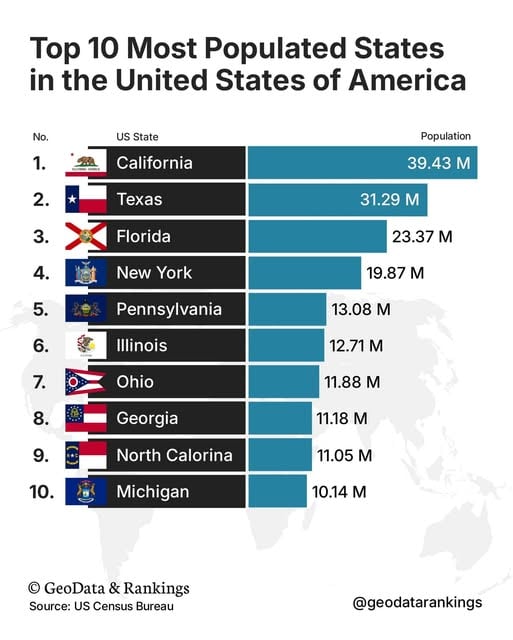
Don’t be fooled by the California population island. Yes California is the #1 most populous state (for now 39.4M, with only 32M being viable consumers), but states #2-10 are all in the mid to east region and account for 155M potential customers. (viable consumers is defined as total estimated population less impoverished and less homeless)
7. Does the technology provide real control?
Startup Sellers do not need to compromise on advanced technology. World-class technology should do more than display a shipment status.
You need real-time inventory visibility, channel integrations, order workflows, returns control, and reports you can act on. A single inventory pool can serve Amazon, Shopify, TikTok Shop, Walmart, eBay, and Etsy instead of forcing you to fragment stock across separate systems. Key technology features that will be important even to startups are:
- Advanced portal for 24/7 answers to most of your questions
- For Amazon sellers, the FBMFulfillment’s FBA Replenishment Module (FRM) can make FBA dripfeed easy and avoid both stockouts and inventory fees.
FBMFulfillment Launches First Automated FBA Replenishment Module [FRM]
- Lot Control, FEFO
- Unit of Measure to enable you to stock and sell by the pallet, master carton or each seamlessly
- Easy native API setup without extra fees.
- Detailed expense visibility.
- Automatic low stock notifications
- Package delivery status dashboard, to quickly monitor shipment all the way to your customer.
- And much more, just ask
8. Can you pay after the work is completed?
Post-pay invoicing matters because cash is often the constraint that kills a promising business. Many 3PLs require an up front cash deposit so they can work from your money. This is almost always required for startups.
You should not have to block working capital in a prepaid balance before orders are picked, packed, shipped, or stored. With post-pay invoicing, you pay after the work is done.
That makes your cash flow more predictable and leaves funds available for inventory, advertising, product development, and customer acquisition. In exchange for this post pay benefit, 3PLs often require tight due upon receipt payment terms.
It is important to understand that a 3PL incurs and pays expenses on your behalf. They have bills to pay like rent, employees, carriers etc.
IT IS IMPORTANT TO ALWAYS PAY YOUR 3PL INVOICE PROMPTLY TO MAINTAIN THE POSITIVE RELATIONSHIP.
Delayed or non payment is a fast way to damage the business relationship and may result in
- Account suspension
- The inability to fulfill your orders affecting marketplace metrics and ranking
- Eventually inventory forfeiture
Why is a startup friendly 3PL still selective?
We are startup-friendly, but we cannot accept every client.
That is not gatekeeping for its own sake. It protects the partnership.
We succeed only when you succeed. If your business fails, you lose money, time, and inventory. We lose labor, storage capacity, operational focus, and the relationship we invested in building.
Because we invest for long-term mutual benefit, we cannot accept clients with very high risk. Maintaining a healthy operation allows us to continue offering startup policies to the founders who are prepared to use them responsibly.
Selectivity is what makes sustainability possible.
What do we need from you before accepting your account?
Do you have a well-thought-out plan?
We are 13-year sellers ourselves across many platforms and marketplaces. We also have experience via 100s of clients as to what works and what does not. While we always protect client confidentiality, if we offer advice, you should carefully consider it as we have your best interest at heart.
You do not need a perfect forecast. You do need evidence that you have thought through the business.
Be prepared to explain:
- What you are selling
- Who buys it
- Your landed cost and target margin (generally)
- Your expected order volume range
- Your inventory source and lead times (generally)
- Your minimum order quantities
- Your sales channels
- Your returns process
- Your plan for replenishment
“I will figure it out” is not a fulfillment strategy. A warehouse cannot build a reliable operating relationship around undefined expectations.
A founder who can explain the plan, identify the risks, and adjust based on data is positioned for a stronger partnership.
Do you have reasonable expectations about resources?
A 3PL is your fulfillment operation. It is not your marketing department, sourcing agent, lender, or product development team.
Onboarding, receiving, integration, and SOP alignment require real time. Same day fulfillment begins after your account is properly configured and inventory is available. Pick and pack fulfillment services depend on accurate product data, usable barcodes, packaging instructions, and approved workflows.
When you bring realistic expectations, you receive predictable service, flexible policies, and a partner focused on your long-term growth.
What do your first 90 days look like?
Days 1–15: Build the operating foundation
You review the plan, connect sales channels, set up the account, confirm SKUs, and align SOPs. There is no onboarding fee.
Days 15–45: Receive inventory and begin shipping
Inventory is received and slotted. Channel integrations go live. Once orders are flowing, the warehouse performs same day fulfillment according to established cutoffs.
Days 45–90: Review the operating data
You evaluate:
- Order volume
- Pick and pack accuracy (should be 100%)
- Delivery performance
(On time Shipping will be 100%, you may need to adjust your shipping template to account for carrier actual performance so you do not over promise) - Return handling
- Inventory accuracy (Should be within the SLA)
- Per-order cost
- Storage utilization
- Replenishment timing
If you sell through marketplaces, the FBA Replenishment Module can help structure direct-to-DC replenishment from the same inventory pool. Review the cycle and tune it to actual demand.
You can also decide whether Ecommerce Academy or in-person coaching would help.
Month 12: Use the checkpoint
The minimums waiver reaches its checkpoint after 12 months. By then, you should understand whether the partnership is working and whether we are earning your business.
If yes, continue month to month. If no, leave without a long-term contract penalty.
Why is this startup friendly 3PL model risky for us?
Waiving minimums, absorbing onboarding, providing coaching, supporting post-pay invoicing, and offering month-to-month terms transfers real risk to FBMFulfillment.
This is not a marketing gimmick.
We offer this model because we were built from an ecommerce seller’s viewpoint. We understand what it feels like to be rejected by a warehouse because your volume is not large enough yet.
The 12-month minimums waiver is our way of saying that the relationship is a bet on your growth, not merely on the size of your first invoice.
You have a problem. We have a solution.
You have a problem: almost every 3PL will say no to you because you are a startup. The providers that say yes may bury you in minimums, onboarding fees, long contracts, and pricing that assumes you already operate at scale.
We have a solution: a startup friendly 3PL with policies designed to create a launch pad:
- Minimums waived for 12 months
- No onboarding fee
- Month-to-month terms
- Competitive 3PL negotiated shipping rates
- Optional coaching through Ecommerce Academy and in-person sessions
- Strategic Jacksonville location
- World-class multichannel technology
- Single inventory pool
- Post-pay invoicing
- Same day fulfillment after setup and inventory approval
We are selective because your success and ours are connected. If you have a well-thought-out plan and reasonable expectations about resources, contact FBMFulfillment at sales@fbmfulfillment.com or +1 (904) 530-9694.
Tell us your plan.
Key Takeaways
- A startup friendly 3PL provides the essential support startups need without burdensome upfront costs or long contracts.
- Only 3% to 5% of 3PLs accept startups, primarily due to risks and operational challenges associated with low order volume.
- Key policies for a good startup friendly 3PL include waiving minimums for the first year and no onboarding fees.
- Having access to competitive rates, technology for inventory control, and optional coaching is vital for startups.
- FBMFulfillment seeks clients with well-thought-out plans and reasonable resource expectations to foster mutual success.
Related Links
Frequently Asked Questions
No – Not if you choose the 3PL wisely. A 3PL that is Startup Friendly is seeking long-term business partners. Working with startups is not the easiest growth strategy, but is a win win when a startup is successful. “Using” a Startup friendly 3PL to launch with the hidden agenda to switch when things start to grow is unethical unless there are serious performance gaps. Most quality entrepreneurs will find benefit in the long-term relationship.
Most 3PLs are built around minimum order requirements, onboarding fees, 12-month contracts, and financial thresholds designed for established sellers, and only an estimated 3-5% of 3PLs accept startups at all. The economics are the issue: account setup, systems integration, SKU creation, warehouse slotting, and SOP development all take real labor, and a startup’s small order volume often doesn’t generate enough revenue to cover that onboarding cost — on top of operational risks like unproven forecasts, under-capitalization, demand swings, and the chance the business closes or pivots entirely. In short, may startups take more than they give, don’t be that guy.
It means giving an early-stage seller many of the same cost and efficiency advantages an established seller already has, from day one — rather than requiring the volume and track record that usually earns those terms.
Minimums are waived for the first 12 months, so a new seller isn’t forced to pay for volume they don’t have yet. That waiver period gives the business time to generate real data before committing to standard terms. At the month 13 checkpoint, billing reverts to a standard $100 minimum invoice.
No — there’s no onboarding fee, even though onboarding itself covers real work: account setup, systems integration, receiving, warehouse slotting, SOP alignment, and operational training. Waiving that fee removes an upfront cash burden before the business has started generating revenue.
No — the relationship runs month-to-month rather than a 12-month lock-in, described as "we earn your business every month." That gives a new seller flexibility to test channels and pricing without being stuck if something isn't working, while also keeping both sides accountable.
Yes — startups normally lack the carrier volume needed to negotiate good rates on their own, but working through a 3PL with established carrier relationships (the article cites DHL eCommerce, alongside same-day fulfillment) gives access to pricing that would normally only be available to larger businesses.
Yes — optional coaching on inventory planning, channel management, returns, and peak season prep, delivered at no additional fee through resources like an Ecommerce Academy and in-person sessions. The expectation is that sellers use that resource respectfully: reading communications thoroughly instead of re-asking answered questions, checking the academy’s existing resources first, and using AI tools appropriately for generic or technical questions.
Real-time inventory visibility across sales channels from a single inventory pool serving Amazon, Shopify, TikTok Shop, Walmart, eBay, and Etsy, plus a portal with features like the FBA Replenishment Module (FRM), lot control, FEFO (first-expired, first-out) support, flexible units of measure, native API setup, low stock notifications, and delivery tracking.
Post-pay invoicing — you’re billed after the work is completed rather than upfront, which protects the seller’s cash flow and lets that capital go toward inventory, advertising, product development, and customer acquisition instead. The trade-off is that paying the 3PL invoice promptly matters for keeping the relationship healthy on both sides.
Because accepting every applicant regardless of readiness creates real costs — a startup that fails still consumes warehouse labor, storage capacity, and operational focus, and can leave behind stranded inventory and a broken relationship. The stated philosophy is “we succeed only when you succeed,” so accepting sellers who aren’t actually prepared undermines the 3PL’s ability to support the startups that are.
Big No – One of the downsides to working with startups, under capitalized and inexperienced entrepreneurs is unfortunately sometimes do not succeed. It is common, and incredibly unfair, to blame others for your failure and this happens some times. If you have any specific concerns, ask for the “whole story”
FBMFulfillment.com is BBB A+ certified and is very proud of that.
A well-thought-out plan covering the product or service, target customer profile, landed cost and target margin, expected order volume range, inventory source and lead times, minimum order quantities, sales channels, returns process, and replenishment strategy. “I will figure it out” is specifically called out as not being an acceptable answer to these questions.
A 3PL’s role is fulfillment — not marketing, sourcing, lending, or product R&D. Same-day fulfillment begins only after the account is fully configured and inventory is actually available, and depends on the seller providing accurate product data, usable barcodes, clear packaging instructions, and approved workflows on their end.