
How Many Websites Are There? The Scale of the Web and How Your Store Gets Noticed
You built a Shopify or WooCommerce store. It is live, your products are ready, and you expected visitors. Then the quiet sets in. When you ask how many websites are there, the scale is startling: Internet Live Stats reports more than 1.5 billion websites, with fewer than 200 million active. Your store is one of […]
Reducing Damaged Shipment Claims for Ecommerce

Reducing damaged shipment claims starts before the label prints. Learn how packaging, pick accuracy, carrier data, and returns controls protect margin.
Your Summer Vacation Plan Is a Lie If You’re Still Packing Boxes Yourself

Are you truly on vacation if you’re still shipping orders? For many DIY e-commerce sellers, summer is more about “working vacations” and managing late-shipment risks than relaxing. This article explores the dangers of self-fulfillment, including Amazon’s 4% late shipment threshold and the hidden costs of “Vacation Mode.” By transitioning to a professional e-commerce fulfillment warehouse, sellers can maintain sales velocity, protect their account health, and reclaim their time. Learn how a 3PL fulfillment center provides the infrastructure for 2-day delivery and seamless multichannel fulfillment so you can finally leave the tape gun behind.
The Garage Trap: Why Self-Fulfillment Means You Never Truly Leave Work
The “garage trap” is a common phase where self-fulfilling ecommerce sellers become overwhelmed by the very success they worked to achieve. Spending 20+ hours a week on manual packing and shipping creates a ceiling on growth and prevents founders from taking necessary downtime. This article explores the hidden costs of DIY fulfillment: including the “growth tax” on a founder’s time and the lack of scalability. By transitioning to a professional ecommerce fulfillment warehouse, sellers can leverage better shipping rates, automated multichannel inventory management, and reclaim their freedom to focus on brand-building.
The B2B Fulfillment Framework: How to Scale Wholesale Operations Without Doubling Your Costs
Scaling wholesale operations often leads to skyrocketing costs and logistical headaches due to the divide between DTC and B2B requirements. This article outlines the “B2B Fulfillment Framework,” emphasizing the importance of a single inventory pool to maximize capital efficiency and avoid stockouts. We dive into the necessity of specialized infrastructure for bulk storage, the role of EDI/API integrations for retail compliance, and the strategic advantages of a fulfillment center in florida. By leveraging seller-centric b2b order fulfillment services, brands can automate wholesale growth while maintaining the precision needed to avoid costly retail chargebacks.
Stockout vs. Overstock: How to Calculate the True Cost of Getting Inventory Wrong in 2026
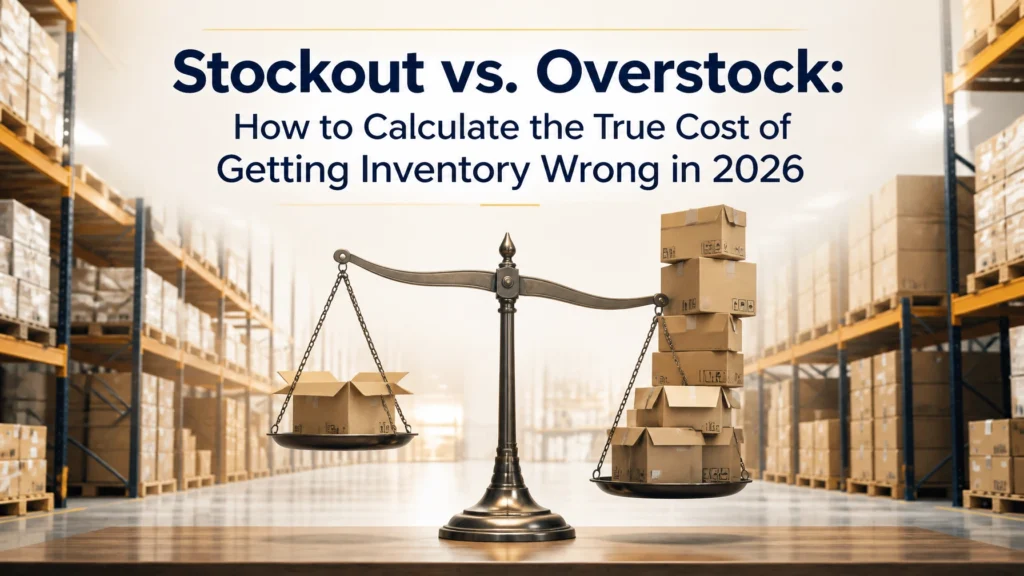
Inventory management in 2026 is a high-stakes game where “stockout vs. overstock” can determine your brand’s survival. This article explains why the safety stock formula is a key tool for calculating safer reorder points and protecting margin, while also breaking down the two critical types of replenishment time: Factory → 3PL and 3PL → FBA. We also show why FBA dripfeed through FBMFulfillment is so effective, how our exclusive FBA Replenishment Module automates replenishment, eliminates placement fees, reduces replenishment time, and why these 2 inventory flows require separate calculations because they are not the same math problem.