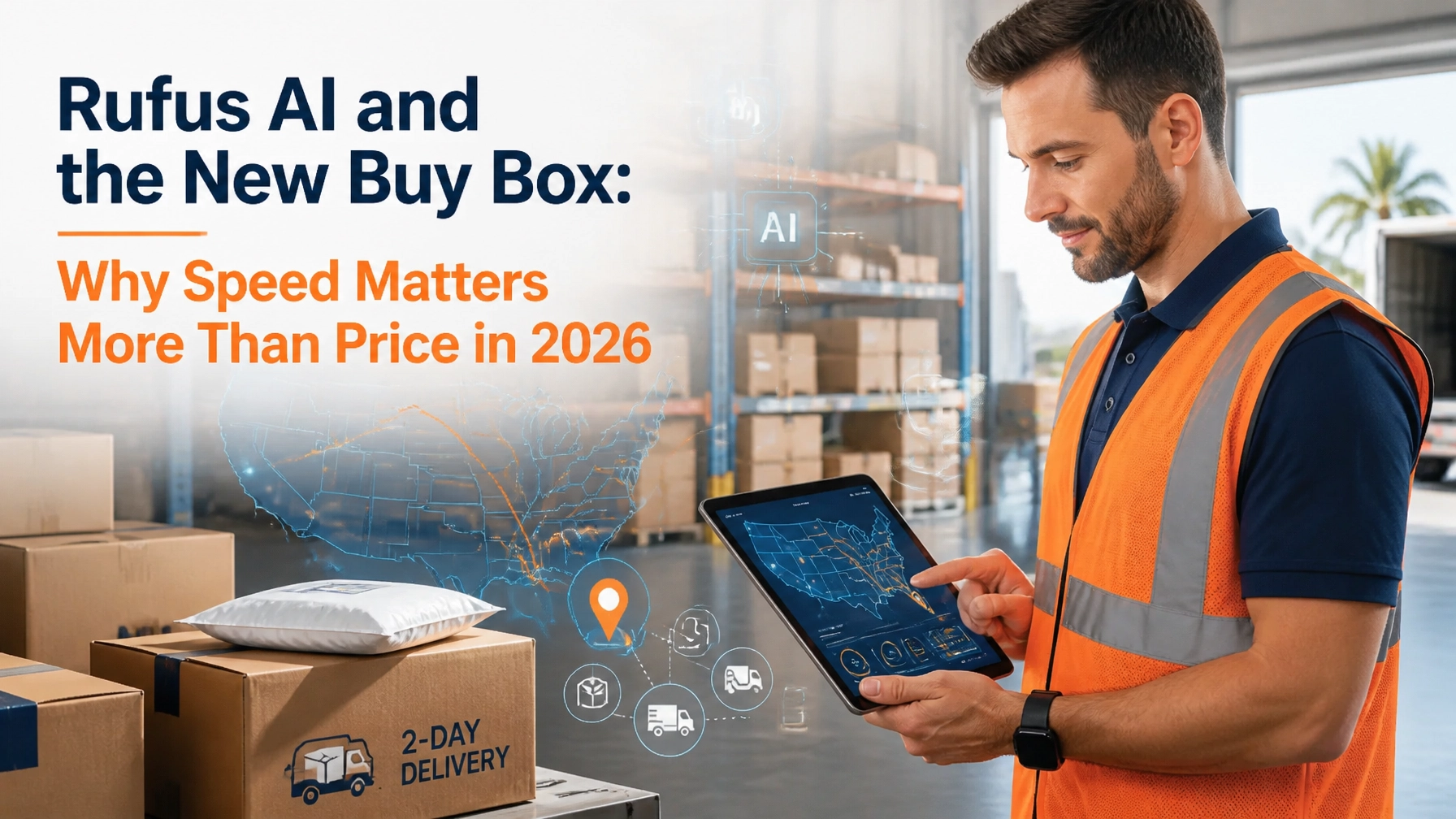
Are your products competitively priced but still losing visibility on Amazon? Rufus AI is changing how the Amazon Buy Box works in practice. In 2026, delivery speed, customer satisfaction, availability, and fulfillment reliability increasingly determine which offers shoppers see, trust, and purchase.
That shift is accelerating as Amazon moves from traditional keyword search toward conversational shopping. Rufus AI, including the broader amazon rufus ai shopping experience, helps customers compare products, ask follow up questions, and receive recommendations based on use cases, reviews, availability, and delivery expectations.
The result is clear: Rufus AI is making fast, dependable fulfillment a ranking and conversion advantage.
1. Why is the Amazon Buy Box changing in 2026?
For years, sellers treated price as the primary lever for winning the Buy Box. Price still matters. However, Amazon has never evaluated offers by price alone, and the balance is changing as customer expectations become more demanding.
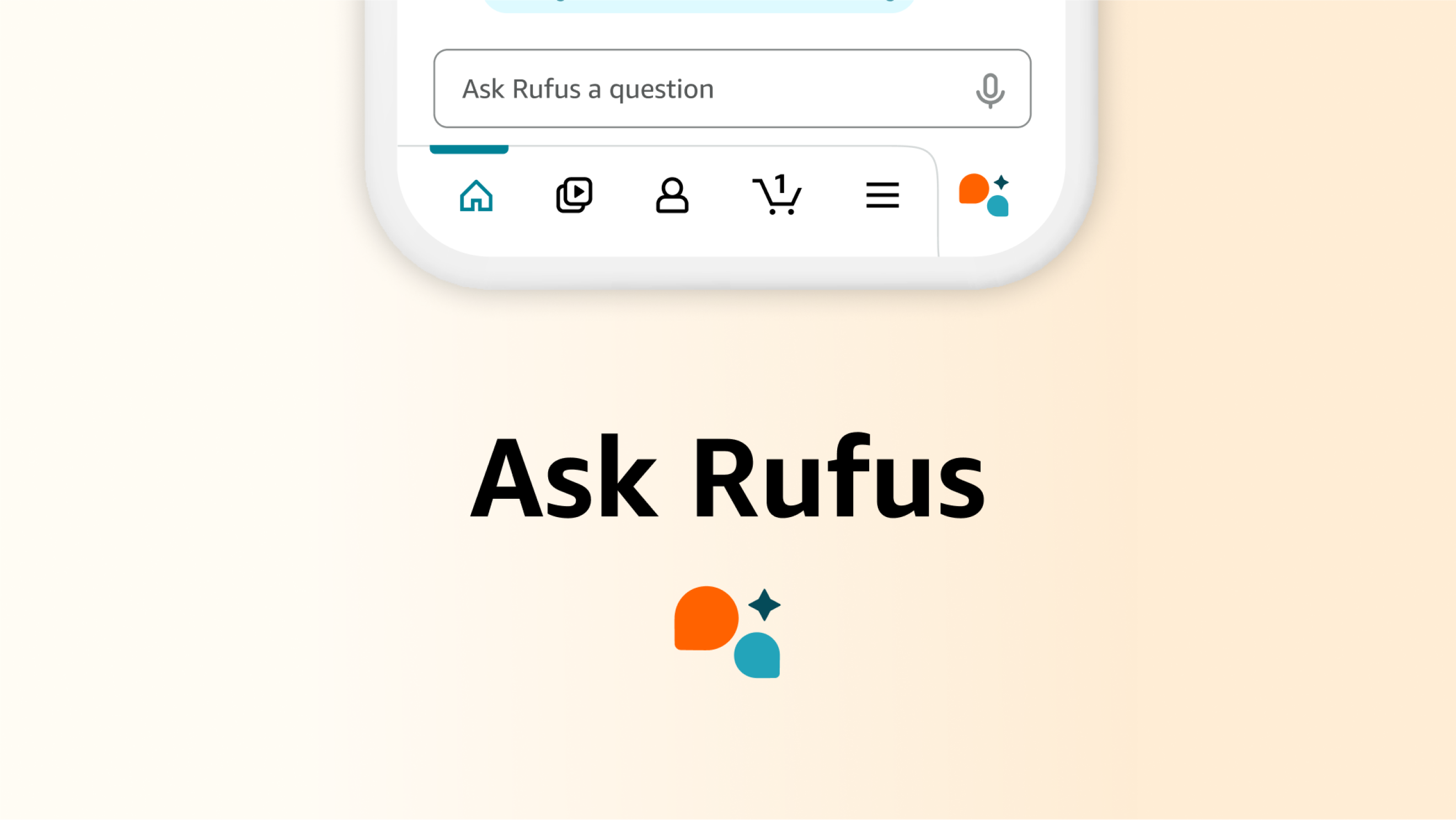
Amazon’s official explanation of Rufus describes an AI shopping assistant trained on product details, customer reviews, community questions, and information from across the web. Customers can ask broad questions, compare products, and request recommendations for specific needs.
That changes the shopping journey.
A customer no longer needs to search for an exact product name. They can ask:
- “What is the best outdoor speaker for a humid climate?”
- “Which backpack is best for a weekend trip?”
- “What should I buy if I need this before Friday?”
- “Which option has reliable customer reviews and fast delivery?”
Rufus AI then narrows the field.
When Amazon presents fewer, more relevant products, every performance signal becomes more important. A product with strong reviews but a five day delivery promise creates friction. A cheaper offer that arrives later may lose to a slightly more expensive option that arrives tomorrow.
The Amazon Buy Box is adapting to the same customer expectations. Amazon has not published a complete formula for Featured Offer selection, and it has not confirmed that Rufus engagement directly determines Buy Box ownership. However, the practical signals are consistent: delivery speed, seller reliability, inventory availability, customer satisfaction, and competitive pricing all matter.
2. How does Rufus AI use delivery speed to shape Amazon search behavior?
Consider two sellers offering comparable products.
Seller A has the lowest price, but the customer sees delivery in five days.
Seller B is slightly more expensive, but the product arrives in two days with a clear delivery promise.
In 2026, Seller B has a stronger chance of earning the conversion.
This is not only about the Buy Box. It is also about what happens before the shopper reaches the product detail page. AI recommendations are designed to reduce customer effort. If a product does not fit the customer’s timing, location, or satisfaction expectations, it becomes less useful to recommend.
A five day delivery promise can create several problems:
- The customer abandons the product before purchasing.
- The product receives fewer clicks from recommendation panels.
- Conversion rates weaken even when traffic remains stable.
- Advertising becomes less efficient because shoppers hesitate at checkout.
- The offer generates fewer positive post purchase signals.
- The product becomes less competitive against faster alternatives.
The practical outcome can feel like Rufus AI has buried the listing. Amazon may not describe the process that way, but slow availability removes your offer from the customer’s preferred decision set.
Independent seller analyses, including this 2026 Featured Offer analysis, also point to delivery speed receiving significantly more attention in Buy Box competition. The exact weighting is not guaranteed across every category, but the operational lesson is dependable:
Do not assume a lower price compensates for a slow delivery promise.
The Amazon Buy Box increasingly reflects the total customer experience. That includes how quickly the order arrives, whether the item is in stock, whether the tracking information is accurate, and whether the customer receives the expected product without damage or delay.
3. What happens when FBA replenishment is too slow?
FBA is still a powerful fulfillment option. It provides Prime eligibility, Amazon managed shipping, and a familiar customer experience. The vulnerability appears when your FBA inventory becomes too low and replenishment cannot keep pace with demand.
A typical sequence looks like this:
- Your sales velocity increases.
- FBA inventory drops faster than forecast.
- A replenishment shipment takes several days to process or becomes delayed.
- The product loses its fast delivery promise in important ZIP codes.
- Customers see slower arrival dates.
- Conversion and Featured Offer performance weaken.
The problem is not limited to complete stockouts. A product can remain technically available while becoming operationally uncompetitive because the nearest inventory is too far away or the replenishment has not been received.
This is why sellers need an upstream inventory strategy. A 3PL fulfillment warehouse can hold reserve inventory, replenish FBA in smaller quantities, and continue fulfilling orders through FBM or other channels while Amazon inventory is in transit.
FBMFulfillment’s automated FBA Replenishment Module is designed around that type of inventory control. The objective is simple: keep products available without forcing every unit into Amazon’s network.
You retain possession of inventory. You gain more options. You reduce the risk that one delayed FBA shipment damages your entire sales channel.
4. Why does localized inventory matter more than ever?
Inventory location determines delivery options.
A seller shipping from a distant warehouse may need several transit days before an order reaches the customer. A seller holding inventory closer to demand can offer faster service with more reliable delivery dates.
For many brands, a Jacksonville, Florida 3PL provides a strategic Southeast fulfillment position. Inventory located in Jacksonville can support customers throughout Florida, Georgia, the Carolinas, the Southeast, and nearby regions while also connecting efficiently to national carrier networks.
That does not mean every seller should place all inventory in one warehouse. It means your inventory strategy should be based on customer geography, order density, and promised delivery times rather than storage convenience alone.
FBMFulfillment’s warehouse locations map illustrates how a regional and national fulfillment strategy can support broader two day coverage. The correct setup depends on your sales distribution and SKU profile.
Localized inventory helps create:
- Shorter carrier zones.
- More consistent delivery estimates.
- Fewer late shipments.
- Lower dependence on one fulfillment channel.
- Better support for multichannel orders.
- More reliable customer expectations.
The Amazon Buy Box does not reward inventory simply because it exists somewhere in the country. It rewards the customer experience created by that inventory. If the unit is available but cannot reach the shopper quickly, the inventory is not doing enough operationally.
5. Can FedEx 2Day improve your competitive position?
Fast shipping only matters when it is reliable.
A vague “ships quickly” promise is not enough. Sellers need a defined process that moves orders from inventory to carrier pickup on schedule and delivers them within a predictable service window.
FedEx 2Day shipping gives sellers a clear operational target. When orders leave a Jacksonville fulfillment warehouse on time, a two day service can support a competitive delivery promise across many customer destinations.
That promise can improve the complete shopping experience:
- Customers know when the order should arrive.
- Delivery expectations are easier to communicate.
- Late shipment risk is easier to monitor.
- Customer service teams have better tracking information.
- Faster arrival supports stronger reviews and repeat purchases.
However, a carrier service alone will not solve fulfillment problems. You also need accurate inventory, same day order processing, barcode scanning, packing verification, carrier cutoff discipline, and exception monitoring.
This is where a modern warehouse management system matters. The WMS should connect orders, inventory, picking, packing, tracking, and shipment status so operational performance can be measured rather than assumed.
6. What should sellers do to prepare for Rufus AI driven shopping?
Optimizing for Rufus AI does not mean stuffing more keywords into a listing. It means creating a product offer that is easy for both algorithms and customers to understand.
Here are key steps:
-
Write for real use cases.
Explain who the product is for, where it is used, and what problem it solves. Rufus can answer questions about comparisons, features, and suitability when your product data is clear. -
Keep product information consistent.
Titles, bullet points, specifications, images, and A+ Content should not contradict one another. Conflicting data makes recommendations less reliable. -
Track delivery promises by ZIP code.
Review the customer experience from several major markets. A two day promise in one region does not guarantee two day coverage elsewhere. -
Build reserve inventory outside FBA.
Use a 3PL inventory pool to replenish FBA, fulfill FBM orders, and protect availability during demand spikes. -
Measure fulfillment reliability.
Monitor same day shipping, order accuracy, tracking validity, on time delivery, cancellations, and return reasons. -
Protect customer satisfaction.
Fast shipping cannot compensate for defective products, poor packaging, or inaccurate listings. Returns and negative reviews remain powerful signals of customer experience. -
Compare total value, not just price.
A slightly higher price with faster delivery and stronger reliability can outperform a lower price that creates delay and uncertainty.
For sellers deciding whether to add FBM to their Amazon strategy, this guide on when brands should use FBM provides a useful framework.
The 2026 Rufus AI fulfillment advantage is operational
Rufus AI is changing how Amazon shoppers discover products. The new experience is conversational, personalized, and increasingly focused on the complete customer outcome.
Price remains important. It is not irrelevant.
But speed now influences visibility, conversion, satisfaction, and the likelihood that an offer remains competitive. A product that takes five days to arrive is difficult for Rufus AI to favor when another credible option arrives in two.
The strongest strategy is not abandoning FBA. It is building flexibility around it.
Maintain localized inventory. Use a Jacksonville, Florida 3PL when it fits your customer geography. Support orders with reliable FedEx 2Day shipping. Keep reserve stock outside Amazon. Connect every channel to one controlled inventory pool.
That is how you give Amazon’s algorithms the signals they value most: availability, speed, accuracy, and dependable customer experience.
If you want a fulfillment strategy built for Rufus AI, visit FBMFulfillment.com. We will be glad to help you evaluate your inventory position, fulfillment channels, and delivery requirements so your offers stay faster, more competitive, and more Buy Box eligible.
Key Takeaways
- Rufus AI is transforming the Amazon Buy Box by prioritizing delivery speed, customer satisfaction, and reliability over just competitive pricing.
- Conversational shopping is the future, allowing customers to ask personalized questions, making Rufus AI essential for product comparisons and recommendations.
- Maintaining localized inventory and fast shipping options can significantly enhance product visibility and conversion rates in 2026.
- Sellers should optimize listings by ensuring clarity, consistency, and alignment with delivery promises to meet the evolving standards of Rufus AI.
- Using warehouses closer to customers ensures faster delivery, which improves customer experience and helps maintain Buy Box eligibility.