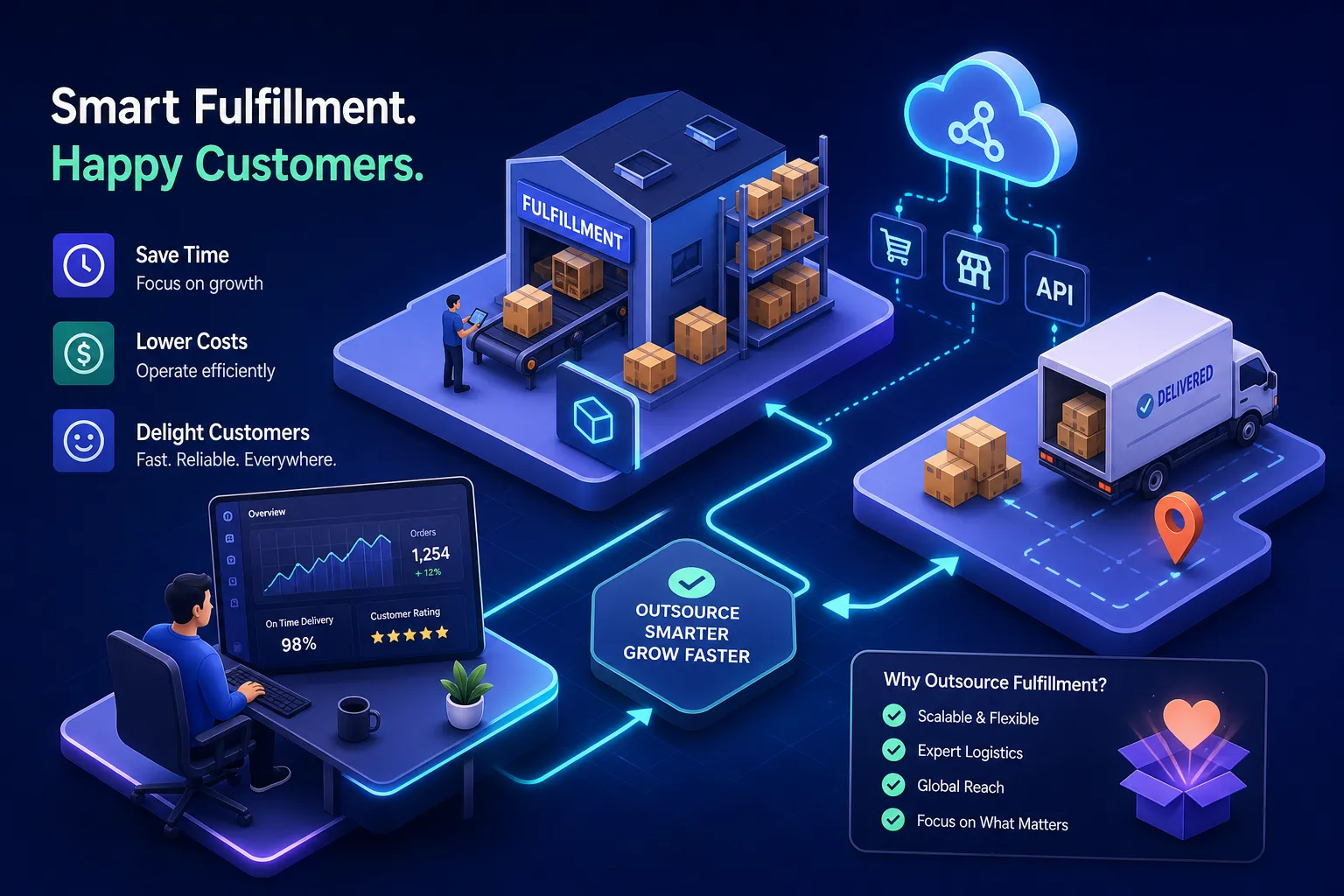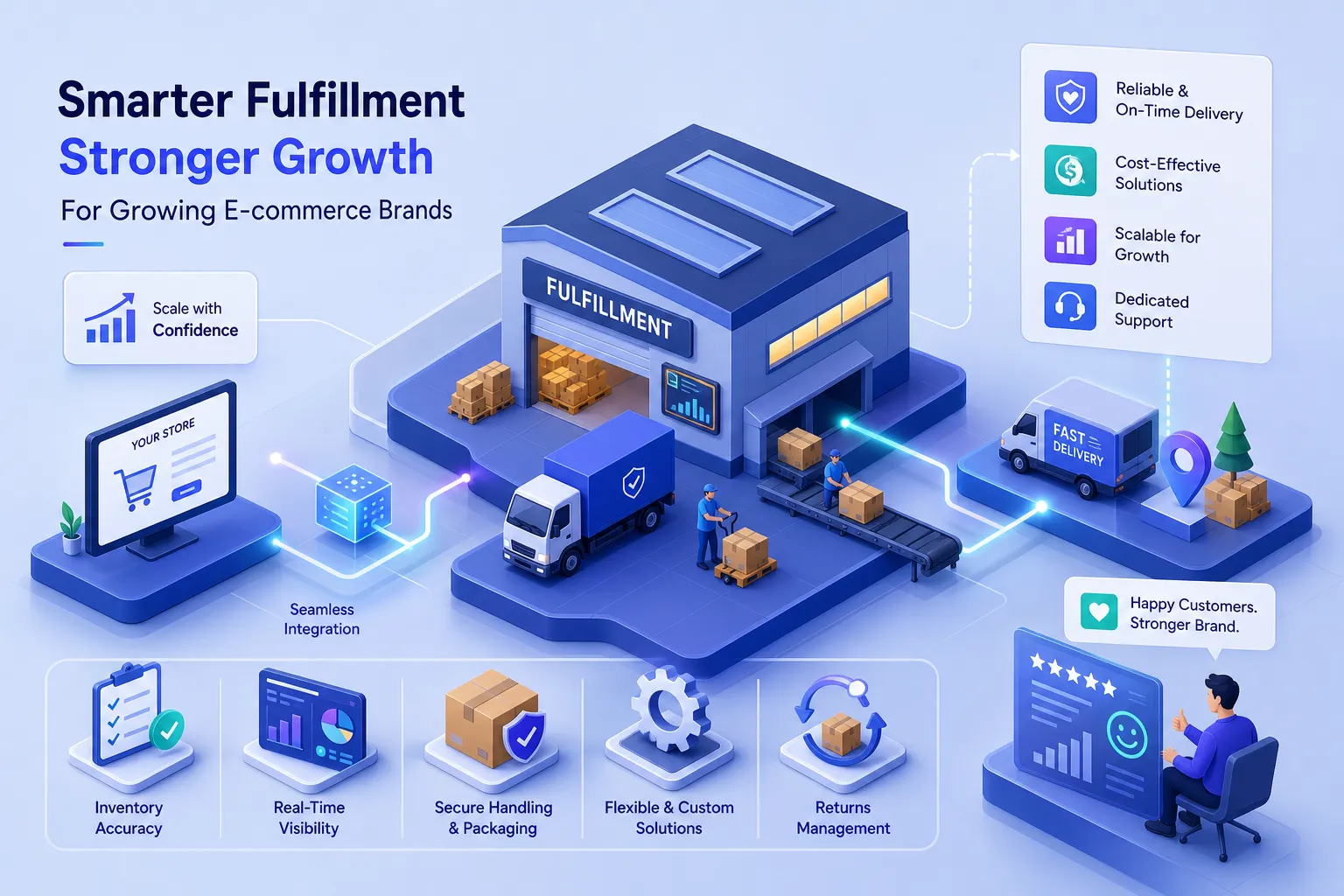

A b2c fulfillment strategy guide matters when orders stop fitting neatly into one channel, one warehouse, or one promise to the customer. A brand can have strong demand and still lose margin through late shipments, split orders, stockouts, avoidable zone costs, and returns that sit untouched for weeks. Fulfillment is where the customer experience meets the P&L.
For marketplace and direct-to-consumer sellers, the goal is not simply to ship orders quickly. It is to make deliberate decisions about inventory placement, order routing, carrier service, packaging, returns, and backup capacity before volume exposes every weak point. The right plan protects delivery performance without trapping too much capital in the wrong network.
Start With the Promise You Are Actually Selling
Your fulfillment operation should be built around the delivery promise customers see at checkout or on a marketplace listing. A two-day promise, for example, creates different inventory and carrier requirements than a five-to-seven-day standard service promise. Too many sellers advertise speed first and attempt to engineer the operation afterward. That usually leads to expensive expedited shipping and inconsistent execution.
Document the standards by channel. Amazon FBM orders may require strict handling and transit-time performance. Shopify orders may allow more flexibility, but customers still expect proactive tracking and accurate delivery estimates. Walmart, eBay, TikTok Shop, and wholesale accounts can each have their own cutoffs, labels, routing requirements, and penalties.
The operational question is simple: what must happen between an order arriving and a package being scanned by the carrier? Set a realistic order cutoff, define same-day versus next-day handling, establish service levels by destination, and decide what happens when inventory is unavailable. A promise that can be met every day is more valuable than an aggressive promise met only when the warehouse is quiet.
Build Your B2C Fulfillment Strategy Around Inventory Risk
Inventory is the main control point in any b2c fulfillment strategy. If stock is in the wrong location, committed to the wrong channel, or replenished too late, no amount of fast picking will fix the customer experience.
Start by separating your catalog into operational groups. Fast-moving SKUs need deeper safety stock and frequent review because a single demand spike can create an immediate stockout. Long-tail products may be better held in lower quantities or replenished on a different schedule. Oversized, fragile, regulated, seasonal, and high-return items should not be treated like standard small-parcel inventory because their storage, packing, and reverse-logistics costs behave differently.
Avoid viewing Amazon inventory, 3PL inventory, and your own warehouse inventory as isolated pools. A hybrid FBA and FBM brand needs an allocation plan. Keeping all units inside Amazon can create exposure to receiving delays, storage fees, restock limits, and stranded inventory. Keeping every unit outside Amazon can weaken Prime coverage if that is central to your sales model. The balance depends on sales velocity, lead times, margin, and how quickly you can replenish FBA.
Set reorder points using actual lead time, not hopeful lead time. Include supplier production, ocean or domestic freight, customs coordination when applicable, inbound appointment delays, receiving time, and the buffer required for demand variation. If your best seller takes 45 days to replace, a reorder point based on 30 days is not a forecast. It is a planned stockout.
Route Orders Without Creating Channel Conflict
Multichannel fulfillment works only when inventory data and order rules are dependable. The same SKU can sell on your website, Amazon, Walmart, eBay, and social commerce at the same time. Overselling one unit can trigger a cancellation, a customer-service issue, or a marketplace performance defect.
Use a single source of truth for available inventory and establish channel allocations where needed. Allocation does not mean locking every unit away permanently. It means reserving enough inventory to protect the channels with the highest margin, strongest repeat-purchase value, or most serious account-health consequences.
Order routing should account for more than the closest warehouse. The lowest-cost route may be a different answer from the fastest route. A high-value order may require signature confirmation. A multi-item order may be worth consolidating into one shipment even if that slightly delays release. A low-margin product going to a distant zone may require a different carrier service or a revised shipping threshold.
These decisions should be rules, not daily improvisation. When a warehouse team has to ask how every exception should ship, the strategy has not been finished.
Treat Shipping Cost as a Margin Decision
Carrier invoices often reveal problems that sales reports hide. Dimensional weight, residential surcharges, delivery-area fees, address corrections, additional handling, and zone exposure can turn a profitable order into a loss.
Review shipping by SKU, order profile, destination zone, and service level. A product that fits in a smaller carton may save more than a negotiated carrier discount. A bundle that reduces separate shipments may improve both margin and customer experience. Conversely, forcing two products into an oversized box to avoid a split shipment can increase dimensional charges enough to erase the benefit.
Packaging should protect the product, fit the carrier rate structure, and be practical for warehouse labor. Overpacking drives cost. Underpacking drives damage claims, replacements, bad reviews, and avoidable returns. Test common order combinations, not just individual SKUs.
Do not make free shipping a blanket promise without knowing the economics. It may be a strong conversion lever for lightweight products with healthy gross margin. For bulky or low-margin items, a threshold, regional pricing approach, or clearly priced expedited option may be more sustainable. The customer does not need every order subsidized. They need clear expectations and reliable delivery.
Design the Warehouse for Accuracy Before Speed
Fast fulfillment with poor accuracy creates more work than it saves. A wrong item, missing component, or incorrect label can become a refund, reshipment, negative review, and marketplace defect. Accuracy needs to be visible in the process through barcode scanning, location discipline, quality checks, and documented exception handling.
Receiving is the first major checkpoint. Inventory should be counted, inspected, labeled, and put away in a way that makes it sellable across intended channels. If a shipment arrives with damaged units or incorrect labels, identify the issue before those units become available to customers.
Pick paths, bin locations, and replenishment tasks should reflect order velocity. High-volume products belong where they can be picked efficiently, while similar-looking SKUs need enough separation to prevent swaps. This sounds basic, but it is exactly where scaling brands get hurt when a warehouse layout that worked at 50 orders per day is stretched to 500.
Ask for operational reporting that shows more than total shipments. You need visibility into order cutoff compliance, pick accuracy, orders held for exceptions, inventory adjustments, aged inventory, carrier scan timing, and return disposition. If a fulfillment partner can only report that packages shipped, you cannot diagnose where performance is slipping.
Make Returns Part of the Customer Experience
Returns are not an afterthought. They are inventory, cash, and customer trust moving in the opposite direction. A return that remains unopened for 30 days distorts available inventory and delays the decision to restock, refurbish, liquidate, or discard the product.
Create disposition rules by item type and condition. A sealed, sellable item may be returned to stock after inspection. A damaged item may need to be photographed and quarantined for a vendor claim. Apparel may require a different inspection standard than electronics or beauty products. The right answer depends on the category, but the rule should be clear before the return arrives.
Track return reasons closely. If customers repeatedly report sizing issues, missing parts, damage, or a mismatch between the listing and the product received, fulfillment data can point to a merchandising or product-quality problem. Processing the return quickly is necessary. Learning from it is where margin protection begins.
Plan for Failure, Not Just Average Volume
The average day is not the test. Peak season, viral demand, supplier delays, weather disruptions, carrier backlogs, and marketplace policy changes are the test. Your operation needs defined fallback options when the normal plan breaks.
Maintain safety stock for critical SKUs, backup carrier options, documented communication paths, and a process for prioritizing orders when capacity is constrained. Consider what happens if an FBA inbound shipment is delayed, a supplier misses a delivery window, or a carrier service degrades in a specific region. The answer may be temporary FBM coverage, rerouting inventory, adjusting delivery promises, or pausing promotions before overselling creates account-health damage.
A capable 3PL should help make those trade-offs visible. FBMFulfillment was built from the seller side of these problems, where inventory limits and late receiving are not abstract logistics issues – they can directly affect revenue, rankings, and account standing.
The most effective fulfillment strategy is not the one with the most aggressive shipping claim or the lowest quoted pick fee. It is the one that gives your brand enough control to keep selling when conditions change, while protecting the margin that made growth worth pursuing.
Key Takeaways
- A b2c fulfillment strategy guide is essential for managing complex orders and maintaining customer satisfaction.
- Base your fulfillment strategy on the delivery promises made to customers and adjust your inventory and carrier decisions accordingly.
- Address inventory risk by managing stock location and replenishing effectively to avoid stockouts and operational inefficiencies.
- Optimize order routing to prevent channel conflict and ensure reliable delivery without daily improvisation in decision-making.
- Make returns a seamless part of the customer experience and analyze return data to improve fulfillment and customer satisfaction.
Related Links
- Multichannel Inventory Control Guide for Sellers
- The Shopify Wholesale Pivot: How to Scale B2B Without a Second Store
- B2B Order Fulfillment Services: The Secret to Scaling Wholesale Without Doubling Your Inventory Costs
- Wholesale Fulfillment Operations Guide for Growth
- What a Seller Fulfilled Prime Warehouse Must Do