
Is your current supplier still the best choice, or are rising costs and unpredictable lead times forcing a change? For an ecommerce seller, product sourcing is not simply a search for the lowest factory quote. It is a decision about landed cost, cash flow, inventory availability, quality, and the ability to serve every sales channel reliably.
The wrong move is reacting to one alarming headline and abandoning a functioning supply chain. The right move is building a SKU-level decision framework, testing alternatives, and relocating only where the numbers justify the operational work.
1. Are You Reacting to a Headline Instead of Building a Scorecard?
A dramatic tariff announcement can make relocation feel urgent. Sometimes it is. But a sourcing move based on fear alone creates its own risks:
- New supplier quality problems
- Unfavorable minimum order quantities
- Longer production ramp-up
- Unfamiliar compliance requirements
- Duplicate tooling and sampling costs
- Lost inventory during the transition
Your decision should start with your own data. Pull the last six to twelve months of information for your highest-revenue SKUs:
- Average unit cost
- Total import duties and tariffs
- Freight and customs charges
- Manufacturing lead time
- Defect and return rates
- Minimum order quantity
- Stockout frequency
- Cash tied up in inventory
Then compare those facts with realistic alternatives. A supplier that offers a lower ex-factory price can still produce a higher landed cost once freight, duty, inspection, delays, and safety stock are included.
The decision rule: do not ask whether another sourcing location looks cheaper. Ask whether it improves your complete operating model.
2. Is Your Current Sourcing Actually Fine?
The grass is not always greener.
Your existing supplier may already have the advantages that are hardest to replace: stable quality, proven packaging, reliable production slots, familiar documentation, and a purchasing relationship that helps you respond to demand changes.
Staying put can be the strongest choice when:
- Your core SKUs maintain healthy contribution margins
- Defect rates remain low and consistent
- Orders arrive within your planning window
- Your supplier can support reasonable volume changes
- Your current origin does not create unacceptable concentration risk
- You have enough inventory visibility to plan replenishment confidently
Do not relocate a product simply because a competitor claims to manufacture it for less. Request samples. Verify production capacity. Check references. Confirm that the quoted price applies to your actual specifications rather than a simplified version of the product.
You also need to consider switching cost. A new supplier may require molds, packaging changes, compliance testing, new carton specifications, updated photography, and fresh marketplace documentation. Those costs can overwhelm modest unit savings.
A stable supplier with a slightly higher unit cost may be more profitable than an untested supplier promising a discount.
3. Are These Five Signals Telling You to Consider a Move?
Relocation does not need to be an all-or-nothing decision. You can move one SKU, one product family, or a percentage of volume.
Look for these five signals.
1. Tariff exposure is concentrated in your core SKUs
If a small group of best sellers carries a disproportionate tariff burden, your entire margin structure becomes vulnerable. Review the classification and origin assumptions with your customs broker, then model the impact at the SKU level.
Do not assume a supplier’s description is enough. The product’s materials, construction, and final origin affect how it is treated.
2. One supplier or origin controls too much of your revenue
Single-source dependence creates catastrophic risk when production stops, capacity is full, shipping lanes are disrupted, or a supplier changes terms. If one factory controls every version of your best seller, you have limited negotiating power and no practical backup.
3. Manufacturing lead time keeps creeping upward
A supplier that once produced in 20 days may now require 35, 45, or more. Even when the factory remains reliable, longer cycles force you to carry more safety stock and place purchase orders earlier.
That ties up cash. It also makes demand forecasting less useful.
4. Landed cost is rising faster than your selling price
Track the complete cost, not just the factory quote. Freight, duty, brokerage, inspection, storage, and expedited replenishment all matter. If your landed cost has increased while marketplace fees and advertising costs remain fixed, relocation deserves a serious review.
5. Your demand pattern has changed
Seasonal products, trend-driven products, and products promoted across TikTok Shop, Shopify, Walmart, and Amazon require inventory agility. A long supply cycle may prevent you from capitalizing on demand or recovering quickly after a stockout.

4. Can a Simple Decision Scorecard Clarify the Best Option?
Use a five-point scale:
- 1 = unacceptable
- 3 = workable
- 5 = strongest fit
The example below is designed for your own comparison. Candidate A and Candidate B are supplier options, not countries. Replace the sample scores with verified quotes and performance data.
| Decision factor | Your Current Source | Candidate A | Candidate B |
|---|---|---|---|
| Unit cost | 4 | 5 | 3 |
| Tariff load | 3 | 4 | 5 |
| Manufacturing lead time | 4 | 2 | 5 |
| MOQ fit | 5 | 2 | 4 |
| Freight predictability | 4 | 3 | 4 |
| Quality confidence | 5 | 3 | 4 |
| Switching cost | 5 | 2 | 3 |
| Supply risk | 3 | 4 | 4 |
| Total score | 33 | 25 | 32 |
This example shows why the cheapest quote does not automatically win. Candidate A has the best unit cost, but its MOQ, quality confidence, and lead time make it a weak transition choice.
You can improve the model by weighting what matters most to your business:
- Multiply tariff load by 2 if margins are under pressure.
- Multiply lead time by 2 if stockouts are common.
- Multiply MOQ by 2 if cash flow is constrained.
- Multiply quality by 2 if returns are damaging your marketplace performance.
Also calculate the payback period:
Switching cost ÷ expected monthly savings = estimated months to recover the move
If the result is 18 months, the move may not make sense for a seasonal product. If the result is three months and the candidate also reduces stockout risk, the case is much stronger.
For additional supplier evaluation guidance, review this product sourcing guide from Global Sources, then apply the criteria to your actual purchase orders.
5. Can Low MOQ Manufacturers Help You Test the Move?
Low MOQ manufacturers can make relocation less dangerous because they let you validate a new supplier without committing your entire working-capital budget.
A pilot order should answer practical questions:
- Does the supplier match the approved sample?
- Are dimensions, materials, and finishes consistent?
- Are cartons labeled correctly?
- Does the supplier meet the promised production window?
- Is the defect rate acceptable?
- Can the supplier repeat the result at a larger volume?
- Does the documentation support your customs and marketplace requirements?
Do not treat a small first order as proof that the supplier is ready for full scale. It is only the first test.
Ask for a written quote that separates tooling, packaging, inspection, freight preparation, and production. Confirm the MOQ for the exact variation you plan to sell. A supplier may advertise a low MOQ for one standard configuration but impose a much higher requirement for custom colors, bundles, or packaging.
A controlled pilot gives you evidence. Evidence beats assumptions.
6. Are Section 301 Tariffs Exposing a Single-Source Trap?
Section 301 tariffs are one reason many sellers are reviewing origin concentration, but the core lesson is broader than one tariff program: you should not bet every SKU on one production location.
Diversification does not mean abandoning a capable supplier. It means identifying products that can be supported elsewhere and building a qualified option before a crisis forces you to move.
Start with products that are:
- Simple enough to reproduce consistently
- High volume or high margin
- Frequently reordered
- Vulnerable to tariff changes
- Responsible for a large share of your revenue
- Not dependent on highly specialized tooling
Keep specifications identical wherever possible. Use the same approved materials, packaging drawings, inspection checklist, barcode placement, and carton requirements. Otherwise, you may create a second supplier that produces a different product under the same listing.
Your goal is controlled redundancy. One supplier remains the primary source while the second supplier proves its ability to perform.
7. How Do You Relocate Without Creating a New Crisis?
Use a staged relocation playbook.
Stage 1: Run a pilot
Select one to three SKUs. Avoid moving your entire catalog first. Place a small production order and document every result, including defects, actual lead time, freight cost, and customs performance.
Stage 2: Qualify the supplier
Review business registration, production capability, quality systems, references, payment terms, capacity, and contingency plans. Conduct pre-shipment inspection before the first commercial-scale order.
Stage 3: Operate a dual-sourcing phase
Keep the existing supplier active while the new supplier completes multiple successful production cycles. Compare real performance, not promises.
Stage 4: Shift volume gradually
Move a defined percentage of purchase orders rather than switching overnight. Set performance gates for quality, delivery, cost, and documentation.
Stage 5: Review quarterly
Supplier performance changes. Recalculate landed cost, lead times, defects, and inventory carrying cost after each quarter. A relocation is not finished when the first shipment arrives. It is finished when the new source performs reliably under normal demand pressure.

8. Can US-Based Fulfillment Make a Sourcing Move Safer?
Yes, when your inventory is managed as one coordinated pool instead of being scattered across disconnected channels.
After a sourcing change, you need flexibility. A shipment may arrive earlier than expected. A pilot may sell faster than forecasted. One marketplace may slow down while another accelerates. A US-based fulfillment partner can receive, inspect, store, and distribute that inventory across your sales channels.
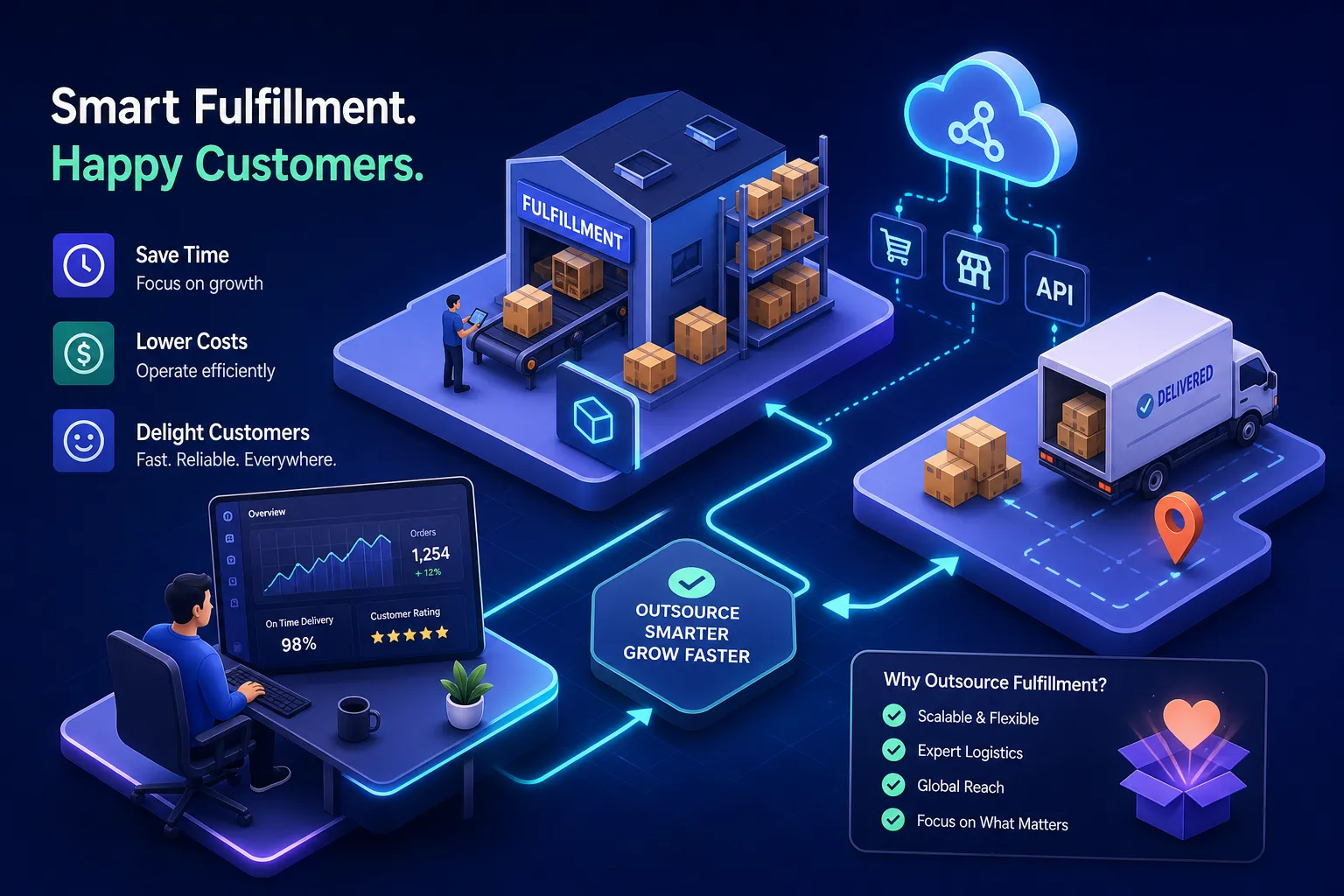
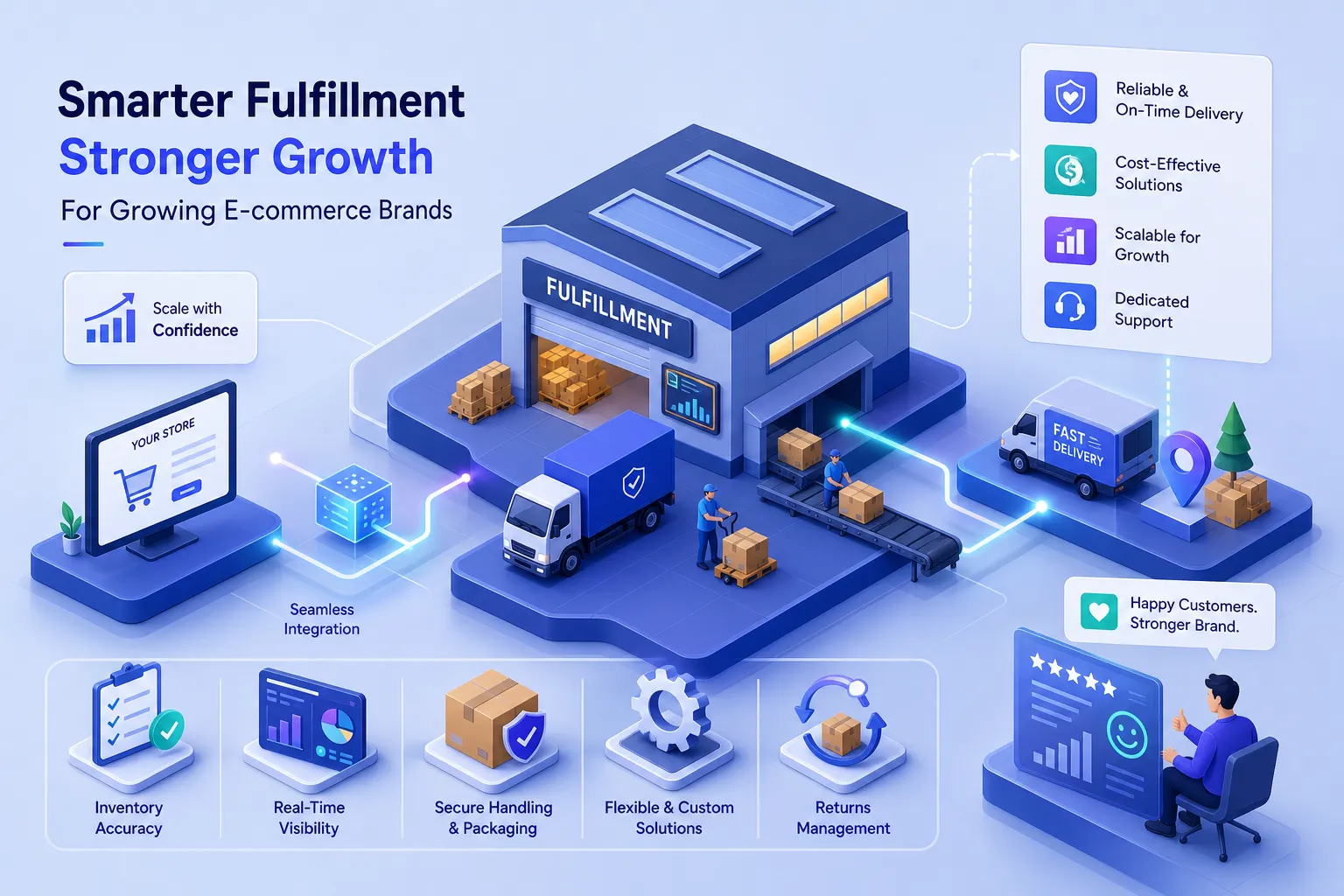
At FBMFulfillment.com, the operating model is built around multichannel ecommerce sellers. A single inventory pool can support orders from Shopify, Amazon FBM, Walmart, eBay, Etsy, TikTok Shop, Facebook, and other channels. That reduces the risk of trapping all available stock inside one marketplace system.
Our port-city Jacksonville operation also gives sellers a practical Southeast logistics advantage. Once inventory is in the United States, you can replenish customers and channels from domestic stock rather than making every marketplace wait for the next international shipment. Review our Southeast Advantage resources to understand how domestic fulfillment can support a broader sourcing strategy.
This is where sourcing and fulfillment connect. A better supplier does not protect your margin if inventory remains unmanaged, delayed, or unavailable to the channel producing demand.

9. You Have a Sourcing Problem. We Have a Solution.
You have a problem: your current sourcing decision must account for margin pressure, supply concentration, lead times, MOQs, and the cost of switching.
We have a solution: build the decision at the SKU level, test alternatives through a controlled pilot, maintain a qualified second source, and place your inventory in a fulfillment operation that gives you control across channels.
You do not need to relocate everything. You need to relocate intelligently.
Start with your top revenue SKUs. Score the current source and two candidates. Verify the landed cost. Test before committing. Then use US-based fulfillment to make the transition more flexible and less dependent on one marketplace or one inventory destination.
Contact FBMFulfillment.com, and we will be glad to help you evaluate the fulfillment side of your next sourcing move.
Key Takeaways
- Evaluate product sourcing decisions carefully; don’t react impulsively to headlines.
- Build a SKU-level decision framework; analyze data on costs, lead times, and supplier reliability.
- Consider signs indicating a need to relocate suppliers, like rising costs and longer lead times.
- Use controlled pilots to test new suppliers before full commitment; assess risks and switching costs.
- Leverage US-based fulfillment to manage inventory flexibly across channels after sourcing changes.