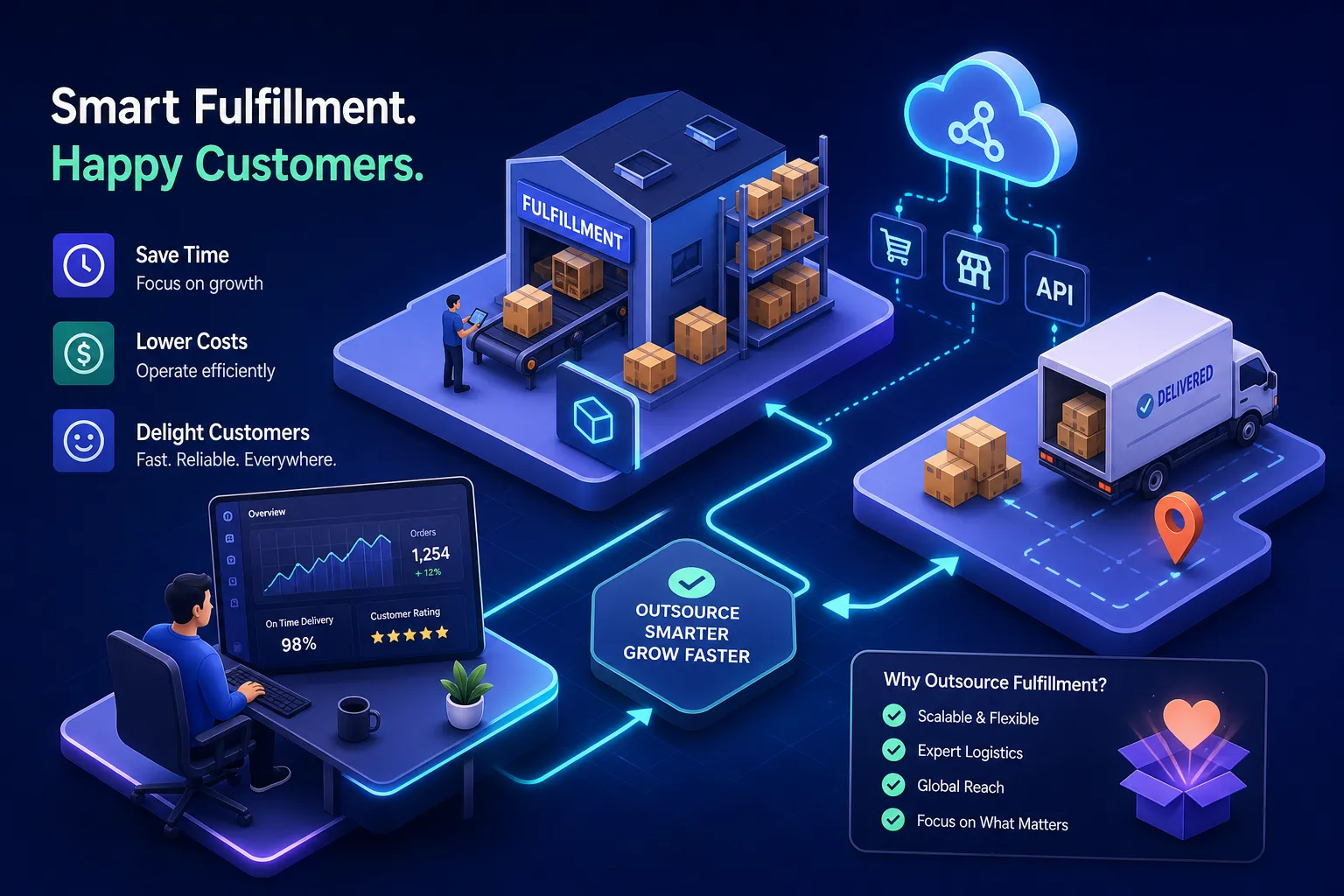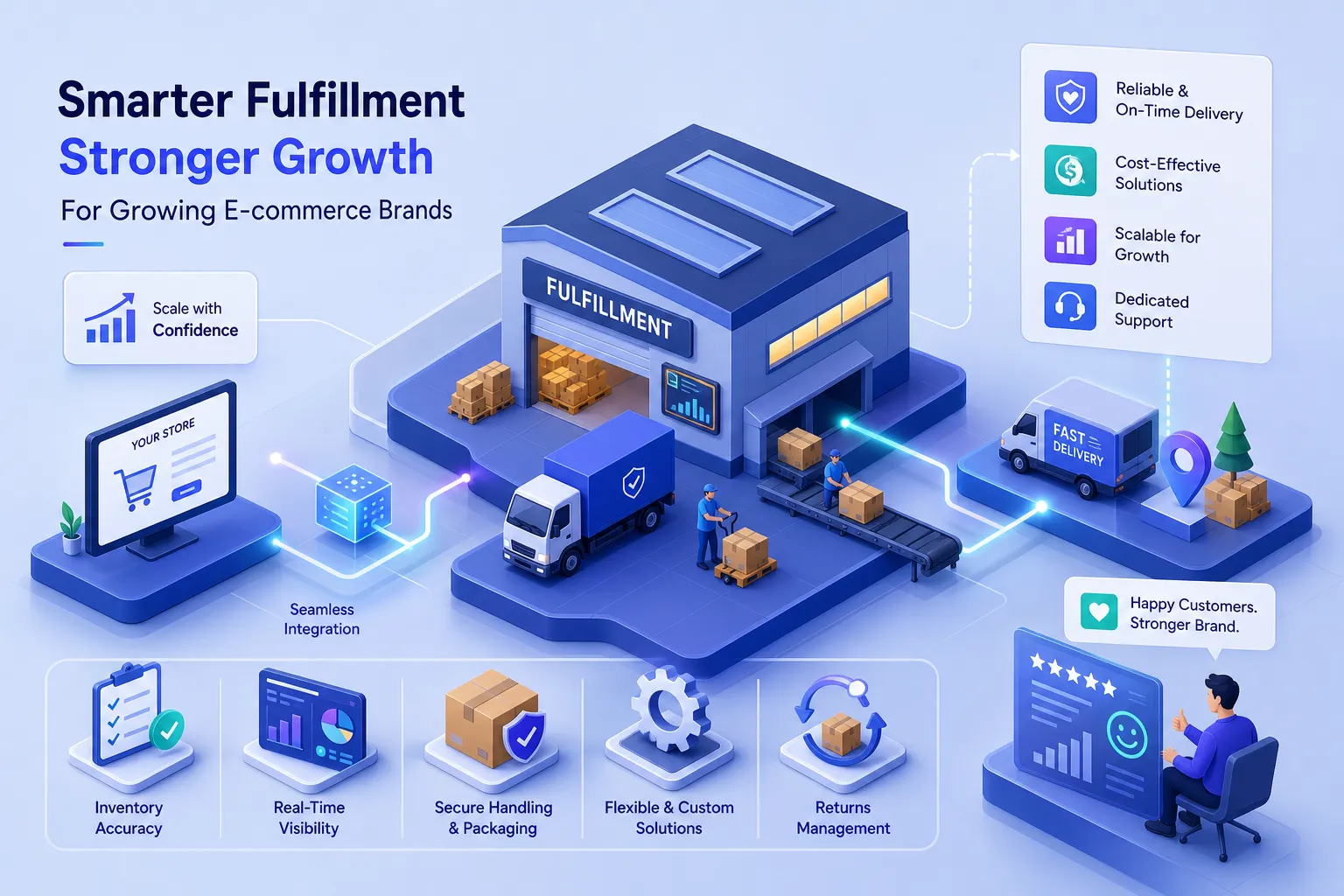

A warehouse can pick orders quickly and still create expensive problems if its software cannot keep sales channels, inventory, shipping, and customer data aligned. The best warehouse software integrations give ecommerce sellers one operational view of what is selling, what is available, and what must ship next – before an oversell, late dispatch, or stockout reaches the customer.
For a growing brand, integration is not a technical nice-to-have. It determines whether inventory on Shopify, Amazon, Walmart, and eBay is actually trustworthy. It determines whether an order reaches the floor without manual entry. And it determines whether your fulfillment operation can absorb a promotion, Prime-level delivery expectations, or a sudden marketplace spike without creating a backlog.
What Warehouse Integrations Need to Do
Warehouse management software should act as the execution layer between your storefronts, marketplaces, inventory, carriers, and finance stack. A good connection does more than transfer an order. It passes the right SKU, service level, shipping address, order priority, bundle details, and marketplace-specific requirements to the warehouse in time to act on them.
Just as important, it sends usable information back. That includes tracking, fulfillment status, available inventory, inventory adjustments, returns activity, and exceptions. When the outbound data is delayed or incomplete, sellers often discover the issue through a customer complaint, an Amazon late shipment warning, or a canceled order. By then, the damage is already done.
The right setup depends on your sales mix. A single-channel Shopify merchant has different requirements than a hybrid FBA and FBM seller processing thousands of orders across Amazon, Walmart, TikTok Shop, and wholesale accounts. The principle stays the same: every integration should remove a manual handoff or reduce a real operational risk.
The Best Warehouse Software Integrations by Function
Marketplace integrations
Amazon integration is usually the highest-stakes connection for marketplace-first brands. For FBM orders, the warehouse system needs to receive orders quickly, respect ship-by dates, assign approved shipping services, and return valid tracking without delay. Sellers using Seller Fulfilled Prime or managing strict delivery metrics need more than a basic order download. They need reliable status synchronization and processes that prevent orders from sitting unassigned during high-volume periods.
For FBA sellers, the integration priority changes. Warehouse software should support inventory visibility outside Amazon, preparation workflows, case and pallet labeling, and replenishment planning. Keeping reserve stock with a 3PL can reduce exposure to Amazon storage fees, receiving delays, and inventory limits, but only if you can see what is ready to replenish and what has already been committed.
Walmart, eBay, Etsy, TikTok Shop, and Facebook or Instagram orders bring their own rules and customer expectations. The best warehouse software integrations handle these channels without forcing your team to export spreadsheets, rekey orders, or maintain separate inventory counts. A connection that only imports orders is not enough if it cannot reliably send tracking and inventory updates back to the platform.
Ecommerce platform integrations
Shopify is often the operational center for direct-to-consumer brands, especially when subscriptions, bundles, discounts, and post-purchase changes are part of daily order flow. Its warehouse connection should recognize order tags, shipping methods, fraud holds, order edits, and bundle components. A popular bundle is not one SKU if it requires three separate items to be picked. If the warehouse receives it as one generic line item, inventory accuracy will break quickly.
WooCommerce and Magento integrations deserve the same scrutiny. They can support highly customized stores, which means the integration must be tested against your actual checkout logic rather than a standard demo order. Ask how it handles gift notes, custom attributes, split shipments, backorders, and address corrections. Those are the details that create manual work after launch.
Shipping carrier and rate-shopping integrations
Carrier integration is where fulfillment speed meets margin control. Warehouse software should connect with the services your customers expect, including USPS, UPS, FedEx, DHL, and regional carriers where appropriate. It should also apply shipping rules based on order weight, destination, package dimensions, service commitments, and marketplace requirements.
Rate shopping can save money, but cheapest is not always best. An Amazon FBM order with a tight delivery promise may need a more reliable service than a low-cost DTC order. A strong shipping integration gives the operation rules to make that decision automatically while still allowing human intervention when an address, weather event, or carrier cutoff creates risk.
Inventory planning and demand forecasting integrations
A warehouse system tells you what is physically on hand. Planning software helps determine whether that number is enough. Connecting order history, purchase orders, lead times, inbound shipments, and channel-level demand can improve replenishment decisions significantly.
This matters most when inventory is split between a 3PL, Amazon FBA, retail locations, and suppliers. Without a reliable inventory feed, brands either overbuy to avoid stockouts or understock and lose sales. Neither outcome protects margin. Forecasting data is only as useful as the underlying SKU data, so solve duplicate SKUs, incorrect pack sizes, and unrecorded adjustments before relying on automated recommendations.
Returns and customer service integrations
Returns are inventory events, not just customer service events. When return data stays outside the warehouse system, available inventory becomes inflated, resale decisions are delayed, and customers wait too long for refunds or exchanges.
A useful returns integration should create a return authorization, identify the reason code, track receipt at the warehouse, and route each item to restock, inspection, liquidation, disposal, or quarantine. Customer service teams also benefit when shipment status, delivery exceptions, and return updates flow into their help desk. They can answer customers with facts instead of sending another ticket to operations.
Accounting and ERP integrations
Accounting platforms and ERPs are rarely the first connection sellers think about, but they matter once order volume and purchasing complexity increase. The goal is not necessarily to push every warehouse movement into the general ledger in real time. The goal is to ensure orders, fulfillment charges, inventory adjustments, purchase orders, and landed-cost information can be reconciled without a month-end spreadsheet crisis.
For wholesale sellers, EDI or ERP integrations may be essential. Retail partners may require specific purchase order, carton label, ASN, routing, and invoice data. A warehouse that can ship consumer parcels but cannot support retailer compliance can become a growth bottleneck.
How to Evaluate an Integration Before You Commit
Do not judge an integration by its logo directory alone. “Connects with Shopify” can mean anything from a mature, two-way connection to a basic order import that fails when an order is edited. Ask what data syncs, how often it syncs, and who owns the fix when data does not match.
Test your operational edge cases. Submit a bundle, a partial refund, a split shipment, an expedited order, an order with a bad address, and an item that goes out of stock. If you sell on Amazon, test the exact shipping and tracking events required for your account health. If you replenish FBA, test the workflow from inventory allocation through shipment confirmation.
Also ask whether the connection uses a direct API, middleware, flat files, or manual exports. None is automatically wrong. A stable flat-file process may be acceptable for a low-volume wholesale account, while a high-volume marketplace operation needs faster automation and clear exception alerts. What matters is whether the method matches the risk and volume of the channel.
Build for Control, Not Just Convenience
The strongest integration stack does not try to automate every decision. It automates repetitive data movement and flags the exceptions that need an operator’s judgment. That is how a brand stays fast without losing control of inventory, shipping costs, or customer experience.
For sellers working across marketplaces and direct-to-consumer channels, a fulfillment partner must understand the pressure behind the data: Amazon performance metrics, inventory restrictions, late carrier scans, bundle accuracy, and the cost of an avoidable stockout. FBMFulfillment approaches integrations from that operating reality, connecting fulfillment execution to the channels where sellers actually compete.
Choose integrations that make your inventory more believable, your shipping decisions more disciplined, and your exceptions easier to see. The goal is not a prettier software stack. It is an operation that keeps selling when volume, channel complexity, and fulfillment pressure rise.
Key Takeaways
- The best warehouse software integrations align sales channels, inventory, and customer data to prevent costly errors.
- Integration is crucial for reliable inventory across platforms like Shopify, Amazon, and Walmart, ensuring accurate order processing.
- Marketplace integrations, such as Amazon and Walmart, require quick order processing and valid tracking to meet customer expectations.
- Ecommerce platform and shipping integrations enhance operational efficiency by automating order flow and optimizing shipping choices.
- Invest in the right integrations to improve inventory accuracy, streamline fulfillment, and maintain control during peak sales periods.
Related Links
- Why 3PL Onboarding Fees are a Red Flag: Don’t Get Trapped
- The B2B Fulfillment Framework: How to Scale Wholesale Operations Without Doubling Your Costs
- 5 Steps to Scale Your Shopify Store: How to Automate Pick & Pack Fulfillment for 7‑Figure Growth
- Cross Channel Inventory Visibility That Prevents Stockouts