Scaling an e-commerce brand usually follows a predictable path: you start with direct-to-consumer (DTC) sales, nail your marketing, and then: boom: a major retailer or wholesale distributor wants to carry your products. It’s a massive win, but it’s also where most brands hit a brick wall. Suddenly, the “pick and pack” workflow that worked for individual Shopify orders doesn’t cut it for 40-pallet shipments to a big-box distribution center. To scale wholesale operations without letting costs spiral out of control, you need a specialized approach to b2b order fulfillment services that doesn’t force you to reinvent the wheel every time a new PO arrives.
B2B vs. DTC: The Operational Divide
Many brands make the mistake of treating B2B like “DTC but bigger.” Unfortunately, that’s a fast track to getting hit with massive chargebacks and late fees. Wholesale fulfillment is a completely different beast. While DTC is about speed and “unboxing experiences,” B2B is about compliance, precision, and bulk efficiency.
In a retail environment, you aren’t just shipping a product; you’re shipping data and logistics compliance. If your pallet isn’t stacked exactly to the retailer’s routing guide, or if your labeling is off by an inch, you won’t just get a complaint: you’ll get a financial penalty. This is why standard 3rd party fulfillment services often struggle if they aren’t built to handle the heavy lifting of wholesale.

1. The Power of a Single Inventory Pool
Perhaps the biggest drain on a growing brand’s capital is the “Siloed Inventory” trap. This happens when you have 5,000 units sitting in one warehouse for your Shopify store and another 5,000 units across the country reserved for wholesale.
The precarious reality of split inventory:
- Capital Inefficiency: You’re paying to store and manage two separate “buckets” of the same SKU.
- Stockout Risks: You might sell out of a product on TikTok while 2,000 units sit “stuck” in your wholesale reserves, unable to be touched.
- Operational Drag: Tracking two sets of data leads to human error and reconciliation nightmares.
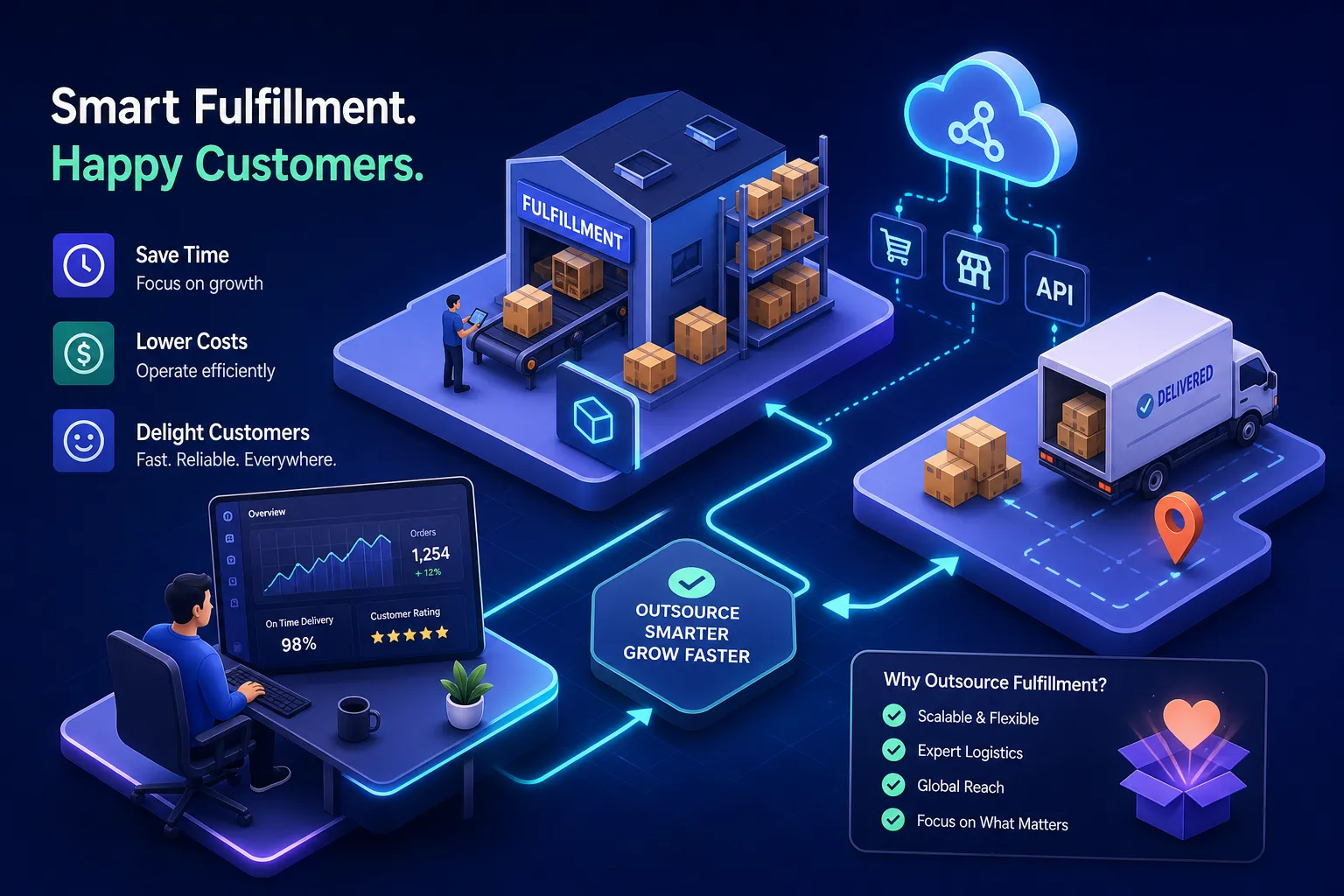
The solution is a single inventory pool. By using one fulfillment center southeast hub to feed both your DTC and B2B channels, you maintain total inventory possession control. At FBMFulfillment.com, we allow you to pull from one stock pile for a single-unit TikTok order or a 20-pallet wholesale order simultaneously. This maximizes your turn rate and keeps your cash flow healthy.
2. Infrastructure: Bulk Receiving and Pallet Storage
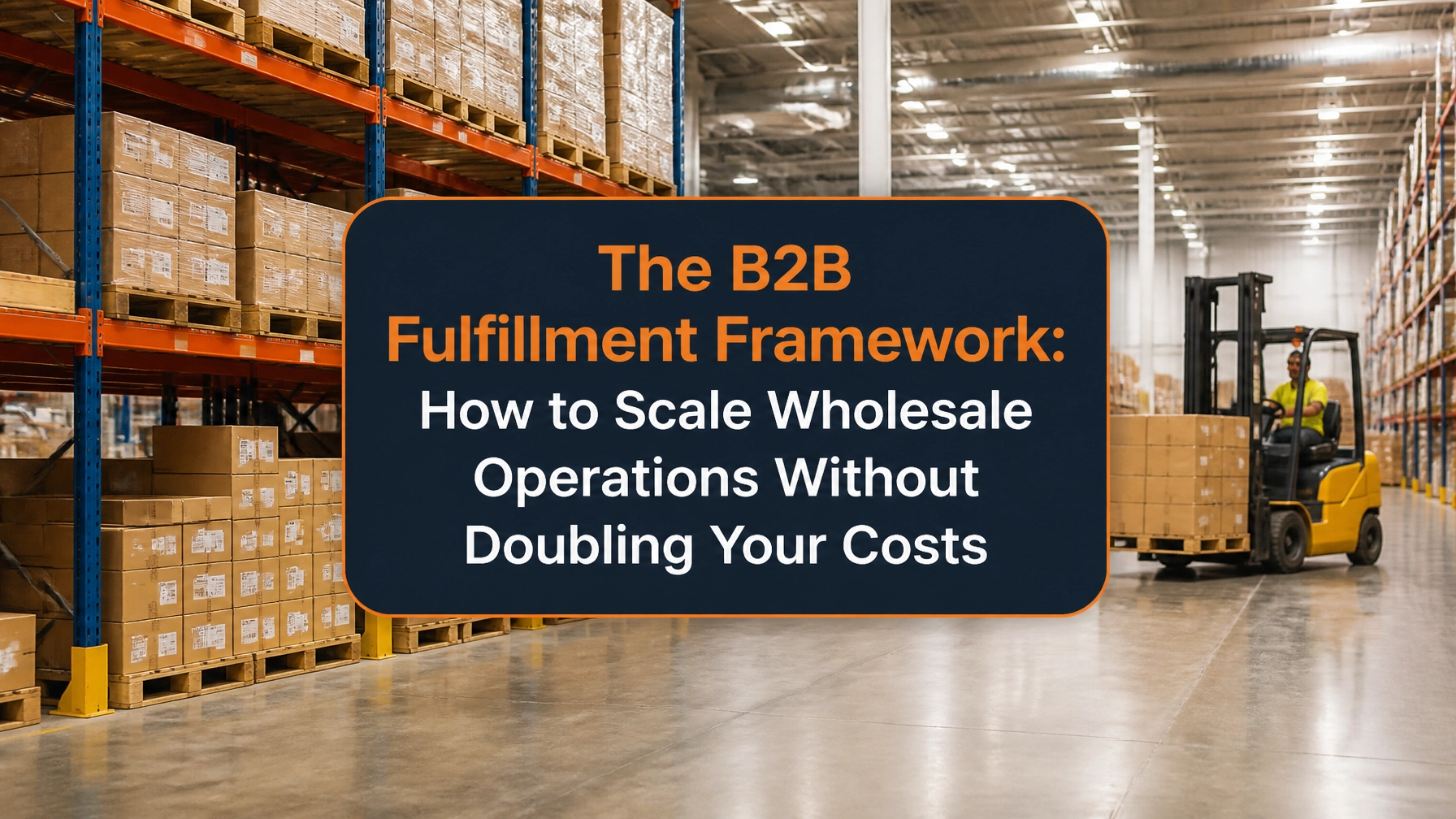
Wholesale doesn’t happen in small parcels. It happens in truckloads. If your current warehouse looks like a glorified garage, you’re going to hit a ceiling fast. True B2B scaling requires a facility designed for high-density pallet storage and rapid bulk receiving.

When evaluating a fulfillment center in florida, look at their racking height and floor-load capacity. Can they handle 40-foot containers arriving daily? Do they have the equipment to move heavy wholesale case quantities without slowing down the DTC line?
At FBMFulfillment, our infrastructure is built from a seller’s perspective. We know that wholesale orders often come in waves: massive spikes that can paralyze an inexperienced warehouse. Our facility is optimized for these heavy-duty cycles, ensuring that your bulk inventory is received, inspected, and racked within 24-48 hours, not weeks.
3. Integration: EDI and API for B2B Order Flow
If you are still manually entering wholesale orders into a spreadsheet, you are playing a dangerous game. Most major retailers (Walmart, Target, Best Buy) require Electronic Data Interchange (EDI). This is a standardized way for their computer systems to “talk” to your 3PL’s Warehouse Management System (WMS).
Why EDI is non-negotiable for b2b order fulfillment services:
- Automation: POs (Purchase Orders) flow directly from the retailer to the warehouse floor.
- ASNs (Advance Shipping Notices): Your system automatically tells the retailer exactly what is on the truck before it arrives.
- Accuracy: It eliminates manual entry errors that lead to rejected shipments and ruined relationships.
Your 3rd party fulfillment services provider must have the technical chops to handle these integrations. We focus on seamless API and EDI connectivity, so whether the order comes from your Shopify store or a wholesale buyer, the workflow remains automated and error-free.
4. Operational Excellence: Picking Cases vs. Picking Units
The labor cost of B2B is different from DTC. In DTC, you’re paying for “pick and pack” on every single item. In wholesale, you should be paying for “case picking” or “pallet picking.”
If your 3PL charges you a “per-item” fee for a wholesale order of 500 units, you are being robbed. A true B2B framework treats a master carton of 24 units as a single pick. This distinction is critical for maintaining your margins as you scale. Here are key steps to ensure your operations are optimized:
- Master Carton Labeling: Ensure every case is labeled with GS1-128 barcodes for retail scanning.
- Pallet Configuration: Follow the TI-HI (Tier x High) requirements of your retailer precisely.
- Compliance Checks: Every shipment must be verified against the retailer’s routing guide before the dock door closes.
5. Why Location Matters for B2B
While DTC shipping is all about reaching the end consumer’s doorstep, B2B shipping is about reaching distribution centers (DCs). Choosing a fulfillment center southeast hub, specifically a fulfillment center in florida like Jacksonville, offers a strategic advantage.
Jacksonville is a logistics powerhouse with deep-water ports and immediate access to major interstates (I-95 and I-10). This means shorter transit times for inbound containers and lower freight costs for outbound wholesale shipments to the entire East Coast. If you’re wondering is warehousing near me actually the best move, the answer usually depends on your freight costs. Moving bulk pallets across the country is expensive; moving them from a strategic Florida hub isn’t.
The FBMFulfillment Edge: Built by Sellers
Most 3PLs are run by “logistics guys” who have never actually sold a product on Amazon or Shopify. They don’t understand the pain of a chargeback or the stress of a looming retail deadline.
We built FBMFulfillment.com because we were tired of the “ghost taxes” and lack of control at other warehouses. (Check out why we hate the 3PL broker trap here).
We offer a unified solution for brands that need to dominate both DTC and wholesale. Our system allows you to:
- Keep all inventory in a single pool.
- Automate b2b order fulfillment services via EDI.
- Access actual 2-day delivery via FedEx for your DTC customers.
- Maintain total control over your inventory possession.
Scaling wholesale doesn’t have to be a nightmare of doubled costs and logistical chaos. By implementing a framework centered on inventory consolidation, technical integration, and a compliance-first warehouse, you can grow your footprint without losing your margins.
Ready to scale? Contact us and we will be glad to help you build a fulfillment strategy that actually works for your business.
The Multi-Unit Fulfillment Hack: The Secret Margin Math for 2+ Unit Orders
The Multi-Unit Fulfillment Hack: The Secret Margin Math for 2+ Unit Orders
Key Takeaways
- Brands must differentiate between B2B and DTC operations to avoid costly mistakes in order fulfillment.
- A single inventory pool helps optimize capital efficiency and decrease stockout risks.
- Effective infrastructure is essential for B2B; it should handle bulk receiving and pallet storage.
- Integration via EDI and API streamlines B2B order fulfillment services, ensuring accuracy and automation.
- Choosing the right location for fulfillment centers, like one in Florida, can significantly reduce shipping costs and improve logistics.