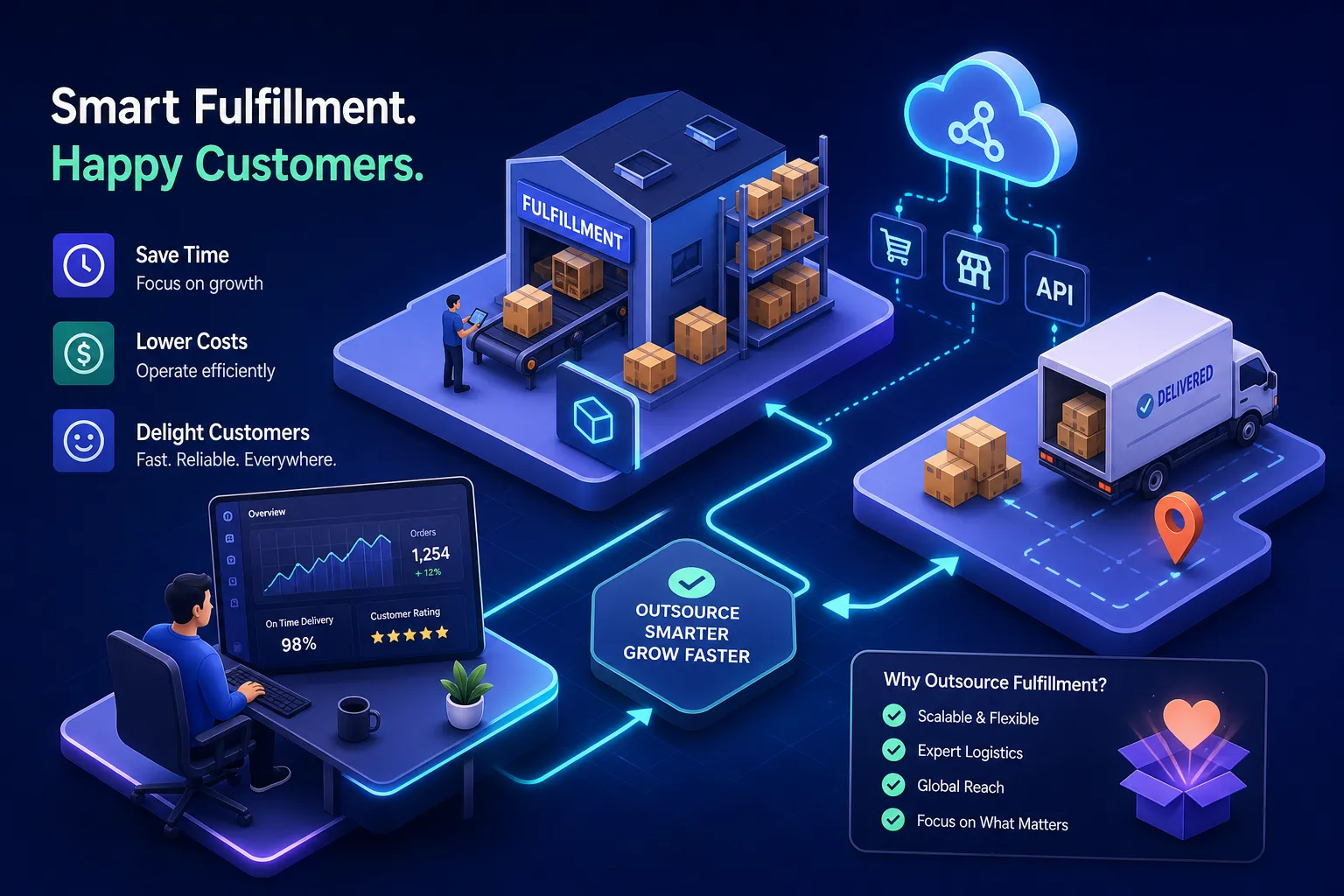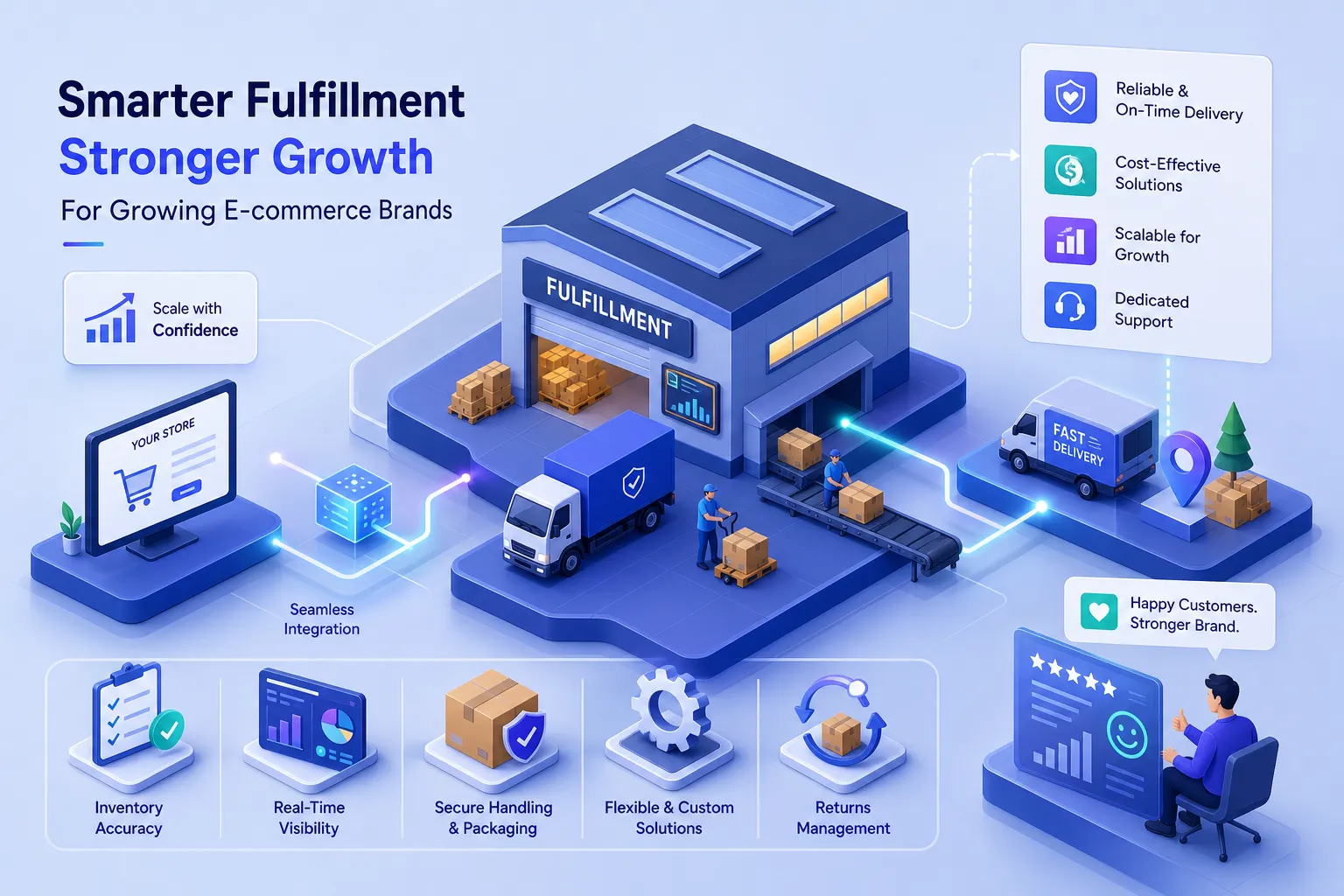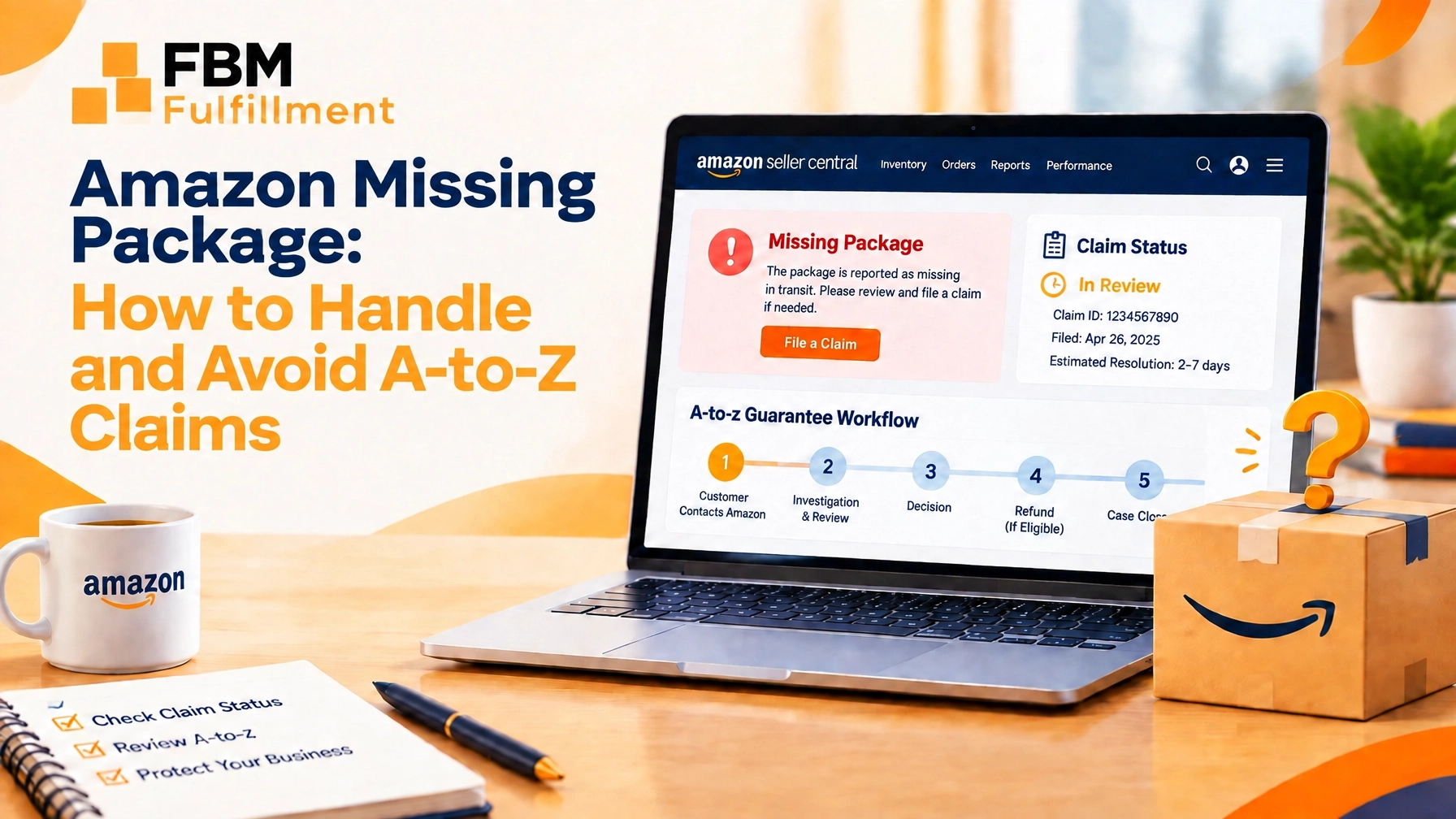

A late shipment is rarely just a late shipment. For an ecommerce seller, it can mean a disappointed customer, a negative review, rising support tickets, lower marketplace performance, and a rushed decision to move more inventory into Amazon at higher cost. That is why order fulfillment should be treated as a margin and risk decision, not a back-office task that only matters after the sale.
The right fulfillment setup protects the customer experience while giving your business room to react. It determines where inventory sits, how quickly orders move, how accurately stock is counted, and whether one channel’s rules can disrupt the rest of your operation. For brands selling on Amazon, Shopify, Walmart, eBay, TikTok Shop, and other channels, those decisions compound quickly.
What Order Fulfillment Actually Controls
Order fulfillment is the process of receiving inventory, storing it, picking and packing each order, shipping it, tracking delivery, and handling the return if one comes back. The definition is simple. The operational consequences are not.
Every handoff creates a point of risk. Inventory can be received under the wrong SKU. A product can be stored in the wrong location. An order can be sent with the wrong service level, miss its carrier cutoff, or leave without the packaging standards your customers expect. If the warehouse system does not keep inventory current across channels, you can also sell units you no longer have.
That is why fulfillment performance is not measured only by whether a package eventually arrives. Sellers need to watch order accuracy, same-day shipping performance, inventory accuracy, delivery speed, damage rates, return processing time, and the cost per order. A warehouse that looks inexpensive on a pick-and-pack quote can become expensive when errors, slow replenishment, and stockouts start affecting revenue.
The Real Cost Is Usually Outside the Shipping Label
Shipping cost gets attention because it is visible on every order. The less obvious costs are often more damaging.
Consider an Amazon seller who relies entirely on FBA. When inbound appointments slow down, receiving takes longer than expected, or inventory limits tighten, the seller may run low on sellable stock. The listing stays active, but the business loses sales momentum or has to pay for urgent replenishment. Keeping every unit inside Amazon’s network can also expose the brand to storage fees and less flexibility when demand shifts.
The opposite problem happens when a seller keeps inventory in a low-cost warehouse that cannot process orders quickly or accurately. A few dollars saved on storage can disappear through late shipment defects, refunds, customer service labor, and marketplace account pressure.
The practical question is not, “What is the cheapest fulfillment price?” It is, “What will this fulfillment model cost when sales double, a marketplace changes its rules, or one SKU suddenly takes off?”
Build Around Inventory Control, Not Just Storage
Inventory is the operating capital behind every online sale. It needs to be available, visible, and positioned where it can support demand without creating unnecessary fees.
For many growing brands, that means separating reserve inventory from channel inventory. Instead of sending all available units into FBA, a seller may hold reserve stock with a 3PL and replenish Amazon in planned quantities. That approach can reduce exposure to storage friction and inventory caps while keeping a backup supply ready for FBM orders, direct-to-consumer sales, or other marketplaces.
It is not a one-size-fits-all model. Fast-moving, predictable SKUs may justify deeper placement in FBA when Prime conversion is central to the sales strategy. Seasonal products, oversized goods, new launches, and slower-moving items often benefit from more controlled storage and replenishment. The right split depends on sales velocity, lead times, cash flow, storage costs, and how much disruption the business can absorb.
A good fulfillment partner should make those trade-offs easier to manage. That starts with reliable receiving, SKU-level inventory visibility, clear reporting, and processes that prevent commingling or miscounts. If you cannot trust the inventory number, you cannot confidently advertise, replenish, or forecast.
Multichannel Inventory Needs Rules
Selling the same SKU on multiple channels creates opportunity, but it also creates allocation risk. A promotion on Shopify can drain stock needed for Amazon. A Walmart order can arrive after the last unit was committed elsewhere. Manual updates may work when order volume is low, but they become dangerous as channels and SKUs increase.
The answer is not simply connecting more software. Your operation needs rules: which channel receives priority, what inventory buffer is held back, when replenishment is triggered, and what happens when actual counts differ from available-to-sell counts. Technology supports those rules, but it cannot replace them.
Speed Matters, but Accuracy Comes First
Customers expect fast delivery, especially when they are used to marketplace standards. Still, a warehouse that ships quickly and incorrectly is not performing well. Wrong items, incomplete kits, damaged products, and poor packaging create a cost that is much higher than an extra day in transit.
Order cutoff times, carrier pickups, warehouse location, and the shipping services offered all affect speed. A seller should know exactly what happens to an order placed at 1:00 p.m., 4:30 p.m., or late on a Friday. “Fast fulfillment” is too vague. Ask whether orders placed before cutoff ship the same day, how exceptions are handled, and how the operation manages peak volume.
Accuracy requires disciplined execution: barcode verification, clear bin locations, documented kitting instructions, and quality checks for high-risk products. If a brand sells bundles, fragile goods, products with expiration dates, or items with multiple variations, those details are not optional. They are the difference between a controlled operation and an expensive stream of preventable claims.
Returns Belong in the Fulfillment Plan
Returns are often treated as a customer service issue, then pushed to the warehouse after the fact. That creates slow refunds, unclear inventory status, and avoidable loss.
A defined return process determines whether an item is restocked, quarantined, repackaged, disposed of, or sent back to the brand. It also provides useful feedback. If one SKU has a high return rate because the item arrives damaged, the problem may be packaging. If customers repeatedly return the wrong size or variation, the issue may be listing content or pick accuracy. If returns pile up without inspection, the business loses both inventory visibility and the chance to identify the cause.
For Amazon and other marketplaces, return timing can also affect account health and customer satisfaction. A fulfillment operation should process returns with the same discipline it applies to outbound orders.
When to Move From In-House Fulfillment to a 3PL
Self-fulfillment gives a brand direct control at the beginning. It can be the right choice when volume is manageable, products are simple, and the team can reliably receive, pack, and ship without taking attention away from revenue-generating work.
The pressure point comes when order volume makes fulfillment a daily interruption rather than a controlled process. Founders start packing boxes late at night. Staff spend more time fixing inventory mistakes than improving the business. Storage spills into offices, garages, or expensive local space. Carrier pickups become inconsistent. One large promotion creates a backlog that takes days to clear.
At that stage, a 3PL is not just extra warehouse capacity. It should provide operating discipline that is difficult to build internally: defined receiving procedures, trained pick-and-pack staff, carrier relationships, reporting, returns processing, and the ability to serve multiple channels from one inventory pool.
But outsourcing does not remove accountability. Sellers should ask direct questions about receiving timelines, service-level commitments, order error handling, inventory reconciliation, communication during exceptions, and peak-season capacity. The wrong 3PL can create distance between you and your customers. The right one gives you more control because the process is visible and repeatable.
Treat Fulfillment as Part of the Growth Plan
The strongest fulfillment strategy is designed before the next sales spike, not after inventory is already delayed or customer complaints are rising. Map the flow of every major SKU from supplier to warehouse to customer. Identify where stock can get trapped, where information can lag, and which channel creates the greatest penalty when orders go wrong.
For hybrid Amazon sellers, that may mean using FBM capacity as protection against FBA receiving delays or inventory restrictions. For direct-to-consumer brands, it may mean improving packaging, shortening cutoff-to-ship time, and protecting stock allocated to high-margin channels. For omnichannel operators, it may mean setting hard allocation rules before a promotion drains shared inventory.
FBMFulfillment was built around this operator reality: fulfillment is where customer promises, marketplace requirements, and inventory investment meet. Choose a process that can hold up when demand is normal, but also when the next disruption tests every weak point in the business.
Key Takeaways
- Order fulfillment impacts customer experience and business operations, influencing inventory management and costs.
- Precision and accuracy in order fulfillment are critical; errors can lead to significant financial loss beyond shipping costs.
- Utilizing a 3PL can enhance fulfillment efficiency, but it requires careful selection to maintain accountability and control.
- Integrating returns into the fulfillment process is essential for visibility and improvement in service quality.
- Plan your fulfillment strategy with growth in mind, ensuring responsiveness to shifts in demand and operational challenges.
Related Links
- Returnly Just Collapsed : 400+ DTC Brands Lost Their Returns Platform Weeks Before Q4. Here’s What to Do
- How to Choose the Best 3PL for Amazon Sellers
- 3PL Services That Protect Ecommerce Margins
- Ecommerce Returns Processing Service That Protects Margin
- Ecommerce Fulfillment Cost Guide for Sellers