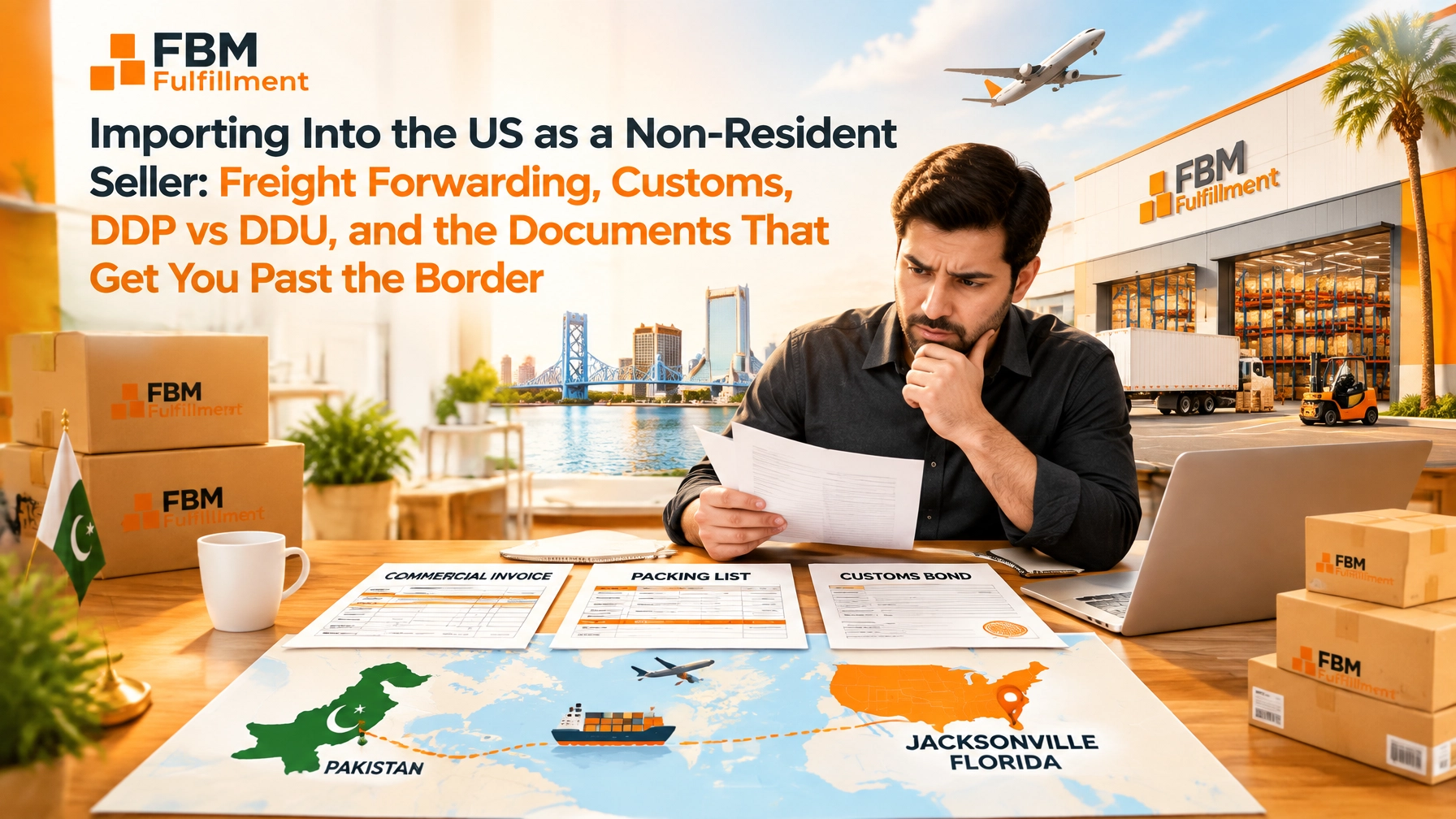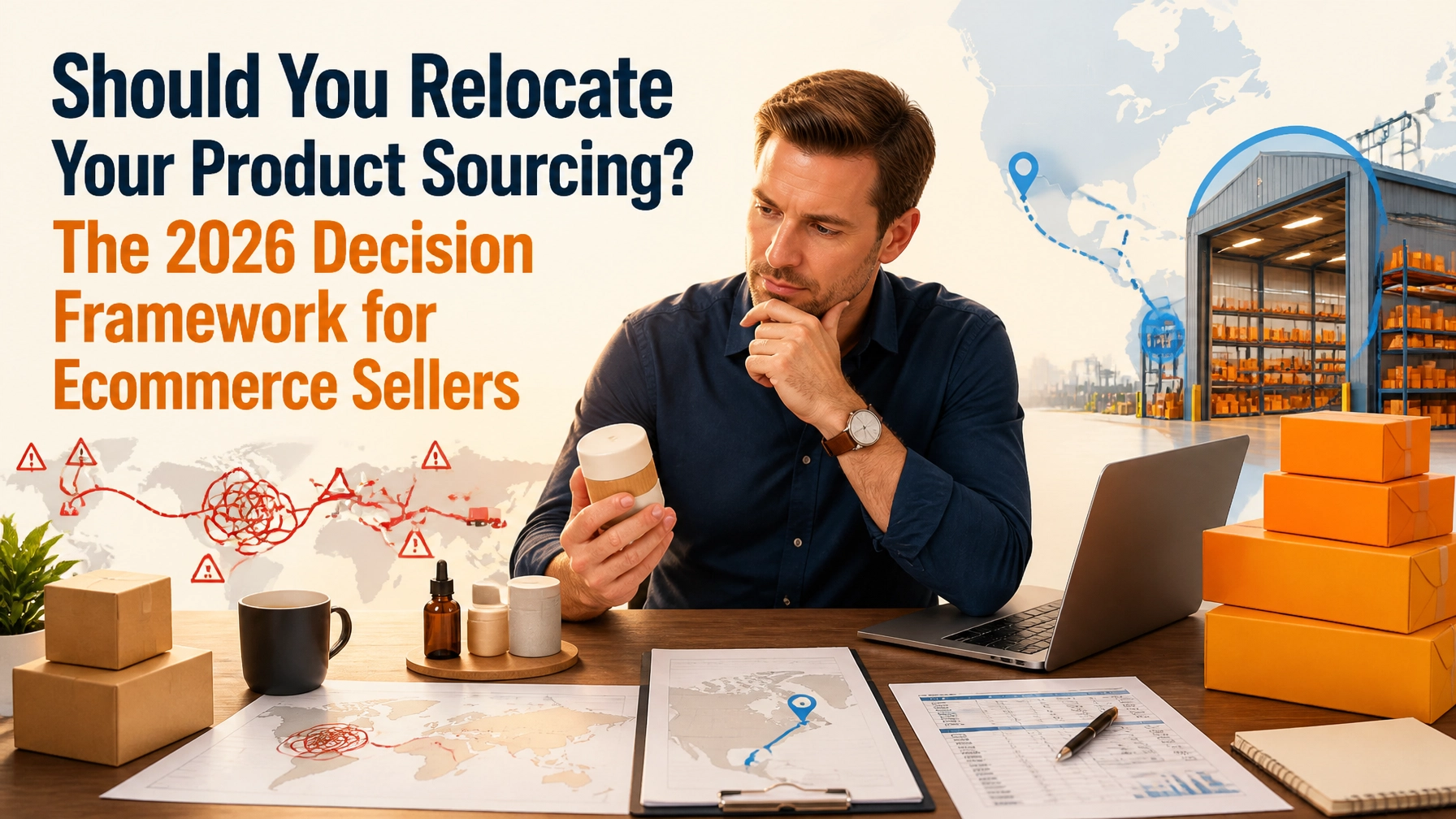

A container that reaches the port is not inventory you can sell. It is inventory waiting on release, documents, appointments, drayage, unloading, and receiving. Freight and customs coordination is what turns an overseas production order into usable stock for Amazon replenishment, FBM orders, wholesale accounts, and direct-to-consumer sales.
For ecommerce sellers, the cost of a missed handoff is rarely limited to a freight bill. A customs hold or an unbooked delivery appointment can push inventory past an Amazon receiving deadline, create an FBA stockout, force expensive air shipments, or leave fast-moving SKUs unavailable across every channel. The objective is not simply getting freight from Point A to Point B. It is protecting sellable inventory flow.
Why Freight and Customs Coordination Is a Margin Issue
Most sellers do not lose money on international freight because they selected the wrong mode once. They lose money because every part of the inbound process operates separately. The supplier finishes production without a confirmed pickup plan. The forwarder has shipment details that do not match the commercial invoice. A container clears customs but sits because the final delivery location cannot receive it. Meanwhile, inventory planning assumes the units are already on the way to Amazon.
Those small gaps compound fast. Demurrage and detention can add costs that were never in the original landed-cost model. Missed delivery appointments can delay receiving. Incorrect cartons or labels can create rework at the warehouse. If the product is seasonal, a two-week delay may reduce the value of the inventory itself.
This is why inbound logistics should sit beside purchasing, inventory planning, and fulfillment operations. A low ocean rate does not help if it creates uncertainty around when inventory becomes available to sell. The right decision depends on the SKU, sales velocity, destination, and risk tolerance. For a slow-moving oversized item, ocean freight with more buffer may be the sensible choice. For a proven bestseller nearing stockout, a partial air shipment may protect far more margin than it costs.
Freight and Customs Coordination Starts Before Pickup
The best time to solve an inbound problem is before cargo leaves the factory. Once a shipment is on the water, options become narrower and more expensive.
Confirm the commercial facts first
Before freight is booked, sellers need agreement on the basics: who is the importer of record, what Incoterms apply, where the goods will be delivered, and which party controls each handoff. These details affect responsibility for freight charges, customs entry, duty payment, cargo risk, and final delivery.
The Incoterm matters, but it does not replace operational clarity. A supplier may quote DDP, for example, while the seller still lacks visibility into the importer of record, entry documentation, or duty treatment. That can create serious problems if the shipment is selected for examination or if the customs paperwork is incomplete. Sellers should know who is responsible for the entry and be able to access shipment documentation when needed.
Product classification also deserves attention before goods move. Harmonized tariff schedule codes, country of origin, product descriptions, valuation, and applicable duties must be accurate. A vague description such as accessories or household goods may feel convenient, but it can invite questions, delays, or corrections. The same applies to products subject to special requirements, including certain food-contact goods, electronics, cosmetics, children’s products, or regulated materials.
Match shipment data to warehouse reality
A warehouse cannot receive what it cannot identify. Carton counts, pallet counts, dimensions, weights, SKU quantities, labels, and purchase order references should agree across the packing list, bill of lading, commercial invoice, and advance shipping notice.
This matters even more for sellers splitting inventory between FBA, FBM, and DTC stock. If 3,000 units are intended for Amazon replenishment and 1,000 units need to remain available for direct orders, that allocation must be visible before the freight arrives. Otherwise, the warehouse is forced to sort out inventory decisions under time pressure, often after the seller has already committed stock to multiple channels.
The Critical Handoffs After Customs Clearance
Customs clearance is a milestone, not the finish line. Cargo still needs to move from the port, airport, or rail ramp to the receiving warehouse. That final stage is where many otherwise well-managed shipments lose time and money.
For containerized freight, sellers need a plan for release status, drayage, chassis availability, terminal free time, delivery appointment requirements, and whether the receiving facility can handle live unloads, drop trailers, floor-loaded containers, or palletized freight. A warehouse that receives parcel deliveries efficiently may not be set up for a floor-loaded 40-foot container without advance notice.
For less-than-container-load shipments, consolidation and deconsolidation schedules can affect delivery timing just as much as the ocean transit. For air freight, the faster flight does not eliminate the need for release, pickup, delivery scheduling, and receiving capacity. Each mode changes the timeline and cost structure, but every mode still requires coordination at the destination.
A reliable inbound plan answers practical questions before the shipment lands: Who monitors the customs release? Who books the delivery? What happens if the terminal changes availability? Who receives the freight? How are shortages, damages, or carton discrepancies documented? When can inventory be counted, inspected, and made available for fulfillment or FBA prep?
Use Inventory Planning to Choose the Right Freight Strategy
Freight decisions should be based on inventory risk, not just the quote. Start with expected daily sales, available stock, inbound quantities, and the date inventory must be physically available for sale. Then work backward through warehouse processing time, final delivery time, customs clearance, port handling, and transit time.
This is especially important for Amazon sellers operating a hybrid FBA and FBM model. Sending every available unit into FBA can expose the brand to storage fees, inventory limits, and receiving delays. Holding all inventory outside Amazon without a replenishment plan can hurt Prime eligibility or delivery speed. The better approach is often to keep reserve inventory at a third-party warehouse, replenish FBA in controlled batches, and maintain enough FBM inventory to keep selling when Amazon receiving slows down.
That strategy only works if inbound freight is visible. A replenishment forecast based on an estimated arrival date is not enough. Sellers need to know whether cargo has departed, whether documents are complete, whether customs has released the shipment, and when the warehouse can receive and process it.
Build buffer into the plan, but make it SKU-specific. A broad buffer applied to every product ties up cash and warehouse space. A tighter buffer may work for predictable, high-frequency replenishment lanes. Longer or less consistent lanes, seasonal products, and items with complex compliance requirements need more protection.
What a Freight and Customs Coordination Partner Should Own
A 3PL does not need to act as the customs broker or ocean carrier to improve inbound execution. Its value is often in connecting the freight process to the warehouse and sales plan. That means providing clear receiving requirements, reviewing inbound data before delivery, coordinating appointments, preparing for container or pallet receipts, and communicating when inventory is actually available.
For ecommerce operators, the most useful partner asks operational questions early. Is this inventory allocated to FBA, FBM, wholesale, or DTC? Are there Amazon labels or prep requirements? Does the shipment include mixed SKUs? Is the container floor-loaded? Are any SKUs already approaching stockout? Those questions prevent the warehouse from becoming the next bottleneck after customs clearance.
At FBMFulfillment, inbound support is built around what happens after freight moves: receiving inventory accurately, preparing it for the right channel, holding reserve stock, and supporting replenishment without forcing sellers to send everything into Amazon at once. The point is not to add another party to the process. It is to give sellers better control over the inventory they have already paid to produce and ship.
Treat Exceptions as Part of the Plan
No inbound process eliminates exceptions. Port congestion, inspections, weather events, production delays, damaged cartons, and inaccurate documents still happen. The difference is whether your operation notices the problem early enough to respond.
A workable exception process assigns ownership and sets communication triggers. If customs requests more information, the responsible party should know who provides it and how quickly. If delivery moves past free time, someone needs authority to make a decision before avoidable charges grow. If the shipment arrives short or damaged, the warehouse should document the issue immediately so inventory records, supplier claims, and channel allocations can be corrected.
Ecommerce brands scale when inventory decisions are made before the emergency, not during it. Treat every inbound shipment as a controlled transfer into revenue-producing stock, and freight will stop being a black box between your factory and your customers.
Key Takeaways
- Freight and customs coordination is essential for protecting sellable inventory flow after production.
- Missed handoffs can lead to costly delays and stockouts, affecting overall margins.
- Sellers must confirm crucial shipping details before freight booking to avoid complications during customs clearance.
- Effective inventory planning aligns freight strategy with sales forecasts, ensuring timely product availability.
- A reliable partnership with a 3PL improves coordination and streamlines inventory processes for e-commerce sellers.
Related Links
- Choosing a Wholesale Order Fulfillment Company
- Customs & Freight
- What Causes Amazon Receiving Delays at FBA?
- Etsy Now Requires Non-US Sellers to Prepay US Duties (DDP) : What Changes and How to Stay Compliant
- Warehouse Receiving Inspection Guide for Sellers