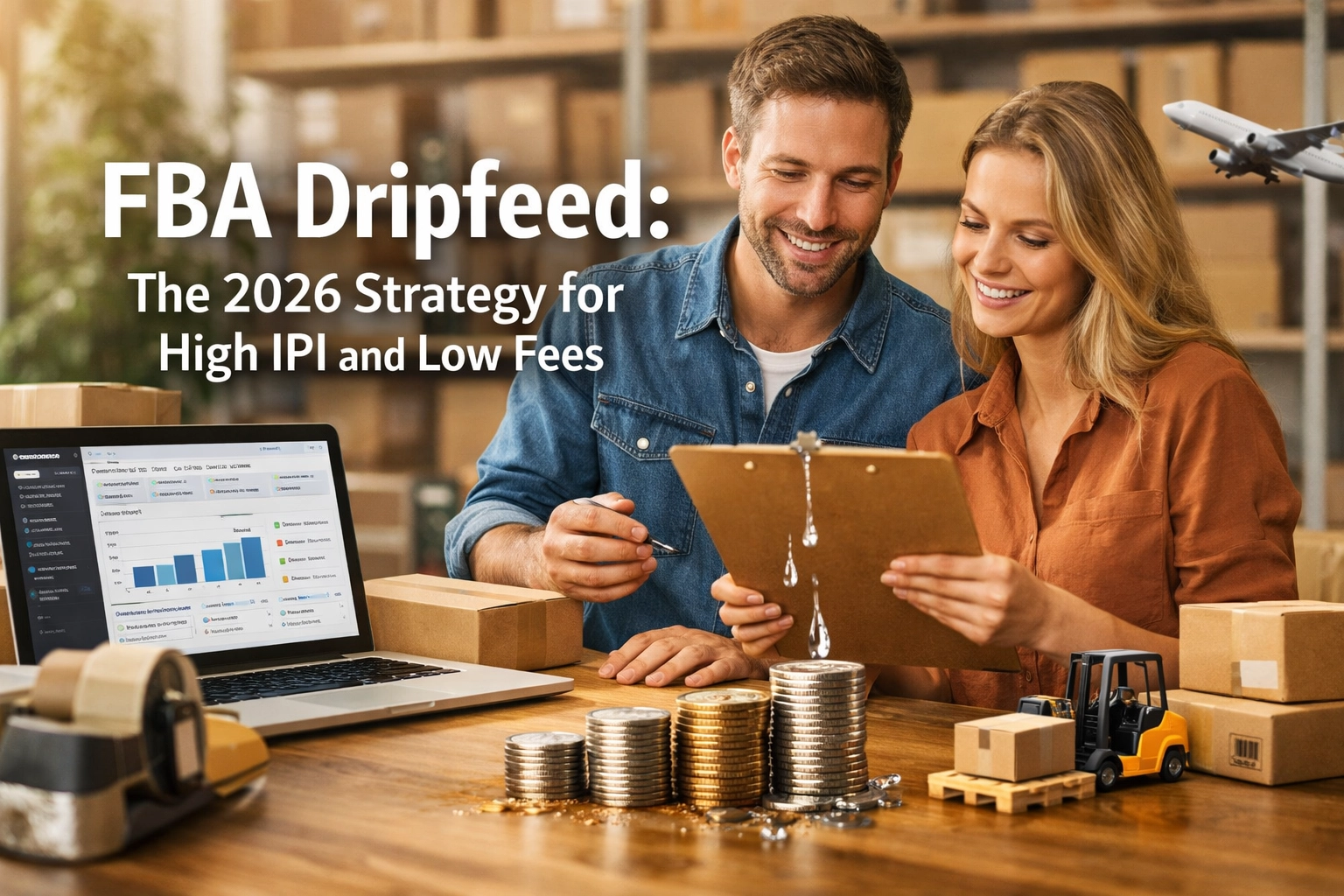
FBA Dripfeed Secret: High IPI Scores and Low Storage Fees
Let’s be real for a second: Amazon is a beast that keeps changing the rules. If you’re an e-commerce seller in 2026, you already know that the days of “set it and forget it” with your FBA inventory are long gone. Between skyrocketing monthly storage fees, the dreaded Inventory Performance Index (IPI) floor, and those pesky low-inventory-level fees, Amazon has made one thing very clear: they want to be a fulfillment center, not a long-term warehouse.
If you’re still sending bulk shipments of 5,000 units directly from your factory to an Amazon Fulfillment Center (FC), you’re likely flushing money down the drain. You’re paying for the “privilege” of letting your stock sit, while simultaneously tanking your IPI score because your sell-through rate looks abysmal.
There is a better way. At FBMFulfillment.com, we call it the FBA Dripfeed. It’s the secret sauce that the top 1% of sellers are using to keep their margins fat and their IPI scores in the green.
THE PROBLEM: THE BULK SHIPMENT TRAP
In the old days, sending a container straight to Amazon was the standard move. It was easy. One shipment, one check, and you were done for the quarter. But Amazon caught on. They realized that sellers were using their premium FC space as a cheap storage locker.
Fast forward to 2026, and Amazon has fought back with a vengeance. They’ve introduced a complex web of fees designed to punish “slow” inventory. If your stock isn’t moving within 30 to 60 days, you’re getting hit with aged inventory surcharges. If you send too much at once, you’re hit with placement fees. It’s a minefield.
Worst of all is the impact on your IPI. Your Inventory Performance Index is basically your “credit score” with Amazon. If it drops too low, Amazon caps your storage volume. Now you’re stuck in a death spiral: you can’t send in new, fast-moving products because your slow-moving junk is taking up all your allocated space.
THE SOLUTION: WHAT IS FBA DRIPFEEDING?
Think of a medical IV drip. It doesn’t dump a gallon of fluid into a patient all at once; it delivers exactly what the body needs, exactly when it needs it, in small, consistent doses.
FBA Dripfeeding works the same way. Instead of sending 2,000 units to Amazon and letting them sit for twelve months, you store your bulk inventory at a high-efficiency 3PL (like us) and “drip” smaller batches: say, 100 to 500 units: into the FBA system as required to replenish to your target inventory.
This creates a continuous replenishment cycle. You are keeping just enough stock at Amazon to cover your immediate sales velocity (plus a small safety buffer), while the rest of your inventory sits in a much more affordable 3PL environment. They key is replenishment time and the amount of inventory required at FBA is determined by sales velocity and replenishment time.
WHY THE DRIPFEED WINS IN 2026
The math behind this strategy is undeniable. Here is why the dripfeed is the dominant strategy for 2026:
1. MIGHTY IPI SCORES
Your IPI score is heavily weighted on sell-through rate. Amazon calculates this by looking at how much inventory you have on hand versus how much you’re actually selling. When you dripfeed, your “on-hand” inventory at Amazon is always low, but your sales stay high. This makes your sell-through rate look phenomenal.
A high IPI score doesn’t just feel good; it unlocks unlimited storage and lower overall fulfillment costs. By keeping your Amazon footprint small and fast, you’re playing exactly the game Amazon wants you to play.
2. DRASTICALLY LOWER STORAGE FEES
Let’s talk numbers. Amazon’s storage fees: especially during Q4: are astronomical compared to a dedicated 3PL. By keeping 80% of your stock at FBMFulfillment.com and only 20% at Amazon, you are effectively cutting your storage bill by 40-60%.
You also completely bypass the “Aged Inventory Surcharge.” Since your stock at Amazon is constantly being refreshed with “fresh” units from your 3PL, nothing ever sits long enough to trigger those heavy penalties.
3. BYPASSING PLACEMENT FEES
Amazon’s newer “Inbound Placement Fees” can be a nightmare for bulk shippers. When you send a massive shipment, Amazon often forces you to split it across 4 or 5 different warehouses across the country: or they charge you a massive fee to do it for you.
When you dripfeed in smaller, optimized batches, you can often utilize shipping plans that are more cost-effective. At FBMFulfillment.com, we specialize in FBA inventory right-sizing, ensuring that every box we send out is optimized to minimize Amazon’s inbound “tax.”
THE 2026 HYBRID MODEL: FBA + FBM
The most successful brands aren’t just using FBA. They are using a Hybrid Model. This is where the magic really happens.
While you are dripfeeding your FBA listings, you also keep an active FBM (Fulfilled by Merchant) backup on the same listing. If Amazon has a delay in receiving your “drip” shipment, or if a sudden spike in sales wipes out your FBA stock, your FBM offer automatically kicks in.
This ensures you never lose the “Buy Box” and your ranking doesn’t tank due to a stockout. We help our clients set this up daily. If you want to see the technical side, check out our guide on how to create Amazon FBM-FBA hybrid listings.
IMPLEMENTATION: HOW TO DO IT RIGHT
You can’t do this with a spreadsheet and a prayer. FBA Dripfeeding requires precision. Here is the blueprint:
- Analyze Your Velocity: Look at your average daily sales over the last 30 days.
- Determine Your Buffer: We usually recommend keeping 14 to 21 days of stock at Amazon.
- Set Your Drip Schedule: If you sell 10 units a day, you want to be sending about 70-100 units every week.
- Use a Reliable 3PL Partner: This is the most critical step. Your 3PL needs to be fast. If they take two weeks to label and ship your “drip,” the whole system breaks down.
Be cautious, though. The 3PL industry has seen a massive influx of “fly-by-night” startups that are under-capitalized and inexperienced. These shops often lose inventory or fail to meet the strict shipping windows required for a successful dripfeed strategy. Always do your due diligence and know what to look for in a 3PL. Given the significant risks, we always recommend working with an established partner.
WHY FBMFULFILLMENT.COM?
We didn’t just jump on the 3PL bandwagon. We’ve been in the trenches with Amazon sellers for years. We understand the nuances of the FBA Dripfeed strategy because we helped pioneer it.
Our warehouse management system (WMS) is designed for speed and accuracy. When you need a drip shipment sent out, we don’t sit on it. We get it labeled, prepped, and out the door so your Amazon stock levels stay consistent.
We also offer specialized programs like our Inbound Freight Program to help you get your goods from the port to our warehouse without the usual headaches.
THE BOTTOM LINE
Amazon in 2026 is a game of efficiency. The sellers who are winning are the ones who treat their inventory like a high-flow asset, not a stationary pile of cash.
By adopting the FBA Dripfeed strategy, you’re not just saving on fees: you’re building a more resilient, scalable business. You’re protecting your IPI, ensuring you always have a “back door” via FBM, and keeping more of your hard-earned profit in your own pocket instead of Amazon’s.
Ready to stop overpaying for storage and start optimizing your fulfillment? We’re here to help. Whether you have questions about SKU naming conventions or need a full audit of your current shipping strategy, our team at FBMFulfillment.com is ready to jump in.
Contact us today at FBMFulfillment.com/contact-us and let’s get your dripfeed started.
Don’t let Amazon’s fees eat your lunch. Start dripping, start saving, and start winning.
Want more tips on mastering the Amazon game? Check out our Tips and Tricks Blog for the latest updates on e-commerce logistics.
FBA-FBM Hybrid Listing Secret to Maximize Amazon Profits
Hostage Inventory: Why Amazon Makes it Hard to Leave (and How to Take Control)
Amazon FBA Inventory Math: How to Calculate Your Target Stock Levels (and Save Your Sanity)
Key Takeaways
- Amazon enforces strict rules that affect e-commerce sellers, especially regarding storage fees and IPI scores.
- The FBA Dripfeed Secret involves sending smaller inventory batches to Amazon, improving sell-through rates.
- This strategy reduces storage costs by keeping most stock at a third-party logistics provider (3PL) rather than Amazon.
- Dripfeeding also avoids penalties like aged inventory surcharges and placement fees, maximizing profitability.
- Using a hybrid model with both FBA and FBM listings can further safeguard sales and inventory management.
Related Links
Frequently Asked Questions
Bulk shipments tend to sit and sell slowly relative to their size, which triggers aged inventory surcharges after 30-60 days, draws higher inbound placement fees for large single shipments, and drags down your sell-through rate — which in turn hurts your Inventory Performance Index (IPI) score. A weak IPI score caps how much storage volume you’re allowed, which can spiral into further restrictions.
It’s the practice of holding the bulk of your inventory at a 3PL and releasing it into FBA in smaller batches — commonly cited in the 100-500 unit range — timed to actual sales velocity, rather than sending one large shipment and hoping it lasts months. The article compares it to an IV drip: small, consistent doses instead of one large dose.
IPI weights sell-through rate heavily. Keeping less inventory on hand at Amazon relative to your sales volume produces a stronger sell-through appearance, which lifts your IPI score — and a higher IPI score unlocks more storage capacity and lower fulfillment costs.
The article cites an example of keeping about 80% of stock at a 3PL and only 20% at Amazon, which it says can cut storage bills by roughly 40-60%, largely by eliminating the aged inventory surcharges that come from letting large batches sit. You can also save on seasonal surcharges.
It means keeping an active Fulfilled-by-Merchant listing as a backup alongside your FBA inventory. If FBA stock runs low or a shipment is delayed, the FBM listing can protect your Buy Box and prevent a ranking drop, acting as an automatic failover rather than losing sales during a gap.
DON’T OVER COMPLICATE IT!
Set up FBA inventory alerts and Amazon will send you an email to initiate a replenishment.
The article specifically warns against ‘fly-by-night’ 3PL startups that are under-capitalized and inexperienced, since a dripfeed strategy depends on consistent, accurate, on-time shipments — a partner that can’t execute reliably risks stockouts and inventory loss instead of the fee and IPI benefits dripfeeding is meant to deliver. Also small players will not have the appropriate technology that will make it much more time consuming to the seller.