“We’ll find you the perfect 3PL for free!”
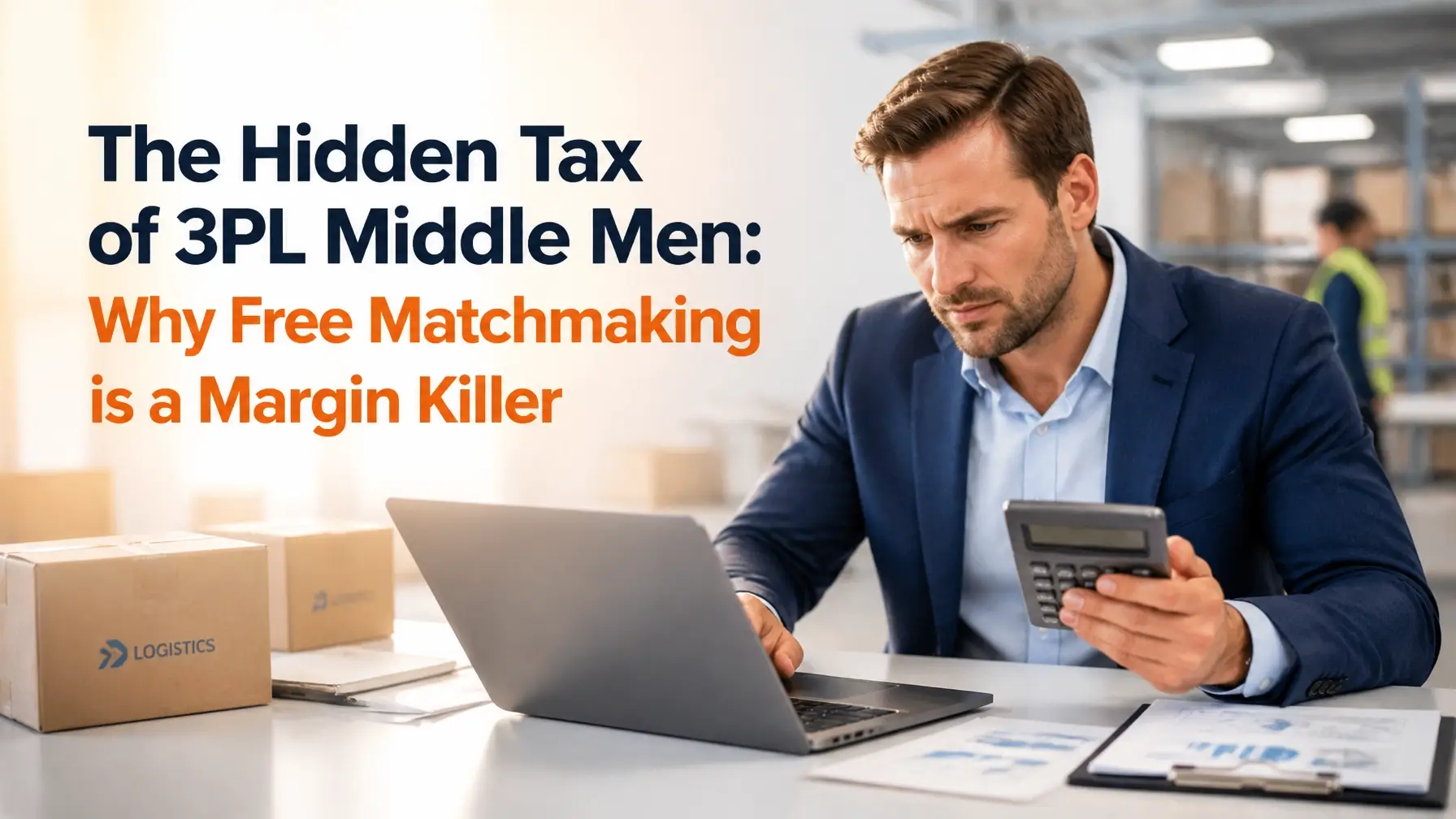
Run a 3PL invoice audit before you renew: if you found your 3PL through a “free matching” service, there’s a real chance your rate card includes a commission you’ve never seen itemized. Here’s how to check, using your own last three invoices.
Step 1: Pull your carrier’s published rate card. FedEx and UPS publish standard zone-based rates. Take one representative SKU — weight, dimensions, and destination zone — and look up what that shipment should cost at the carrier’s list rate (before any volume discount your 3PL may be passing through).

Step 2: Compare it to your invoice’s shipping line item. If your 3PL is charging you within 5-10% of list rate, that’s normal — carriers rarely discount much below list for smaller shippers. If you’re being charged at or above full list rate despite your 3PL presumably getting a volume discount as a high-shipping-volume operation, the gap is worth asking about.
Step 3: Calculate your effective per-pallet storage rate. Take your total monthly storage charge and divide it by your average daily pallet count (not your peak count — check your inventory reports for a daily average, not a single snapshot). If your quoted rate was $15/pallet but your effective rate comes out to $25-30/pallet, you’re either paying for empty “ghost space” or a markup is baked into the number — sometimes both.
Step 4: Look for a recurring “account management,” “platform,” or “network” fee. This is the easiest one to spot and the most direct signal. A flat monthly fee that isn’t tied to a specific, describable service (not pick-and-pack, not storage, not a named software subscription) is the most common place a broker commission gets parked.

Step 5: Ask your 3PL directly: “Am I currently paying a referral or placement fee to a third party as part of my rate?” This is a yes-or-no question. If you were matched through a “free” service, the warehouse is contractually obligated to that platform in some way — a straightforward operator will tell you what that arrangement is and how it affects your pricing.
Step 6: Run the same audit again in 90 days. If your rates were negotiated through a broker, you likely have less leverage to push back than you would negotiating directly — brokers are typically paid on your total spend, so they have no incentive to help you reduce it. A direct relationship with the warehouse gives you a real negotiating conversation instead of a routed one.

What “normal” actually looks like: pick-and-pack in the $2.00-$3.00 range depending on complexity, storage billed daily against actual cubic footage rather than a monthly snapshot, and a rate card with no unexplained flat fees. If your numbers are meaningfully outside that and you can’t get a straight answer about why, that’s your answer.
Want a second set of eyes on your actual invoice? Send it to FBMFulfillment.com and we’ll walk through it with you — no obligation, no referral fee changing hands on either end.

Why a 3PL Invoice Audit Protects Your Margins
The ecommerce fulfillment industry is full of smoke and mirrors, but your business deserves transparency. Don’t let 3PL middle men steer your ship into a high-cost harbor just so they can collect a check.
Do your own research. Talk to the owners of the warehouses. Ask the hard questions about where your money is actually going. If you’re tired of the games and want a direct, performance-driven partnership, contact us at FBMFulfillment.com. We’ll give you a straight quote with zero hidden kickbacks. Your margins will thank you.
Key Takeaways
- A 3PL invoice audit helps you identify hidden fees and commissions in your shipping costs.
- Start by comparing your invoices to the carrier’s published rate card to check for discrepancies.
- Calculate your effective per-pallet storage rate to avoid paying for unnecessary space.
- Look for unexplained fees and ask your 3PL directly about potential third-party commissions.
- Regular audits protect your margins and ensure you’re not overpaying due to hidden broker fees.