The United States represents the largest e-commerce opportunity in the world, but for international entrepreneurs, the barrier to entry often feels like a brick wall. Between entity formation, complex tax nexus rules, understanding importer of record obligations, and the logistical nightmare of transoceanic shipping, many brilliant sellers quit before they even start. If you are looking to scale your brand in the US, finding a reliable ecommerce fulfillment center florida is just the beginning of your journey.
Expanding into the US market in 2026 is no longer just about “listing a product” and hoping for the best. It requires a strategic foundation built on proper legal structures, localized banking, and a high-performance logistics partner. This guide will walk you through the exact steps needed to go from an international spectator to a US market leader.
1. Entity Formation and the Tax “Labyrinth”
Do you actually need a US LLC to start selling? No. That assumption trips up many international sellers. Amazon and eBay permit registration using foreign individual or foreign company details, and non-residents can complete the required platform tax interview with Form W-8BEN using a home-country tax ID instead of an EIN. The real question is not “Do I need an LLC?” The real question is which structure best matches your channels, banking needs, customs plan, and compliance tolerance.
Two Valid Paths for Non Residents
You have two practical options. Both can work. Both carry tradeoffs.
| Option | Pros | Cons |
|---|---|---|
| Option A: Sell as a Foreign Individual (No US Entity) | Simpler setup; no US filing obligations beyond W-8BEN; no registered agent costs; no annual state fees | Cannot use Shopify Payments; harder to open a US bank account; customs clearance is more complex as a foreign IOR; less credibility with platforms; no liability protection |
| Option B: Form a US LLC | Easier US bank account setup through Mercury, Wise, and Payoneer; unlocks Shopify Payments; EIN doubles as your CBP importer number; liability protection; stronger perceived credibility | Must file Form 5472 and Form 1120 annually or face $25,000+ penalties; registered agent fees; state annual report fees; additional compliance burden |
Option A: Sell as a Foreign Individual
This is the leanest route. You can register on Amazon and eBay with your foreign personal or business details, then complete the tax interview with Form W-8BEN using your home-country tax ID. No LLC. No registered agent. No annual US state filings.
That simplicity matters.
But the tradeoff is real. You will face more friction with banking, more friction with customs, and more friction when you try to localize your operation. Perhaps the biggest limitation is Shopify. Shopify itself does not require an LLC, but Shopify Payments specifically requires a US entity and EIN if you want that US based payment setup. Without that, you usually need to use a payment gateway tied to your home country.
Option B: Form a US LLC
A US LLC is not mandatory. It is a strategic upgrade.
Many sellers specifically look for a non resident llc in usa because it makes the operation cleaner once volume increases. It is usually easier to open a US business banking relationship with providers like Mercury, Wise, or Payoneer. It also helps with importer setup because the EIN can function as your CBP importer number. Then there is the platform angle. If Shopify Payments is part of your plan, the LLC plus EIN route becomes far more attractive.
Unfortunately, the compliance burden is where many sellers get blindsided. Forming an LLC triggers IRS filing requirements even if you owe no US income tax. A foreign owned single member LLC generally must file Form 5472 and Form 1120 every year. Review the official form 5472 instructions carefully before year end. Ignore that, and the penalties are brutal. $25,000 or more. That is not a paperwork detail. That is a catastrophic compliance risk.
When Does a Registered Agent Matter?
Only if you form a US entity.
If you sell as a foreign individual with no US entity, you do not need a registered agent. If you form an LLC, every state requires one. A registered agent service for llc receives legal correspondence and state notices on your behalf, helping keep your entity active and compliant.
Best Solution: Choose Based on Your Sales Model
Here is the practical breakdown:
- Choose Option A if you want the fastest and simplest launch, you are starting with Amazon or eBay, and you do not need Shopify Payments yet.
- Choose Option B if you want cleaner US banking, stronger platform credibility, easier importer setup, liability protection, and full access to Shopify Payments.
- Do not form an LLC casually. The banking and platform upside is real. So is the annual filing burden.
Navigating Sales Tax Nexus
Perhaps the most “precarious” part of US selling is Sales Tax.
- Physical Nexus: Storing inventory in a warehouse (like a fulfillment center in florida) creates physical nexus, meaning you may need to register for sales tax in that state.
- Economic Nexus: Even if you have no inventory in a state, if you hit a certain revenue or transaction threshold (e.g., $100,000 in sales), you are legally required to collect and remit sales tax.
Unfortunately, ignoring these rules can lead to devastating consequences, including retroactive tax bills that can bankrupt a growing brand.
2. Banking and Getting Paid in USD
You cannot run a US business effectively with only a home-country bank account. Currency conversion fees alone will eat 3-5% of your margins. More importantly, platforms like Shopify and Amazon often require a US-based bank account for their primary payment gateways. For many founders, the search starts with a US bank account for non residents that can accept marketplace payouts and support day to day operations.
Digital Banking Solutions
Fortunately, you no longer need to fly to New York to open an account. Services like Mercury, Wise, and Payoneer specialize in non-resident business banking. These platforms provide you with a US routing and account number, allowing you to:
- Receive payouts from Amazon, Etsy, and eBay.
- Pay your US-based vendors via ACH or wire.
- Connect to Shopify Payments (which usually requires a US entity and bank account).
Pro-tip: If you formed a US LLC, use your LLC’s EIN when setting up these accounts to keep your bookkeeping clean for annual US informational filings like Form 5472.
3. The Logistics Bridge: Shipping and Fulfillment
For a non-resident, your fulfillment strategy is the difference between five-star reviews and account suspension. Shipping from overseas directly to US customers is slow, expensive, and a customer service nightmare. This is where third party logistics 3pl services become essential, not optional.
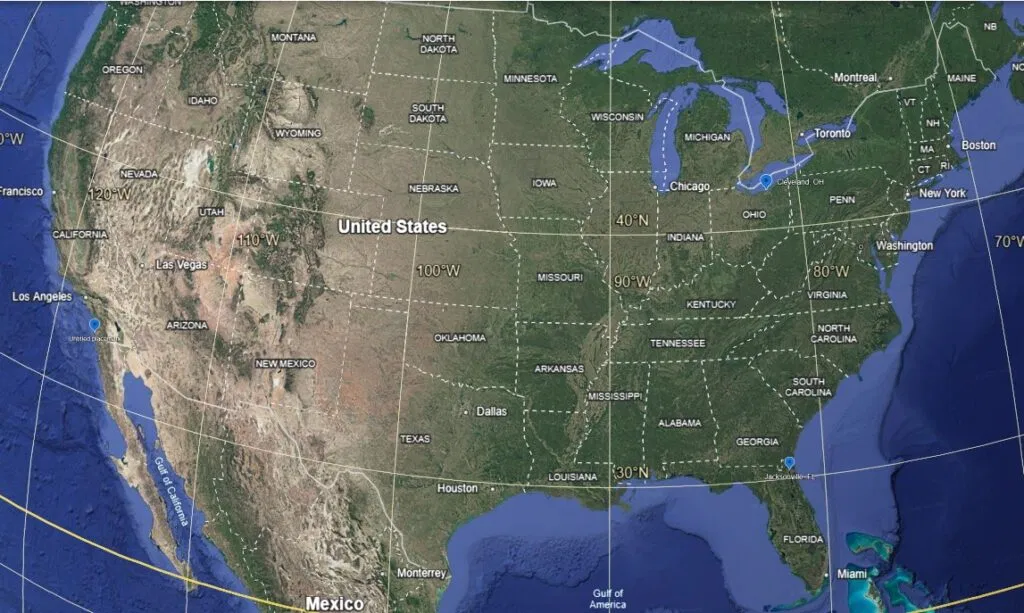
The best solution? Leverage 3rd party fulfillment services and broader third party logistics 3pl services based in the US. By shipping your inventory in bulk to a 3pl jacksonville location, you bypass the complexity of individual international shipments.
Customs and Inbound Freight
To get your goods into the US, you’ll work with a freight forwarder and a customs broker. First, understand the importer of record meaning. The importer of record is the party legally responsible for customs entry accuracy, duties, fees, and product compliance at the border. For non-US sellers, this matters immediately.
In many cases, non-US sellers must act as the importer of record when bringing their own inventory into the country. In other words, the foreign seller, not the warehouse, carries the customs responsibility. Some brokers will also refer to this as the importer of the record. If you are shipping under your own name or entity, you may also be treated as the foreign importer of record depending on the shipment structure and broker setup.
You must also understand Incoterms (International Commercial Terms). Most sellers use DDP (Delivered Duty Paid), where the seller handles all costs and risks until the goods arrive at the warehouse. This ensures your ecommerce fulfillment center florida doesn’t receive a surprise bill for duties when your pallet arrives.
Why a US Buffer is Critical
Platforms like Amazon and TikTok Shop have strict “time-to-scan” requirements. If your product is stuck in a container at the port, your listings will go “Out of Stock,” killing your rankings. Having a US-based inventory buffer at a fulfillment center southeast allows for rapid replenishment of Amazon FBA or direct-to-consumer shipping for Shopify and Etsy orders.
4. Platform-Specific Verification Secrets
Each platform has its own “hoops” for non-residents to jump through.
- Amazon: They will conduct a video verification call. Have your passport and supporting business or identity documents ready. If you formed a US LLC, that may include your LLC paperwork plus a utility bill or lease style proof tied to your Registered Agent or 3PL. If you are selling as a foreign individual, Amazon can still register you using your foreign details and W-8BEN tax interview.
- Shopify: To use Shopify Payments, you need a US entity and EIN. Shopify itself does not make an LLC mandatory, but Shopify Payments effectively pushes serious US based setups toward that structure.
- Etsy: Etsy is increasingly strict about “location spoofing.” If you say your items ship from the US, they must ship from the US. Using same day fulfillment from a US warehouse ensures your tracking numbers reflect the location you’ve promised to the buyer.
eBay — Forward Deployment & the WELSS Audit
If you are a non-US seller trying to sell domestically on eBay.com, this is where things get serious. Fast. eBay does allow international sellers, but its enforcement around US-based listings is far stricter than many realize.
1. eBay’s strict dropshipping policy
The ebay dropshipping policy is strict. eBay has zero tolerance for retail arbitrage disguised as dropshipping. You cannot list an item on eBay and then fulfill it by buying from Amazon, Walmart, Home Depot, or another retailer after the sale. That model is prohibited.
Dropshipping is only permitted when you have a formal wholesale supplier agreement. That distinction is everything.
2. The Seller of Record rule
eBay expects you to be the seller of record. That means the packing slip, invoice, and customer-facing shipment details must display your business information, not your supplier’s branding.
If the buyer receives a box showing another seller’s name, you are exposed immediately.
3. What Forward Deployment means
Forward Deployment means a non-US seller lists inventory on eBay.com as physically located in the United States in order to promise fast domestic delivery. In plain English, you import the inventory first, place it into a real US warehouse, and then ship from that domestic stock when orders come in.
That is the compliant model.
4. The Overseas Warehouse Block Policy
Unfortunately, eBay automatically restricts some accounts from setting a US item location. Sellers from regions such as Southeast Asia, India, Israel, Ukraine, and Turkey can be blocked by default from claiming their inventory is in the US.
This is not a minor inconvenience. It can stop your Forward Deployment strategy cold.
5. The WELSS audit
To bypass that block, non-US sellers may need to pass a formal WELSS (Warehouse Logistics & Seller Support) audit. This means submitting a structured application package that proves the inventory is truly under your control in the United States.
Here is what that proof typically includes:
- A signed corporate contract with a legitimate US 3PL
- Recent warehouse invoices
- Documentation proving imported inventory ownership
- Evidence that the inventory is already stored domestically and ready to ship
No real warehouse. No real contract. No approval.
6. Exact Item Location Accuracy
eBay expects the exact item location in your listing. Not a region. Not a vague state level claim. The precise city, state, and zip code where the inventory is sitting.
Get this wrong and the consequences are immediate. If you list inventory as being in New York but the tracking shows first movement from Los Angeles, eBay can trigger automated flags for Item Location Misrepresentation.
That kind of mismatch is dangerous.
7. Warehouse Service Standard (WSS)
eBay also monitors warehouse execution through its Warehouse Service Standard (WSS). The system watches whether tracking is uploaded inside the promised handling time and whether shipments arrive on time.
If those metrics fail, eBay can remove your US listing privileges immediately.
This is why warehouse speed is not just an ops issue. It is an account health issue.
8. CTPAT and customs risk
There is another layer many sellers underestimate. If your 3PL or customs broker touches unapproved, misdeclared, or non-compliant goods, your entire domestic inventory can be exposed to CBP seizure.
That is the nightmare scenario.
A weak customs process upstream can destroy a perfectly good domestic fulfillment setup downstream.
9. Why FBMFulfillment solves this
This is exactly where FBMFulfillment.com becomes valuable. We are a legitimate US 3PL with real contracts, real inbound receiving records, real inventory ownership documentation, and real tracking generated from Jacksonville, FL or other verified locations.
For non-US sellers pursuing Forward Deployment, we help provide the kind of WELSS-compliant documentation eBay wants to see:
- Signed warehouse agreements
- Storage and fulfillment invoices
- Accurate inventory location records
- Domestic tracking tied to the true ship-from location
Best solution: if you want to sell on eBay.com with US item locations, do it with real imported inventory, a real warehouse partner, and real documentation. Anything less is precarious.
5. Returns: The Silent Profit Killer
What happens when a customer in California wants to return a shirt to a seller in London? The shipping cost alone exceeds the product’s value.

Without a US returns address, you are often forced to simply refund the customer and let them keep the item: a catastrophic risk to your bottom line. A local partner provides pick and pack fulfillment services that include return management. They can inspect the item, restock it if it’s pristine, or dispose of it if it’s defective, preventing “bad stock” from ever reaching a new customer.
6. Why FBMFulfillment.com is Your Strategic Partner
We didn’t just build a warehouse; we built a solution for the pain points we experienced as sellers ourselves. For a non-resident, FBMFulfillment.com acts as your “boots on the ground” in the United States.
Located in Jacksonville, FL, our 3pl fulfillment prep services are optimized for the East Coast and national distribution. We offer:
- Actual 2-Day Delivery: Via FedEx 2Day, outperforming the often-inconsistent Amazon Prime speeds.
- FBA Dripfeed: We store your bulk inventory and “drip” it into Amazon’s system as needed, helping you avoid those predatory FBA storage fees.
- Multi-Channel Fulfillment: Whether it’s tiktok shop fulfillment, amazon multi channel fulfillment mcf, or your shopify fulfillment company needs, we handle it all from a single inventory pool.
- Zero Onboarding Fees: We know starting a US business is expensive. We don’t charge you to get started, and we have no monthly minimums.
Selling in the US as a non-resident is a marathon, not a sprint. By setting up your entity correctly, securing your banking, and partnering with a b2b order fulfillment services expert like FBMFulfillment, you can compete: and win: against local US brands.
Ready to claim your piece of the US market? Contact us at FBMFulfillment.com and we will be glad to help you navigate the setup and logistics of your international expansion.
Key Takeaways
- The United States offers a huge e-commerce opportunity, but international entrepreneurs must navigate complex legal and logistical hurdles.
- Understanding the role of the importer of record is crucial for compliance and customs responsibilities when shipping inventory.
- Choosing between selling as a foreign individual or forming a US LLC affects banking, platform credibility, and compliance burden.
- Utilizing a reliable ecommerce fulfillment center Florida is key for successful logistics, returns, and inventory management.
- FBMFulfillment provides tailored solutions for non-resident sellers, simplifying entry into the US market.