A shipping zone optimization guide matters most when order volume starts exposing the gap between a flat shipping rate and the actual cost to serve customers. A two-pound order traveling from New Jersey to New York may be inexpensive to ship. Send that same order to California, and the zone, transit time, and surcharge profile can change the margin completely. For multichannel sellers, that difference repeats across hundreds or thousands of orders.
Shipping zones are not just a carrier billing detail. They influence conversion, delivery promises, Seller Fulfilled Prime performance, customer support volume, and the amount of profit left after each shipment. The goal is not to force every order into the lowest possible zone. The goal is to build an inventory and fulfillment model that reduces expensive shipments without creating stockouts, split shipments, or unnecessary warehouse complexity.
What Shipping Zones Actually Measure
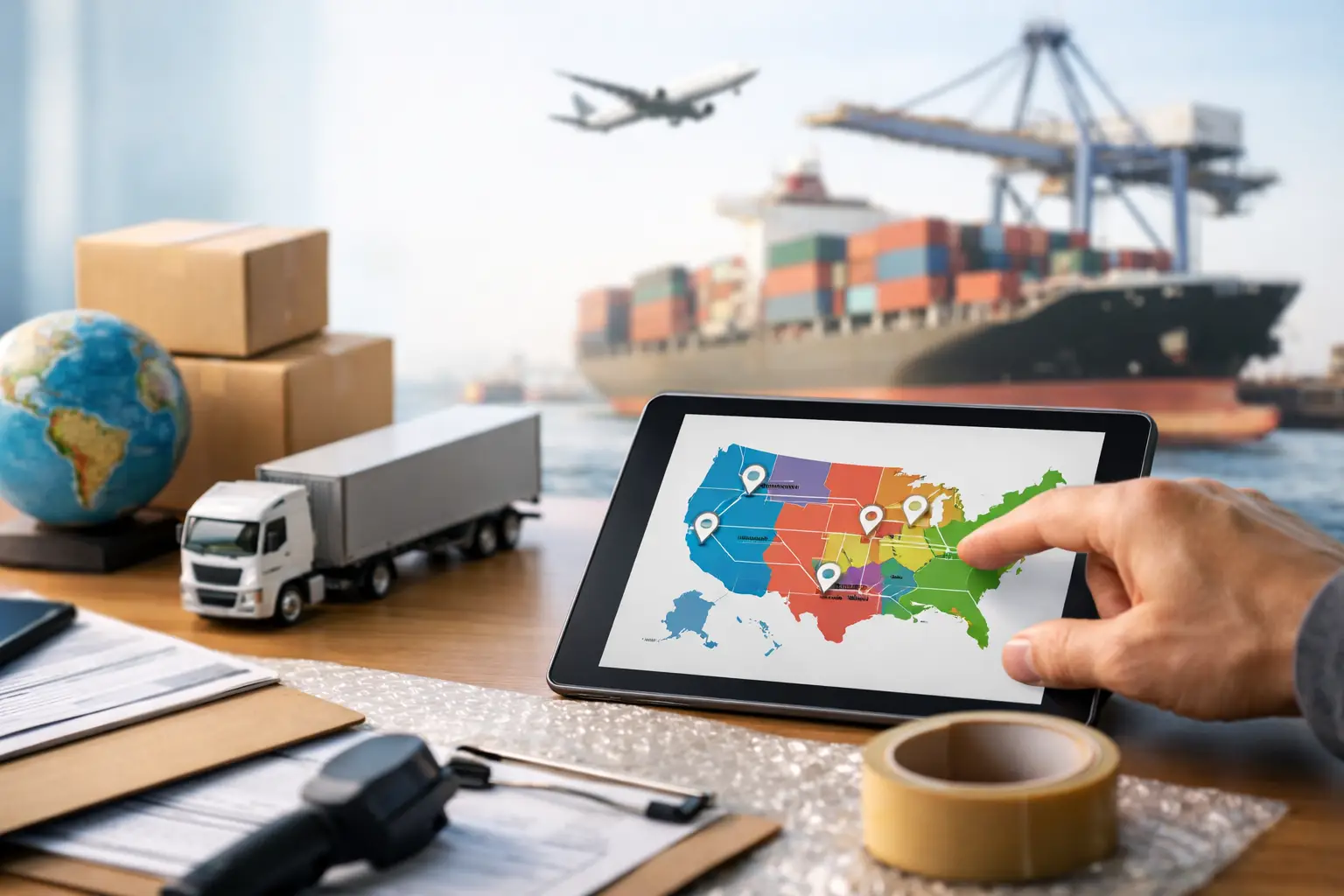
US parcel carriers assign zones based on the distance between the shipment’s origin ZIP code and its destination ZIP code. Lower zones generally cover nearby deliveries, while higher zones represent longer distances. The exact zone map varies by carrier, but the operating reality is consistent: shipping farther usually costs more, especially as package weight and dimensional weight increase.
A seller shipping all orders from one East Coast warehouse may have excellent economics for Northeast customers and poor economics for customers on the West Coast. That is manageable when the product is light, margins are strong, and customers accept standard delivery. It becomes a problem when products are bulky, average order value is tight, or marketplace delivery expectations leave little room for transit delays.
Zone cost is also not limited to the base transportation rate. Residential delivery, fuel, additional handling, oversize rules, delivery-area surcharges, and dimensional billing can make a high-zone package disproportionately expensive. A carton that barely crosses a dimensional threshold can erase the savings from a negotiated carrier rate.
Start With Your Order Data, Not a Warehouse Map
The first step in shipping zone optimization is to understand where your orders actually go. Do not choose a fulfillment location because it looks central on a map or because a provider claims national reach. Pull at least 90 days of shipped-order data, and preferably 12 months if seasonality is meaningful.
Review destination ZIP codes, state-level order concentration, average shipment weight, package dimensions, carrier service used, shipping revenue collected, and total shipping cost. Separate marketplace orders from direct-to-consumer orders when their service commitments differ. Amazon FBM orders, for example, may need faster and more predictable delivery than a Shopify order where the customer selected economy shipping.
The useful question is not, “Where are most of my customers?” Ask, “Which destinations create the highest shipping spend and the greatest delivery risk?” A state may represent only 8% of orders but account for an outsized share of zone 7 and 8 shipments. That is often where a second inventory location, adjusted carton, or different service level has the highest return.
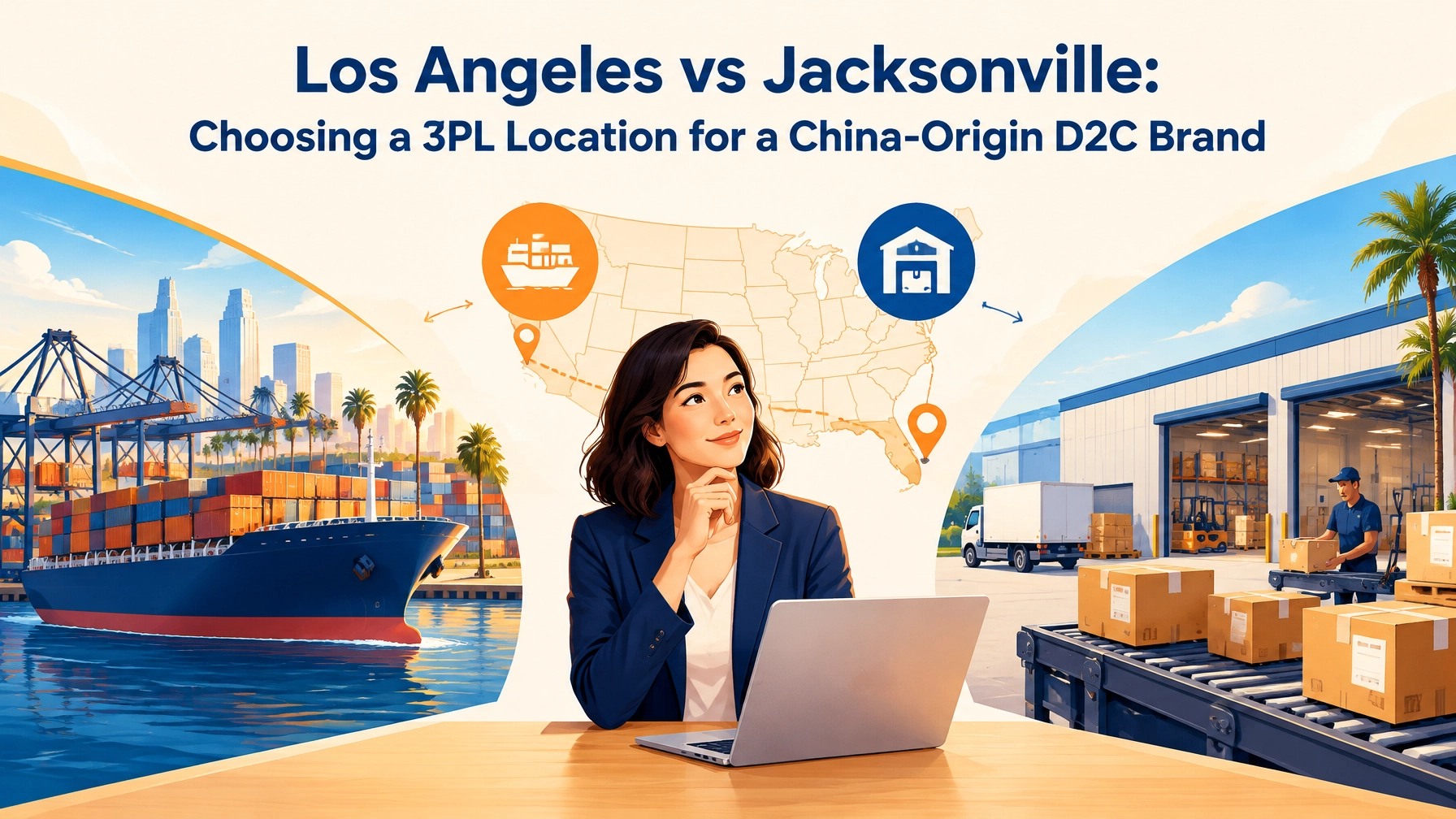
Don’t get hung up on the California population island. Yes, California is the #1 state with the most population (39.4M), states 2-10 are all on the eastern region of the country and total 155M. If you are starting with a single location, you should optimize with a location that can optimally serve while preserving the ability to service Californina. You also need to take into account the cost on inbound that favors port cities. Jacksonville, FL is a great choice as it is the western most point on the Atlantic coast, directly south of Cleveland, OH and directly east of Los Angeles CA.
The “Cleveland Longitude” Secret: Jacksonville’s Logistics Cheat Code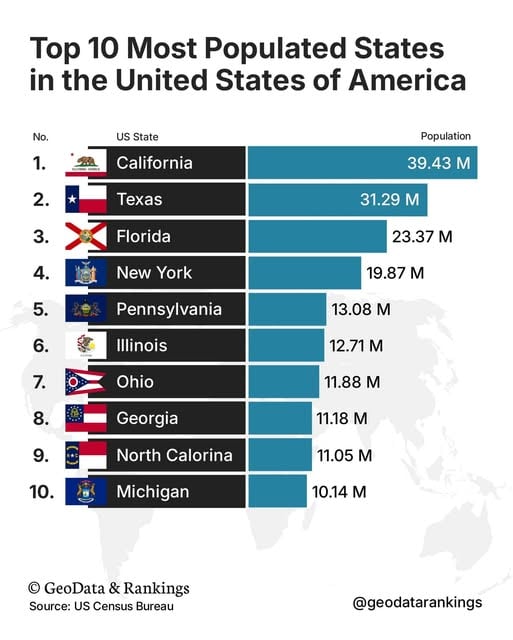
Build a Practical Zone Profile
Group orders by zone and calculate three numbers for each group: share of orders, average parcel cost, and average contribution margin after fulfillment and shipping. Then look at delivery performance by zone. If zones 6 through 8 create both higher costs and more late deliveries, the issue is larger than postage.
Also identify SKU behavior. A one-pound apparel item may tolerate a higher zone far better than a 12-pound kitchen appliance or a low-density home goods product. Inventory placement should reflect the economics of the SKUs being moved, not just total unit volume.
Choose Inventory Locations Based on the Cost to Serve
A single fulfillment center is often the right answer for an early-stage or highly concentrated brand. It simplifies receiving, inventory counts, replenishment, and returns. Splitting inventory too early can create a new problem: units sitting in the wrong warehouse while the fast-moving location runs out.
The case for multiple locations gets stronger when a meaningful share of shipments consistently travel across the country, package dimensions drive high-zone costs, or delivery promises require ground transit that one facility cannot reliably provide. For many national brands, an East and West network can reduce the number of zone 7 and 8 orders. Other brands may benefit more from a central location, particularly if demand is broadly distributed and products are compact.
In short, large, heavy and bulky products (with few skus) are ideal for a multiple location strategy sooner rather than later. Otherwise be cautious of the complexity and hiddent costs of a multi-location model. The National Warehouse Myth: Why More Locations Can Be a Massive Hidden Cost
There is no universal best warehouse city. A centrally located building does not automatically produce the lowest cost, and two warehouses do not automatically improve margins. The decision depends on order density, inbound freight lanes, inventory carrying costs, SKU velocity, and the operational burden of keeping stock accurate in more than one place.
A practical model compares the projected parcel savings against the added cost of a second node. Include additional storage, receiving, inventory transfers, safety stock, software complexity, and the risk of stranded inventory. If the new location saves $1.20 per order but requires carrying weeks of duplicate safety stock on slow-moving SKUs, the savings may not be real.
Use SKU Segmentation Before Splitting Everything
Do not send every SKU to every warehouse. That approach often increases inventory fragmentation and makes replenishment harder than it needs to be. Instead, segment products by velocity, size, margin, and regional demand.
High-volume, bulky, or dimensionally inefficient SKUs are usually the strongest candidates for regional placement because they create the biggest zone penalty. Fast-moving products may also justify two locations if a stockout at one node would immediately hurt marketplace performance. Slow movers, seasonal items, and long-tail variants can remain in one facility until demand proves otherwise.
This is especially relevant for hybrid FBA and FBM operations. Keeping reserve inventory in a 3PL network can reduce dependence on Amazon receiving timelines and storage limits, while allowing the seller to replenish FBA deliberately. The inventory allocated for direct-to-consumer and FBM orders should still be positioned around actual customer demand, not simply around where Amazon inventory happens to be stored.
Reduce Zone Costs Without Adding a Warehouse
A second fulfillment center is not the only lever. Before expanding your network, test whether packaging, service selection, or shipping rules are creating avoidable cost.
Dimensional weight is a common place to start. If a lightweight product ships in an oversized carton, carriers may bill based on package volume rather than actual weight. Reducing carton dimensions, removing excess void fill, or standardizing a better-fit mailer can move a shipment into a lower billed weight. Those changes may save more than a new carrier contract because they improve every order, regardless of destination.
Carrier mix matters too. One carrier may be competitive for nearby ground shipments, while another performs better for residential deliveries, heavier packages, or specific regions. Rate-shopping software can help, but the cheapest label is not always the right label. A lower-cost service that increases late deliveries, claims, or customer complaints can damage account health and repeat purchase rates.
Review your free-shipping threshold as well. If your average order is low and customers frequently buy one small item, shipping absorbs too much of the transaction. Bundles, minimum order thresholds, and product-specific shipping rules can improve contribution margin without raising prices across the catalog.
Protect Delivery Promises as You Optimize
Zone optimization should never be treated as a postage-only project. A seller can reduce transportation expense and still lose money through late delivery, negative feedback, refunds, and marketplace metrics. This is particularly true for Amazon merchants managing handling-time commitments and account-level delivery expectations.
Set routing rules that prioritize the closest in-stock fulfillment location, but build exceptions for inventory availability, cutoff times, carrier capacity, and service-level requirements. A West Coast order should not automatically ship from a West Coast node if that location has only one unit left and inbound replenishment is delayed. The system needs to protect the broader inventory position, not just the next label cost.
Monitor on-time delivery by carrier, service, zone, and channel. When performance changes, investigate quickly. A carrier issue affecting a specific region can turn a previously sound routing decision into a customer experience problem within days.
Make Zone Optimization an Operating Habit
Shipping patterns change as product mix, ad spend, marketplaces, and customer geography change. Review zone distribution and parcel cost at least quarterly, and more often during peak season or major channel expansion. Re-run the analysis when you introduce oversized products, change packaging, open wholesale accounts, or see a sustained shift in regional demand.
The best fulfillment strategy gives you options. FBMFulfillment helps sellers keep inventory under control across channels while building a distribution approach around margin protection, delivery performance, and real marketplace pressure. That matters when a fulfillment decision affects not only shipping cost, but also stock availability and customer trust.
The useful test is simple: every inventory move should earn its complexity. If a new location, carton, routing rule, or carrier mix reduces the cost to serve customers while protecting delivery reliability, it deserves a place in the operation. If it only makes a spreadsheet look better while creating inventory risk, keep looking.
Key Takeaways
- A shipping zone optimization guide helps manage costs as order volume increases, improving shipping efficiency.
- Shipping zones affect delivery performance, conversion rates, and overall profitability, requiring careful analysis of order data.
- Start with order data to identify high-cost zones, determine inventory location, and build a practical zone profile.
- Use SKU segmentation to determine which inventory to place where, focusing on high-penalty items for regional placement.
- Regularly review shipping patterns and costs to adapt your strategy, ensuring that changes enhance delivery reliability and customer trust.
Related Links
Frequently Asked Questions
Shipping zones are based on the distance between the origin ZIP code and the destination ZIP code — lower zones mean nearby deliveries, higher zones mean longer distances. Costs increase with both package weight and dimensional weight, and can carry additional charges for residential delivery, fuel, handling, and other surcharges.
With your own order data, not a map of your warehouse network. Analyze at least 90 days of shipped orders (12 months is preferable), looking at destination ZIPs, state concentration, weight, dimensions, carrier, shipping revenue, and shipping cost. The key question to answer is which destinations are creating the highest shipping spend and the most delivery risk. Look forward not just backward, look at potential sales (population) not just historical. Remember the 2nd-10th largest population states are in the east.
California has a population of about 39.4 million, and it is somewhat of a populaton island relative to the rest of the country. You can afford to spend a bit more for the California orders because the overall will be less expensive. Find a 3PL (like FBMFulfillment.com, that can offer shipping to California that is only slightly more expensive.)
Calculate the share of orders, the average parcel cost, and the contribution margin for each zone, and monitor delivery performance by zone as well. SKU-level weight differences matter here too, since heavier or bulkier products have less tolerance for high zones before shipping cost erodes their margin. The bigger and heavier the products, the more siginificant this is.
Based on cost to serve, not just convenience. A single facility keeps operations simple, but the case for multiple locations grows as demand becomes more national — factors to weigh include order density, inbound freight lanes, inventory carrying costs, and SKU velocity. A practical way to evaluate it is comparing the projected shipping savings of a second location against the added costs of storage, inventory transfers, and extra safety stock. Be sure to consider ALL costs, not just outbound shipping. Examples would be inbound, 3PL price structure, Cost to distribute and rebalance inventory, extra headcount to manage the complexity, etc.
No — the article specifically warns against sending every SKU to every warehouse. Prioritize regional placement for high-volume, bulky, or dimensionally inefficient products first, since those are the ones where zone costs hurt the most. Fast-moving SKUs can justify a second location on their own if stockouts would otherwise hurt marketplace performance.
A few levers: test for dimensional weight optimization, since an oversized carton can trigger volumetric billing even for a light item; evaluate your carrier mix, since the cheapest label isn’t always the best one once service and reliability are factored in; and review your free-shipping thresholds and order minimums to make sure they still make sense against current zone costs. 3PL policies/proceedures can impact this is hidden ways. Example 1: if a 3PL ships in standardized boxes vs poly bags, you are paying for extra volume and weight. Don’t under estimate the weight of a box + fill material. Some 3PLs, like FBMFulfillment.com offer vacuum packing to minimize the volume of packages so you are not paying to ship air. This can be very valuable with shipping products like apparel, pillows, blankets etc. Dimensional weight can be a cost killer, expecially internationally.
Set routing rules that prioritize the closest in-stock location, with clear exceptions for when that location doesn’t have the item available. Monitor on-time delivery by carrier, service, zone, and channel, and investigate any performance changes quickly rather than waiting for a pattern to fully emerge.
As an ongoing habit rather than a one-time project — quarterly under normal conditions, and more frequently during peak season or a period of geographic expansion. It’s also worth reassessing whenever your product mix, packaging, or demand patterns shift meaningfully.