A growing order queue can hide a dangerous question: are you building an operation that protects margin, or one that keeps you busy until the next sales spike breaks it? The choice between in house vs outsourced fulfillment determines who controls your inventory, how quickly orders leave the building, and how much operational risk stays on your payroll.
For a new brand, packing orders in a garage or small warehouse can feel like control. For an established Amazon, Shopify, Walmart, or multichannel seller, that same setup can become the reason orders go late, inventory goes missing, and customer expectations outpace the team. Outsourcing is not automatically the answer, either. A weak 3PL can create blind spots that are just as expensive as an overloaded in-house team.
The right model depends on order volume, SKU complexity, sales channels, service-level requirements, and the real cost of labor and space. The key is to compare those variables honestly.
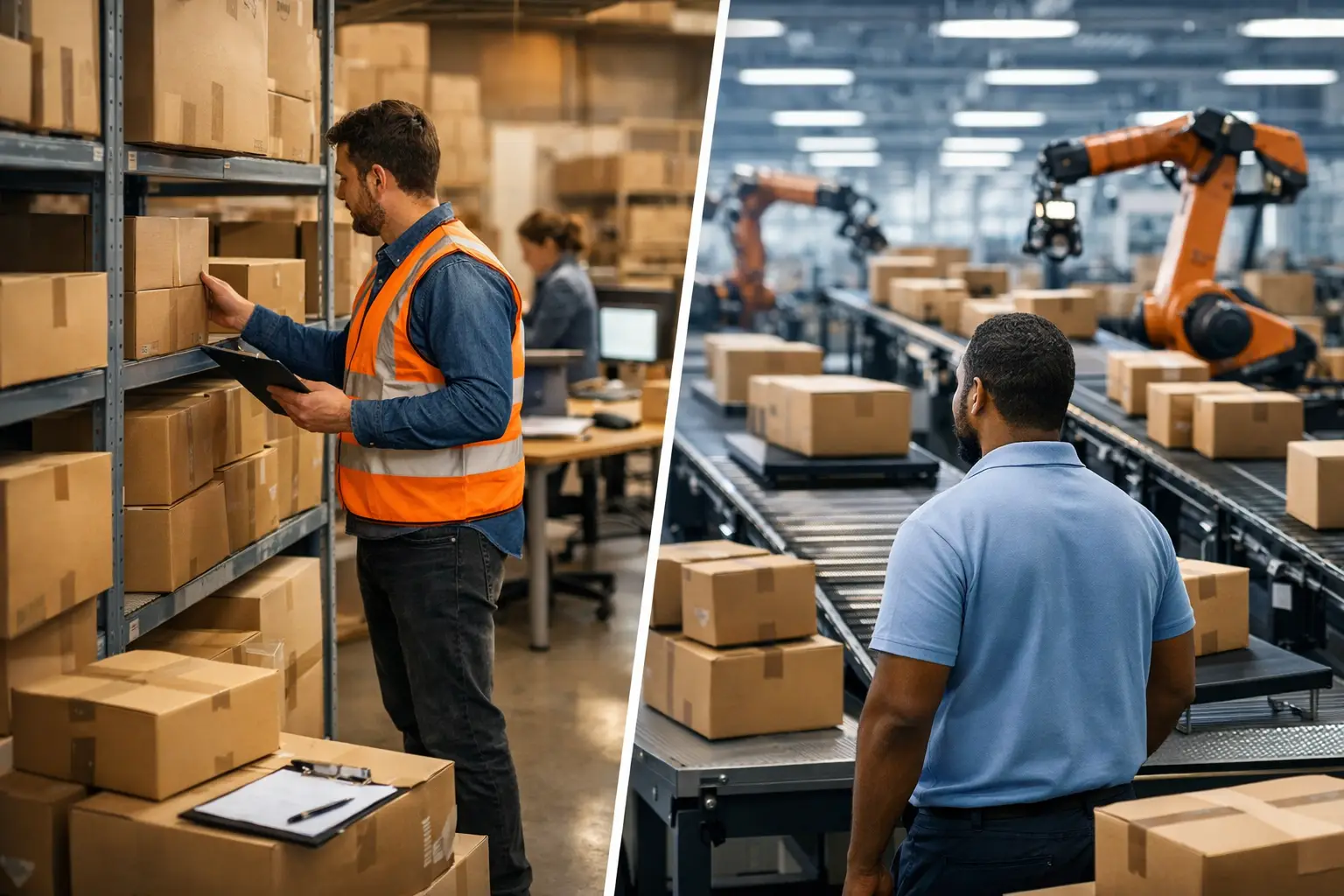
In House vs Outsourced Fulfillment: The Real Difference
In-house fulfillment means your company leases or owns the space, hires the warehouse team, receives inventory, stores products, picks and packs orders, manages returns, and handles carrier relationships. You own the process from inbound freight to final handoff.
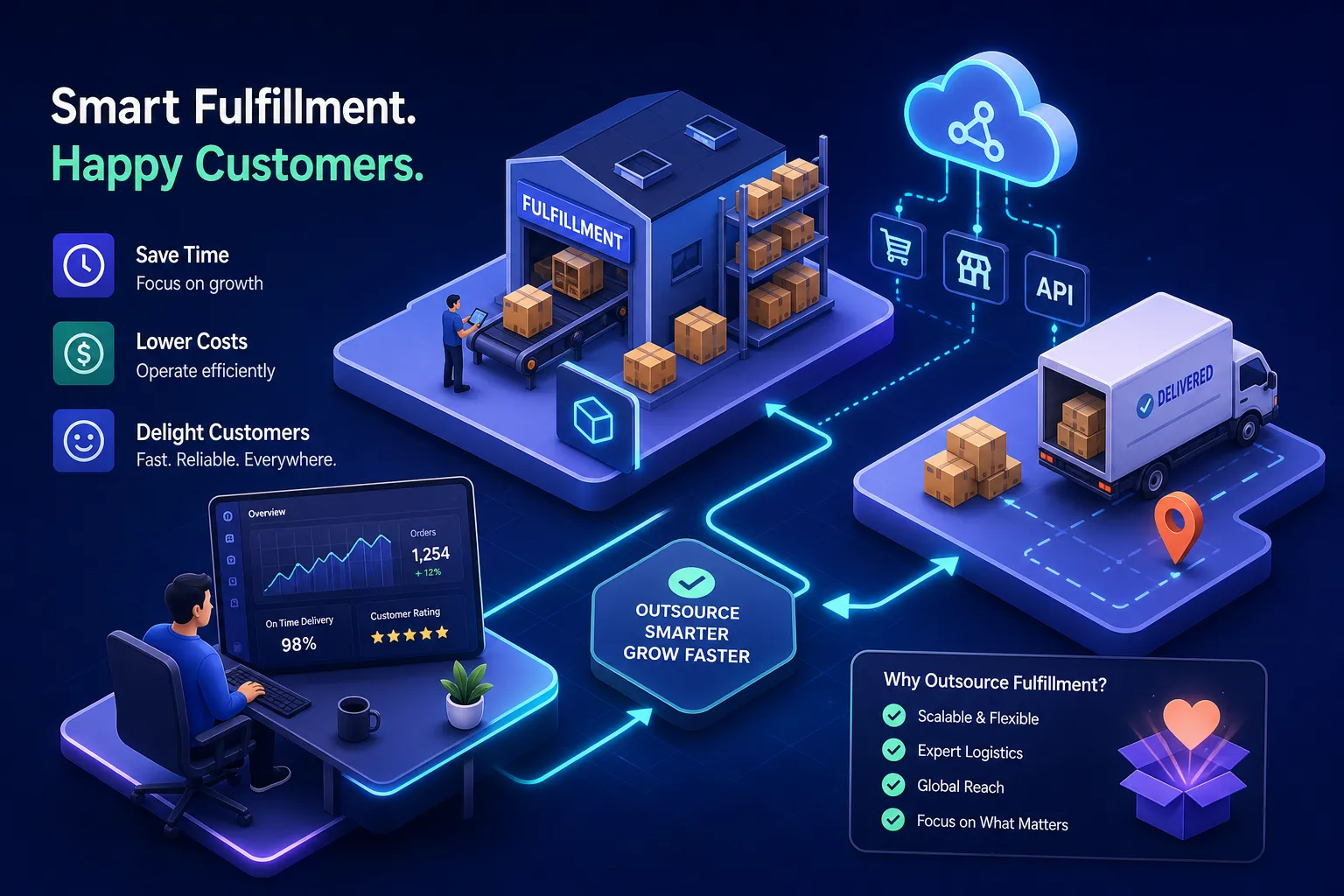
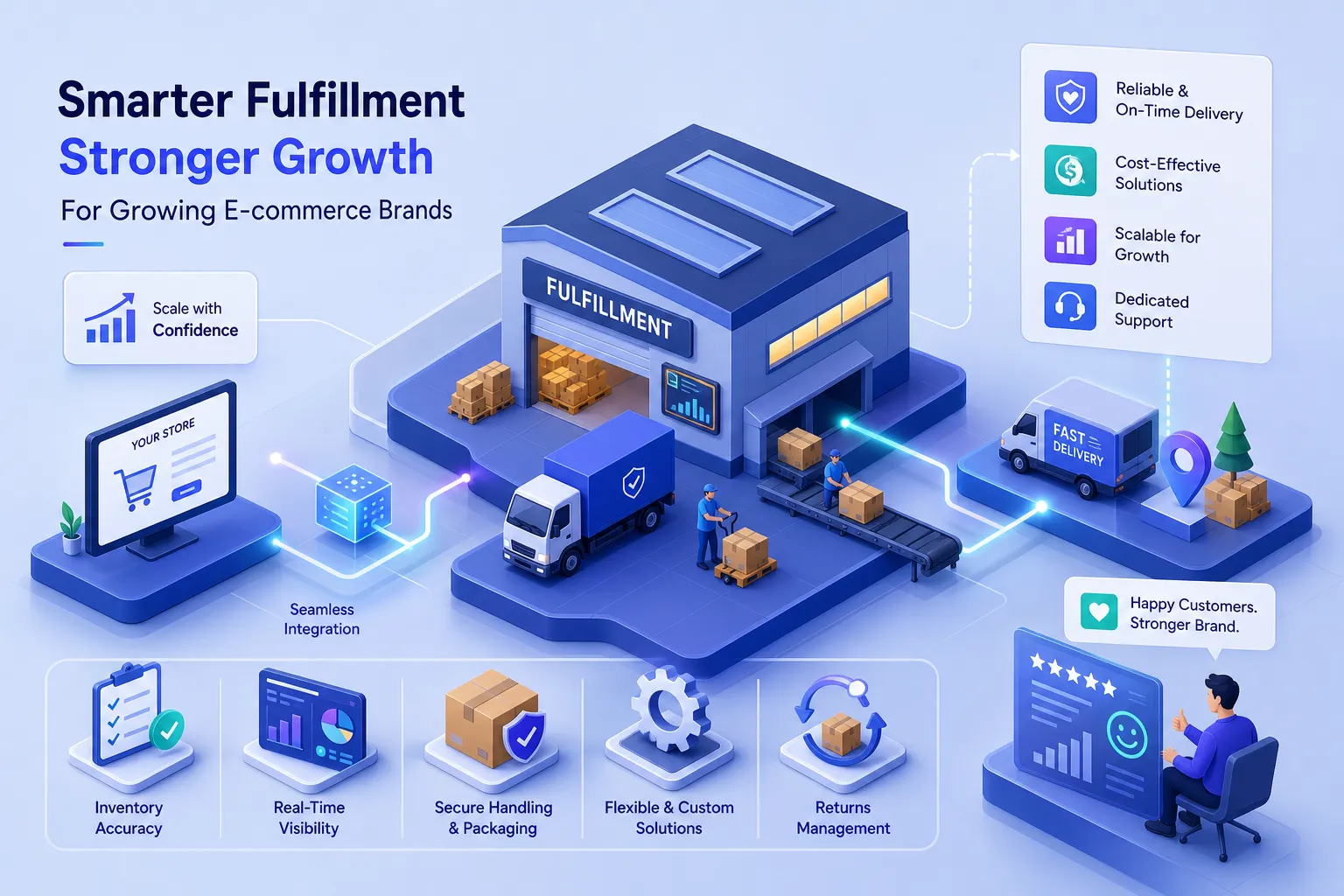
Outsourced fulfillment places those functions with a third-party logistics provider. Your team still owns the customer experience and inventory decisions, but the 3PL runs the warehouse labor, systems, packing operation, and shipping workflow.
The difference is not simply ownership versus convenience. It is where operational complexity sits when volume changes, a carrier misses a pickup, Amazon limits inbound units, or a promotion generates three times the forecasted order count.
What in-house fulfillment gives you
The strongest case for in-house fulfillment is direct control. Your team can change packing rules immediately, inspect product quality on the spot, prioritize VIP or wholesale orders, and adapt workflows without waiting on a partner. For brands with highly customized packaging, fragile products, regulated inventory, or unusual kitting requirements, that control can be valuable.
It can also make economic sense at a stable, predictable volume. If you have consistent order flow, efficient labor, favorable warehouse terms, and enough density to keep staff productive, your per-order costs may be competitive. Brands with local retail operations may already have warehouse space and employees in place, which changes the calculation.
But control has a cost. You are responsible for training, attendance, overtime, insurance, warehouse management software, supplies, equipment, shipping negotiations, and the daily discipline required to ship accurately. When your best warehouse lead calls out during a holiday rush, the problem belongs to you.
What outsourced fulfillment gives you
A capable 3PL converts much of that fixed operational burden into a variable cost tied to inventory and orders. Instead of hiring ahead of demand and paying for underused space, you can use warehouse capacity built for fluctuating volume. That matters for seasonal businesses, marketplace sellers with uneven sales, and brands adding new channels.
Outsourcing also gives multichannel sellers a way to hold inventory outside Amazon while still serving Amazon FBM, Shopify, Walmart, eBay, TikTok Shop, and wholesale orders from a coordinated operation. This reduces the need to split stock across disconnected locations or push too much inventory into FBA simply because it is the only fulfillment system available.
The trade-off is that you must choose the provider carefully. A 3PL that treats every client as the same can miss channel-specific rules, mishandle exception orders, and leave you chasing updates when inventory does not reconcile. Outsourcing only improves control when the partner has strong processes, clear accountability, and systems that provide usable visibility.
Compare Total Cost, Not the Pick Fee
Sellers often compare a 3PL pick-and-pack fee to the hourly wage of an internal warehouse employee. That is not a valid comparison. Labor is only one line item in an in-house operation.
Your internal cost includes rent, utilities, racking, insurance, forklifts, printers, packing materials, technology, payroll taxes, recruiting, supervision, worker turnover, claims, and carrier costs. It also includes the space you need before you fully use it. A brand shipping 2,000 orders one month and 8,000 the next still has to pay for enough square footage and labor coverage to survive the higher number.
Outsourced fulfillment has its own costs: receiving, storage, pick and pack, packaging, shipping, returns, special projects, and sometimes account management or technology fees. Ask for a rate card that makes each charge clear. More important, model it against actual order patterns, SKU dimensions, order profiles, and peak periods.
A low pick fee does not help if slow receiving causes stockouts. Low storage pricing does not help if inaccurate inventory forces overselling. The right comparison is total landed fulfillment cost, including the revenue and account-health damage caused by late shipments and avoidable cancellations.
When In-House Fulfillment Is the Better Call
Keeping fulfillment internal can be the better choice when your business has enough consistent volume to support a dedicated, well-managed operation and your product requires hands-on handling that is difficult to standardize. It may also fit brands with a mature warehouse leadership team and a location that supports their customer base.
Consider in-house fulfillment if you can reliably answer yes to these questions: Do you have experienced warehouse management? Can you cover absences and peak volume without service failures? Do you understand your fully loaded cost per order? Can your systems keep inventory accurate across every sales channel?
If the answer is no, the apparent savings may be coming from unpaid founder labor, overworked staff, or service problems that have not yet hit your account metrics.
When Outsourced Fulfillment Is the Better Call
Outsourcing is usually strongest when fulfillment is limiting growth rather than supporting it. That may mean the owner is still solving shipping exceptions every afternoon, the team cannot receive inventory fast enough before a launch, or Amazon FBM performance is putting the account at risk.
It is also a practical move when you need geographic reach, carrier rate leverage, overflow capacity, or a better plan for FBA replenishment. Rather than sending all inventory into Amazon and accepting storage pressure, brands can hold reserve stock with a 3PL and replenish FBA in controlled batches. That approach can reduce exposure to receiving delays, inbound restrictions, and stockout risk.
For multichannel businesses, one inventory pool is often the deciding factor. A qualified provider can allocate stock to direct-to-consumer, marketplaces, wholesale, and Amazon replenishment without forcing your team to run separate warehouse processes for each channel.
FBMFulfillment is built around this operator reality: fulfillment is not a commodity expense. It is a lever for protecting margin, preserving inventory availability, and keeping channel performance from becoming a daily fire drill.
The Questions That Reveal a 3PL’s Real Capability
Before moving inventory, ask how the provider handles exceptions, not just standard orders. Standard orders are easy. The operational test is what happens when an item arrives damaged, a carton count is wrong, an order requires a replacement, or a marketplace deadline is approaching.
Ask how inventory is received and reconciled, what data is available by SKU and channel, and how cycle counts are performed. Clarify order cutoffs, carrier pickup schedules, accuracy targets, claims procedures, return inspection rules, and escalation contacts. If you sell on Amazon, ask directly about FBM shipping performance, Seller Fulfilled Prime requirements if applicable, FBA prep, and drip-feed replenishment.
You should also understand capacity planning. A provider that can handle your normal month but not your Q4 peak is not solving the core problem. Give them realistic forecasts, including promotions, launches, and wholesale shipments, then ask exactly how they staff and prioritize volume surges.
A Hybrid Model Can Protect More Options
The decision does not have to be all or nothing. Many established sellers use a hybrid model: keep specialized projects or local fulfillment in-house while outsourcing standard DTC orders, marketplace orders, returns, or FBA replenishment. Others use a 3PL as overflow during peak season before transitioning more volume once performance is proven.
A hybrid strategy is especially useful for Amazon sellers. You can retain inventory outside Amazon, use FBA selectively where it makes financial sense, and maintain an FBM option when FBA capacity, fees, or receiving timelines become unfavorable. The goal is not loyalty to one network. The goal is having inventory positioned to serve the customer and protect the business.
Choose the model that gives your team the clearest view of inventory, the most reliable path to on-time shipping, and enough flexibility to grow without gambling your margin or marketplace standing on a single warehouse operation.
Key Takeaways
- Choosing between in house vs outsourced fulfillment impacts inventory control, order speed, and operational risk.
- In-house fulfillment offers direct control but comes with significant responsibilities and costs.
- Outsourcing can convert fixed costs into variable ones, especially for seasonal or multichannel businesses.
- Compare total fulfillment costs, not just pick-and-pack fees, to understand the real expenditure.
- A hybrid model allows flexibility, retaining some fulfillment in-house while outsourcing standard operations.
Related Links
- Best 3PL Fulfillment Companies for Small Businesses in the US
- The Future of Amazon Fulfillment Is Hybrid
- FBA vs FBM
- What to Look for in a 3PL?
- Are Direct from China Shipments Dead? The Truth About the De Minimis Crackdown