A fulfillment bill rarely gets out of control because of one obvious warehouse fee. It grows through small operational leaks: inventory sitting too long, oversized packaging, split shipments, inaccurate product data, expedited replacements, and stockouts that force expensive recovery decisions. Learning how to lower fulfillment costs means finding those leaks without creating a slower, less reliable customer experience.
For Amazon sellers and multichannel brands, the goal is not simply to get the cheapest pick-and-pack rate. A low per-order rate can become expensive fast if it comes with poor inventory accuracy, late shipment confirmations, missed marketplace SLAs, or no flexibility when demand changes. The right cost strategy protects margin and operational control at the same time.
Start With the True Cost Per Order
Most sellers focus on the visible fulfillment rate: storage, pick fees, packing materials, and shipping. Those numbers matter, but they do not show the full cost of getting an order to a customer.
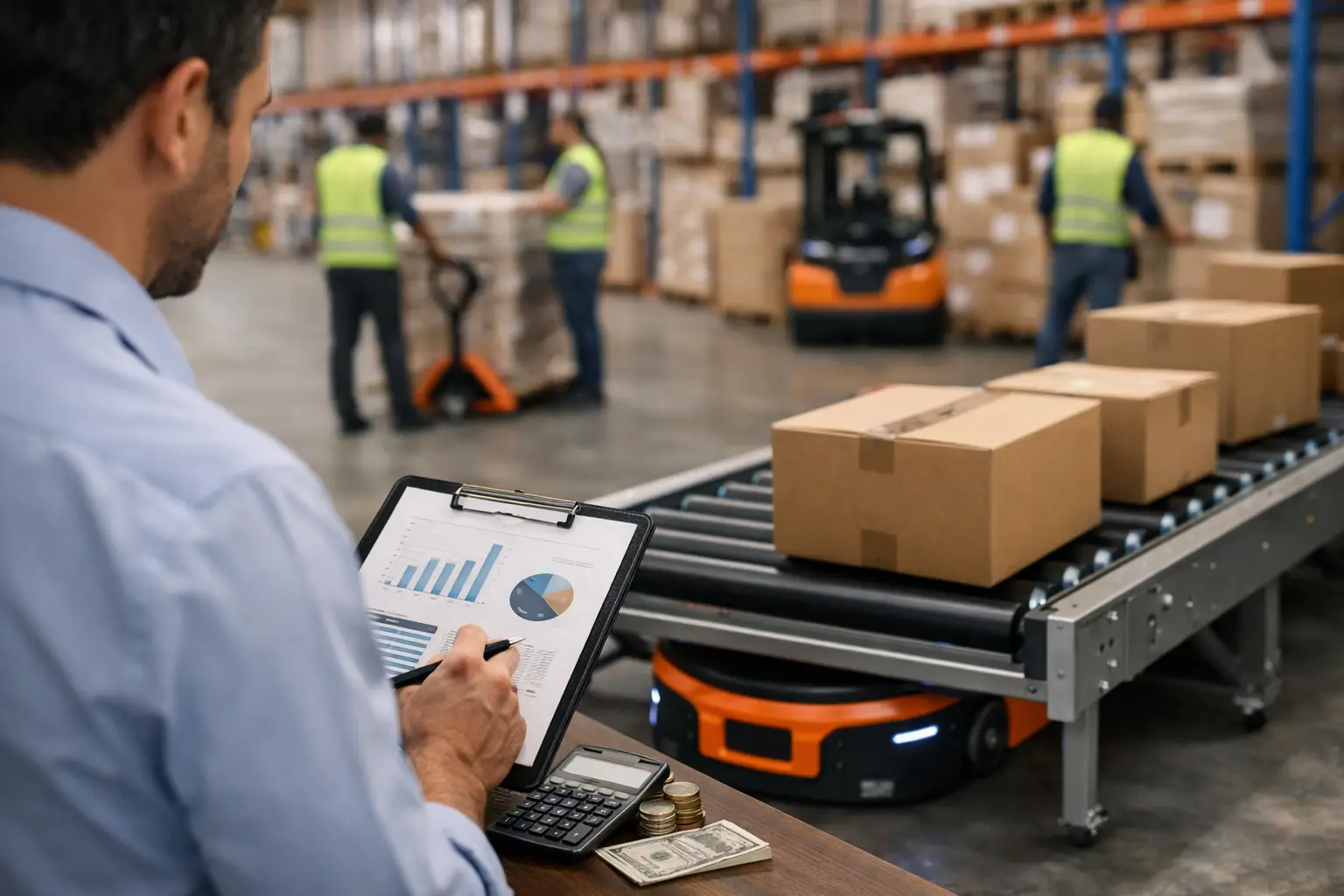
Calculate your cost per shipped order by channel and include warehouse handling, postage, packaging, inbound freight allocation, returns, replacement orders, marketplace penalties, and the labor your team spends fixing exceptions. Then separate that data by SKU. A lightweight, fast-moving item may be highly profitable to fulfill, while a bulky item with frequent returns can be quietly consuming margin.
This view also exposes a common multichannel problem. A brand may be profitable on Shopify but losing money on a marketplace because the same SKU has different shipping expectations, packaging requirements, or return behavior. One blended fulfillment average hides that difference.
Watch for costs that arrive after the order ships
Late shipments, damaged orders, and inventory discrepancies are not merely service failures. They are fulfillment costs. A late Amazon FBM order can affect account health and force a seller to use more expensive shipping to protect delivery promises. An inaccurate inventory count can cause a cancellation, lost ad spend, and a customer who does not return.
If a warehouse quote looks unusually low, ask how exceptions are handled, how inventory is reconciled, and what happens when an order needs to be intercepted or corrected. The cheapest rate is rarely the lowest total cost when the operation cannot prevent expensive mistakes.
Reduce Storage Costs by Improving Inventory Flow
Storage is where slow inventory becomes a margin problem. This is especially true for sellers managing FBA limits, seasonal demand swings, or a catalog with too many low-velocity variants. The answer is not always to hold less inventory everywhere. It is to place the right amount of inventory in the right network at the right time.
Keep your fastest-moving products available for immediate fulfillment, but avoid treating every SKU as a top seller. Use recent sales velocity, seasonality, lead times, reorder points, and promotion calendars to set inventory targets. A product that sells steadily at 10 units a day needs a different replenishment plan than a product that spikes only during a holiday promotion.
For hybrid FBA and FBM brands, holding reserve inventory with a 3PL can reduce pressure to over-send inventory into Amazon. This gives you a buffer for FBA replenishment while keeping units available for FBM, Shopify, Walmart, eBay, and other channels. It can also reduce the risk of stockouts when Amazon receiving slows down or inventory limits tighten.
The trade-off is real: distributed inventory adds handling and transportation decisions. But for many sellers, the cost of controlled reserve storage is lower than Amazon storage friction, stranded inventory, emergency replenishment, or lost sales from going out of stock.
Lower Pick-and-Pack Costs Without Creating Errors
Pick-and-pack costs are often driven by product complexity, not just order volume. A catalog with inconsistent SKU labels, mixed product dimensions, fragile items, bundles, inserts, and special packing rules takes longer to fulfill. If your warehouse team has to stop and interpret instructions on every order, labor costs and error rates will rise together.
Start with clean product data. Every SKU should have confirmed dimensions, weight, barcode requirements, storage needs, and packing instructions. Bundles should be defined clearly before they reach the warehouse, not assembled through email instructions after an order comes in. If an item requires special dunnage or a branded insert, make that rule repeatable.
Packaging is another practical lever. Oversized boxes increase material costs and dimensional shipping charges. Under-protected packaging creates damage claims and replacements. Test a smaller set of right-sized packaging options for your highest-volume SKUs rather than using one box size for everything.
Do not overcorrect by eliminating packing safeguards that protect high-value or fragile products. Saving 40 cents on materials is not a win if it creates a 6 percent increase in damage-related returns. The objective is fewer touches, fewer materials, and fewer costly exceptions.
Make Shipping Decisions Earlier in the Process
Shipping is usually the largest variable fulfillment cost, and it is where sellers often react too late. By the time an order is packed and a carrier service is selected, many of the cost drivers have already been set by inventory placement, package dimensions, cutoff times, and delivery promises.
Review shipping spend by zone, service level, package weight, and carrier. Look for patterns such as a large number of residential shipments going long distance, lightweight packages being billed at dimensional weight, or routine upgrades to expedited service because inventory was not available in the closest location.
For a growing brand, one fulfillment location may be the most economical choice. For a brand shipping high volume nationwide, regional inventory placement may lower postage enough to justify additional operational complexity. It depends on order density, product size, delivery commitments, and whether your customers are concentrated in a few regions or spread across the country.
You should also be disciplined about shipping promises. Offering two-day delivery everywhere can be a powerful conversion tool, but only if your inventory position and carrier mix can support it. Otherwise, it becomes an expensive promise funded by margin. Set service levels by channel and customer expectation, then build the fulfillment process around those commitments.
Stop Paying for Stockouts and Emergency Replenishment
A stockout does more than pause sales. It can reduce marketplace rank, waste advertising momentum, trigger last-minute freight, and push customers toward competitors. Brands often view stockouts as a demand-planning issue, but they are also a fulfillment cost issue.
Build replenishment rules that account for more than average daily sales. Include inbound lead time, receiving time, sales spikes, supplier reliability, and the time needed to move inventory between your reserve warehouse and FBA. If a product sells through in seven days but inbound receiving takes two weeks, the reorder point is already too late.
Drip-feed replenishment can help sellers maintain FBA availability without sending excessive inventory into Amazon at once. It creates a more controlled flow: reserve stock remains available outside Amazon, while replenishment is released based on sales pace and operational constraints. This approach is particularly useful when Amazon capacity limits or receiving delays make large inbound shipments risky.
Treat Returns as a Margin Recovery Process
Returns are often treated as unavoidable, then written off with little analysis. That leaves money on the table. The warehouse process after a return arrives determines whether the item can be restocked, refurbished, returned to the vendor, liquidated, or disposed of.
Create clear return disposition rules by SKU condition and product value. A returned apparel item may need inspection and repackaging. A sealed accessory may be restocked quickly. A damaged electronic item may need to be quarantined and evaluated before it becomes a customer service problem again.
Return data can also reveal upstream cost problems. If one SKU has a high return rate because the listing dimensions are inaccurate, the warehouse cannot fix that. If damage is concentrated in one package type, a packing adjustment may prevent repeat losses. Review return reasons alongside fulfillment data instead of treating them as separate reports.
How to Lower Fulfillment Costs With the Right 3PL Model
A 3PL should give you more than a rate card. It should provide accurate inventory visibility, clear billing, order-level accountability, and the ability to support the channels where you actually sell. If you operate Amazon FBM, FBA replenishment, Shopify, Walmart, and wholesale orders, your fulfillment partner needs processes that can handle different rules without forcing you into manual workarounds.
Ask direct questions before making a move: How are storage charges calculated? Are receiving, labels, inserts, returns, and special projects billed separately? What is the inventory accuracy process? How quickly can the warehouse replenish FBA inventory? What happens when a marketplace order has a problem after cutoff?
FBMFulfillment was built around the reality that fulfillment affects account health, inventory risk, and margin – not just whether a package leaves a warehouse. That operator perspective matters when your business depends on keeping multiple channels in stock and customers informed.
The best cost reduction is usually not a dramatic warehouse switch or a one-time carrier negotiation. It is a fulfillment operation where inventory moves with purpose, orders ship correctly the first time, and every service level supports the margin you need to grow.
Key Takeaways
- Identify and fix small operational leaks in fulfillment to reduce costs without sacrificing customer experience.
- Calculate true cost per order, considering storage, shipping, and additional fees, to understand profitability across channels.
- Improve inventory flow to reduce storage costs and manage stock levels effectively, avoiding stockouts or excess inventory.
- Optimize pick-and-pack processes with accurate product data and suitable packaging to minimize labor costs and errors.
- Treat returns as a margin recovery process and analyze return data to uncover cost issues and prevent losses.
Related Links
- Cross Channel Inventory Visibility That Prevents Stockouts
- Can a 3PL Handle Returns Without Costing You?
- Amazon’s New Fee Stack Is Squeezing Your Margins: Why Hybrid FBM Is the Only Way Out
- Hostage Inventory: Why Amazon Makes it Hard to Leave (and How to Take Control)
- How to Manage Ecommerce Returns Without Losing Margin