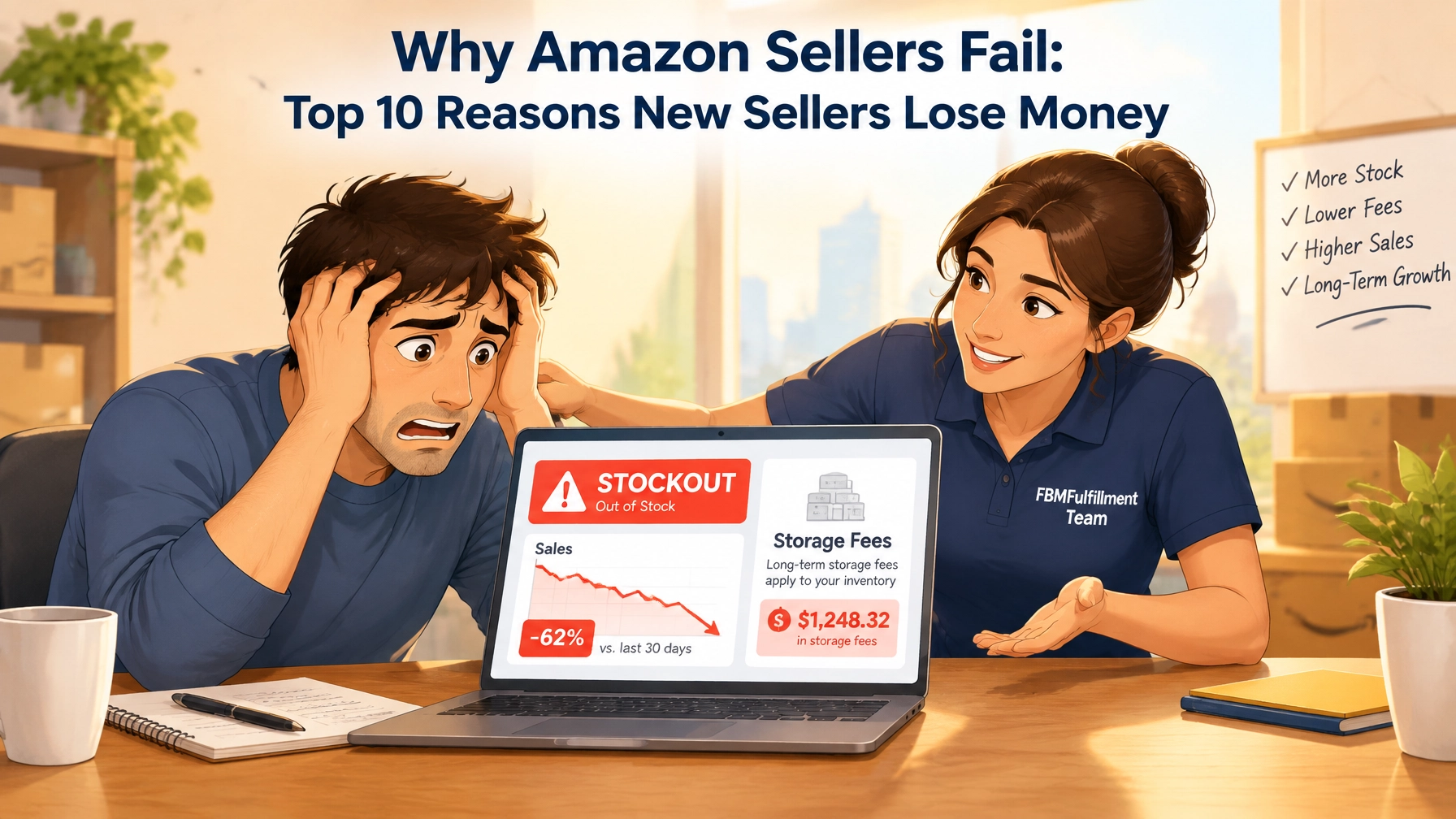

A stockout rarely starts when Amazon shows zero units. It starts weeks earlier, when a seller trusts a stale sales average, overlooks a receiving delay, or sends too much inventory into FBA because the next reorder feels uncertain. This Amazon replenishment planning guide is built for sellers who need to protect sales without tying up margin in inventory that is sitting in the wrong place.
Replenishment is not just a purchasing task. It is a control system that connects demand, supplier lead times, inbound freight, Amazon receiving, storage limits, and inventory allocated to other channels. Get one part wrong and the cost shows up quickly: lost Buy Box momentum, emergency air freight, aged inventory fees, canceled FBM orders, or a Shopify store selling units that should have been reserved for Amazon.
Start With the Inventory Position You Actually Have
Do not plan from the inventory number in one dashboard. A usable replenishment position includes sellable units at FBA, units in transfer, units checked in but not yet available, inventory at your warehouse or 3PL, supplier-ready stock, and units already committed to orders across every channel.
That distinction matters because inventory can look healthy while your available-to-sell position is already thin. A shipment marked as delivered to Amazon is not the same as inventory that can satisfy customer orders. During busy periods, receiving can take longer than expected. Treat inbound FBA units as unavailable until the marketplace makes them sellable, especially for a fast-moving SKU.
At the same time, do not count all warehouse stock as freely available. If the same SKU supports Amazon FBM, Shopify, Walmart, and wholesale orders, define allocations. A warehouse may physically hold 2,000 units, but 400 could be needed to protect a wholesale commitment and 300 may be reserved for a promotion on another channel. The number that matters is the inventory you can safely deploy.
Build Demand Forecasts From More Than One Average
A 30-day sales average is a starting point, not a forecast. It can hide a price change, a stockout, a promotion, a new review pattern, a competitor going out of stock, or a seasonal shift. For established products, compare short-term velocity with a longer baseline. If a SKU sold 12 units a day over the last 30 days but 7 units a day over the last 90, planning solely on the short-term number may create excess stock once the temporary lift fades.
For each important SKU, review four signals: recent daily sales, longer-term daily sales, the same period last year if available, and known upcoming events. The events list should include Prime-related promotions, coupon activity, influencer campaigns, price changes, holidays, wholesale purchase orders, and product launches that may cannibalize or lift demand.
New products require a different approach. Their early sales are often too volatile for a formula to carry the entire decision. Start with a conservative test quantity, watch conversion and return rates, then increase reorder volume after demand becomes repeatable. Buying six months of inventory because launch week performed well is one of the fastest ways to create a storage problem.
Separate Base Demand From Event Demand
Base demand is what the SKU sells without special activity. Event demand is the additional volume created by promotions, seasonality, or temporary traffic. Keeping them separate prevents a common planning mistake: treating a one-week spike as permanent velocity.
If a deal is scheduled, forecast the expected lift separately and make a clear decision about where those units will sit. For an FBA offer, send enough stock early enough to account for receiving uncertainty. For an FBM offer, make sure the warehouse has labor and carrier capacity to absorb the surge. The channel changes the execution, but not the need to plan ahead.
Calculate Reorder Points With Real Lead Time
A reorder point tells you when to place the next purchase order or trigger the next FBA transfer. The basic logic is simple:
Reorder point = expected demand during lead time + safety stock
The hard part is defining lead time honestly. For an imported SKU, lead time may include production, quality control, booking, origin handling, ocean or air transit, customs clearance, delivery to the warehouse, prep work, shipment creation, and Amazon receiving. Leaving out even one stage creates a reorder point that looks precise but fails in real conditions.
Use a range, not a single best-case number. If a supplier usually produces in 25 days but sometimes takes 35, plan around the risk window. If Amazon normally receives in a week but has taken three weeks during past peak periods, your buffer needs to reflect that exposure. Sellers do not lose revenue because their spreadsheet lacked decimal points. They lose revenue because they planned for the smoothest possible outcome.
Safety stock should vary by SKU. A high-margin bestseller with stable demand deserves more protection than a slow-moving item with weak margins and a high risk of becoming aged inventory. A product with only one overseas supplier also needs a larger buffer than a product available from multiple domestic sources.
Choose the Right Inventory Split Between FBA, FBM, and Your 3PL
Sending all inventory into FBA can feel safer because the units are close to the customer. It can also create storage fee exposure, restock limit problems, stranded inventory risk, and less flexibility when demand moves to another channel. Holding too little at FBA creates the opposite problem: you may lose momentum while Amazon receives the next shipment.
For many growing brands, the practical answer is a layered inventory model. Keep a working quantity in FBA based on sales velocity and receiving risk. Hold reserve inventory with a 3PL that can replenish FBA in controlled shipments while also fulfilling FBM and direct-to-consumer orders. Keep supplier-side inventory only when production reliability, terms, and inspection control make that a safe choice.
This is not a rule that every brand should maximize warehouse inventory. It depends on product size, margins, cash flow, replenishment lead time, FBA capacity, and channel mix. Bulky, lower-margin goods often benefit from shorter FBA coverage and replenishment from an external warehouse. Small, high-velocity products may justify deeper FBA coverage if fees and limits remain manageable.
FBMFulfillment supports this model by holding reserve inventory, processing multichannel orders, and drip-feeding FBA replenishment based on the seller’s actual demand and constraints. The point is not to move units for the sake of activity. It is to keep inventory positioned where it protects revenue without creating unnecessary storage friction.
Use a Weekly Replenishment Cadence, Then Manage Exceptions Daily
A weekly planning review works well for most catalogs. Review each SKU’s available inventory, inbound units, average demand, projected days of cover, open purchase orders, and next replenishment date. Then make a decision: reorder, transfer to FBA, hold, or investigate.
For fast-moving and high-risk SKUs, monitor exceptions daily. A SKU deserves attention when projected coverage drops below its lead-time requirement, recent sales materially exceed forecast, an FBA shipment has stalled, or a supplier date slips. Do not make the team review every product with the same intensity. Focus operational attention on the SKUs that can damage revenue or cash flow.
A simple priority framework can help. Classify products by revenue contribution, margin, demand volatility, and replacement difficulty. Your top sellers should have the cleanest forecasts, the most current supplier updates, and the fastest escalation path. A low-volume accessory should not consume the same planning effort as the SKU responsible for 30 percent of marketplace revenue.
Watch the Failure Points That Break Good Plans
Even a well-built forecast can fail when execution data is wrong. Inventory counts that do not reconcile, unclosed purchase orders, mislabeled inbound cartons, and untracked prep delays all distort the next decision. Require clear ownership for supplier confirmations, inbound tracking, warehouse receiving, FBA shipment status, and inventory adjustments.
Also watch for false confidence created by days-of-cover reports. A report may say you have 45 days of supply, but that number is meaningless if 20 of those days depend on a shipment that has not cleared customs or a transfer Amazon has not received. Build reports that distinguish available, in transit, inbound, and restricted inventory.
Finally, protect cash as carefully as you protect stock. The right reorder quantity is not always the largest quantity that earns a better unit cost. A supplier discount can disappear quickly if it forces you to finance months of slow-moving inventory, pay higher storage fees, or miss a chance to invest in a stronger SKU. Replenishment planning should improve purchasing decisions, not merely automate them.
The best plan is one your team can act on before inventory becomes an emergency. Keep the forecast grounded in real lead times, reserve stock for the channels that need it, and treat every replenishment decision as a balance between sales protection, cash control, and operational flexibility.
Key Takeaways
- A stockout can begin weeks before visible zero units; careful foresight is crucial.
- Effective Amazon replenishment planning requires a comprehensive view of available inventory across multiple channels.
- Use multiple data signals to build demand forecasts, separating base demand from event demand for better accuracy.
- Calculate reorder points with realistic lead times and safety stock levels to prevent stockouts.
- Manage replenishment weekly, monitor exceptions daily, and ensure clear accountability for inventory management.
Related Links
- Restock Planning for Amazon Without Stockouts
- 7 Ways to Reduce Amazon Stockout Risk Fast
- Ecommerce Fulfillment Cost Guide for Sellers
- How to Prevent Marketplace Stockouts at Scale
- How to Split Inventory Across Channels Without Stockouts