Amazon storage becomes expensive long before a seller sees a single long-term storage charge. The pressure often starts with tighter inbound capacity, slow receiving, aged-inventory risk, and the uncomfortable decision to send more units into FBA just to avoid a stockout. An amazon inventory storage alternative gives you another place to hold inventory while keeping Amazon supplied at the rate your sales actually require.
For serious sellers, this is not simply a warehousing decision. It is a margin, account-health, and growth decision. The right storage setup can help you avoid tying up too much cash in FBA, keep backup inventory available for FBM orders, and support channels that Amazon does not fulfill.
Why Sellers Need an Amazon Inventory Storage Alternative
Keeping all inventory inside FBA is convenient when demand is predictable and Amazon accepts inventory quickly. But convenience has a price. Storage fees, inbound placement costs, aged-stock exposure, and inventory limits can turn a simple replenishment plan into a constant operational problem.
The bigger issue is control. When your full supply sits inside Amazon’s network, you have fewer options if receiving slows down, a listing is suppressed, demand falls unexpectedly, or you need stock for Shopify, Walmart, eBay, or wholesale orders. Inventory may be physically available, yet operationally inaccessible when your business needs it most.
A separate storage location creates a buffer between your purchasing decisions and Amazon’s warehouse rules. Instead of shipping a large purchase order directly into FBA, you can hold the bulk inventory with a fulfillment partner and send smaller, planned replenishments to Amazon. That lets you react to sales velocity rather than guessing several weeks or months in advance.
This model also protects against the other side of the problem: stockouts. Sellers frequently under-send inventory because they are trying to avoid storage fees or capacity restrictions. A nearby reserve inventory position makes it easier to replenish FBA without committing the entire purchase order to Amazon on day one.
The Main Alternatives to Amazon Storage
There is no single best answer for every seller. The right model depends on SKU count, sales velocity, product size, seasonality, and how many channels you serve.
A 3PL Warehouse With FBA Replenishment
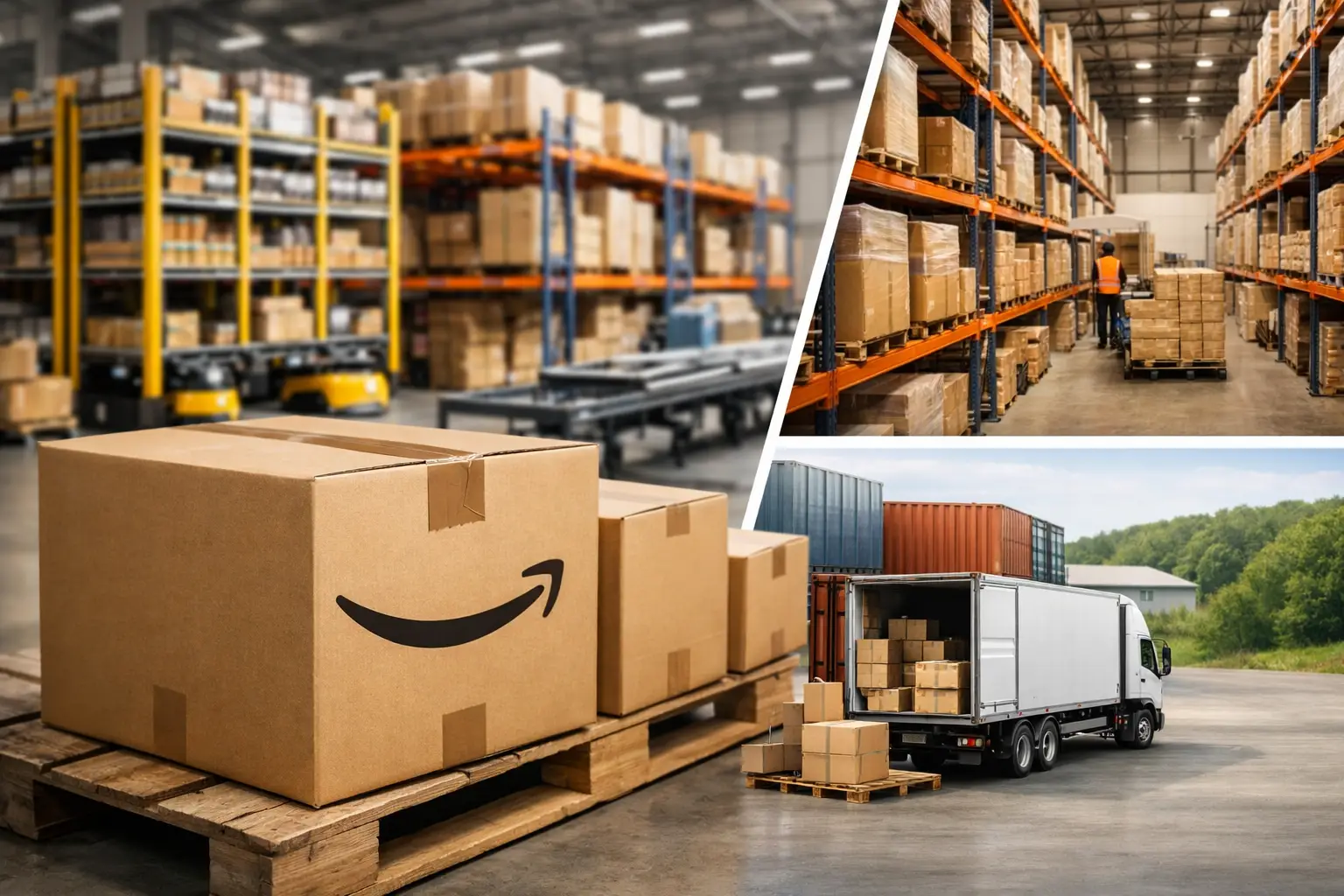
For most growing brands, a specialized ecommerce 3PL is the most practical option. The 3PL receives container loads, pallets, or parcel shipments; stores reserve inventory; prepares units to Amazon requirements; and drip-feeds inventory into FBA based on your plan.
This gives sellers a staging location outside Amazon while preserving the Prime conversion benefits of FBA for products that belong there. It also gives the brand an inventory source for FBM and direct-to-consumer fulfillment. One pool of inventory can support Amazon, your website, Walmart, TikTok Shop, eBay, and wholesale accounts instead of being trapped in separate systems.
The trade-off is execution quality. A low-cost warehouse that misses receiving appointments, mislabels cartons, or cannot maintain accurate counts can create more problems than it solves. Ask direct questions about inbound receiving times, lot and expiration tracking where applicable, FBA prep capabilities, shipping cutoffs, inventory reporting, returns handling, and escalation procedures when something goes wrong.
Amazon’s Own Upstream Storage Programs
Amazon offers upstream storage options that can make sense for sellers committed primarily to FBA. These programs may reduce some inbound handling and can simplify replenishment into Amazon’s fulfillment network.
However, Amazon-controlled upstream inventory is still Amazon-controlled inventory. It may not be the right reserve location if you need to pull stock for FBM, DTC orders, retail accounts, product bundles, or a change in channel strategy. Sellers should also look closely at the full fee picture, lead times, and the degree of control they retain over inventory movement.
This option works best when FBA is genuinely your main and only fulfillment path. It is less attractive for an omnichannel brand that needs inventory flexibility.
A Prep Center or Storage-Only Provider
A prep center can be useful when your immediate need is inspection, labeling, bundling, and forwarding products to FBA. Some offer short-term storage, which can help sellers who need a place to stage a small number of SKUs.
The limitation is that many prep centers are built around forwarding, not full fulfillment operations. They may not ship direct-to-consumer orders, manage returns, support wholesale routing, or provide the reporting needed to run multiple channels from one inventory pool. If your business is scaling beyond FBA, a prep-only relationship can become another handoff to manage.
Your Own Warehouse
Operating your own warehouse provides the highest level of physical control. You choose the staff, systems, storage layout, and shipping process. For a brand with consistent volume, concentrated inventory, and experienced operations leadership, this can eventually make financial sense.
But it is not a cheap shortcut. Rent is only the visible cost. Labor, workers’ compensation, equipment, warehouse management software, shipping supplies, carrier negotiations, hiring, training, and daily quality control all become your responsibility. A warehouse also has fixed costs even when sales slow.
For many ecommerce operators, outsourcing fulfillment is the better move until order volume and operational maturity clearly justify bringing it in-house.
Build a Replenishment Plan, Not a Storage Pile
An amazon inventory storage alternative only creates value when it is connected to a disciplined replenishment plan. Moving excess inventory from FBA to another warehouse does not fix overbuying. It simply changes where the inventory sits.
Start with realistic sales velocity by SKU. Separate steady sellers from seasonal products, new launches, bundles, and slow-moving variations. Then calculate how much stock should remain in FBA based on expected demand, inbound lead time, and a sensible safety buffer. The rest can remain in reserve storage until the next replenishment window.
The goal is not to minimize FBA inventory at all costs. Running too lean can lead to lost sales, ranking damage, and emergency replenishment expenses. The goal is to keep enough inventory in FBA to protect availability while keeping the bulk of your purchase order in a location that gives you options.
For example, a fast-moving item with consistent weekly sales may justify frequent smaller replenishments. A seasonal product may need a larger pre-positioned reserve before peak demand, but not necessarily a massive FBA send-in months early. Oversized products deserve even closer analysis because storage and inbound costs can magnify quickly.
What to Look for in a Storage and Fulfillment Partner
A warehouse partner should understand the difference between storing cartons and protecting an ecommerce operation. Inventory accuracy matters, but it is not enough. You need a partner that can receive freight correctly, flag discrepancies, preserve carton and unit-level traceability, prepare FBA shipments, and fulfill orders across channels without creating separate inventory silos.
Service accountability is equally important. When an Amazon shipment is delayed or a customer order misses a cutoff, you need a clear owner and a fast answer. Sellers should be wary of warehouses that treat every issue as a ticket queue problem. Your fulfillment provider should understand that a missed shipment can become a negative customer experience, a late-shipment metric problem, or a stockout that costs ranking momentum.
Location can matter, but it should not be the only selection criterion. A centrally located warehouse may reduce transit times for DTC orders, while a facility closer to your import gateway may lower inbound freight costs. The right answer depends on where inventory enters the country, where customers are located, and whether the warehouse can meet your actual service requirements.
Use Storage to Support a Hybrid Amazon Strategy
The strongest model for many brands is not FBA versus FBM. It is FBA and FBM, backed by reserve inventory outside Amazon. Use FBA for high-volume, Prime-sensitive SKUs. Keep the ability to fulfill merchant-fulfilled orders when FBA inventory runs low, when Amazon restricts inbound shipments, or when a product requires more control.
That strategy also reduces channel conflict. Rather than buying separate inventory for Amazon and your website, you can allocate from one controlled reserve pool. When demand shifts, you move inventory toward the channel producing the best margin and the most reliable sell-through.
FBMFulfillment was built around this operator reality: inventory has to stay available, movable, and accountable. A warehouse should not force your brand into a single channel or leave you waiting for someone else to decide when your own stock can move.
The useful question is not, “Where can I store inventory more cheaply?” Ask, “Where can I hold inventory without losing the ability to sell it?” That answer will lead to a storage strategy that protects both your margins and your next growth move.