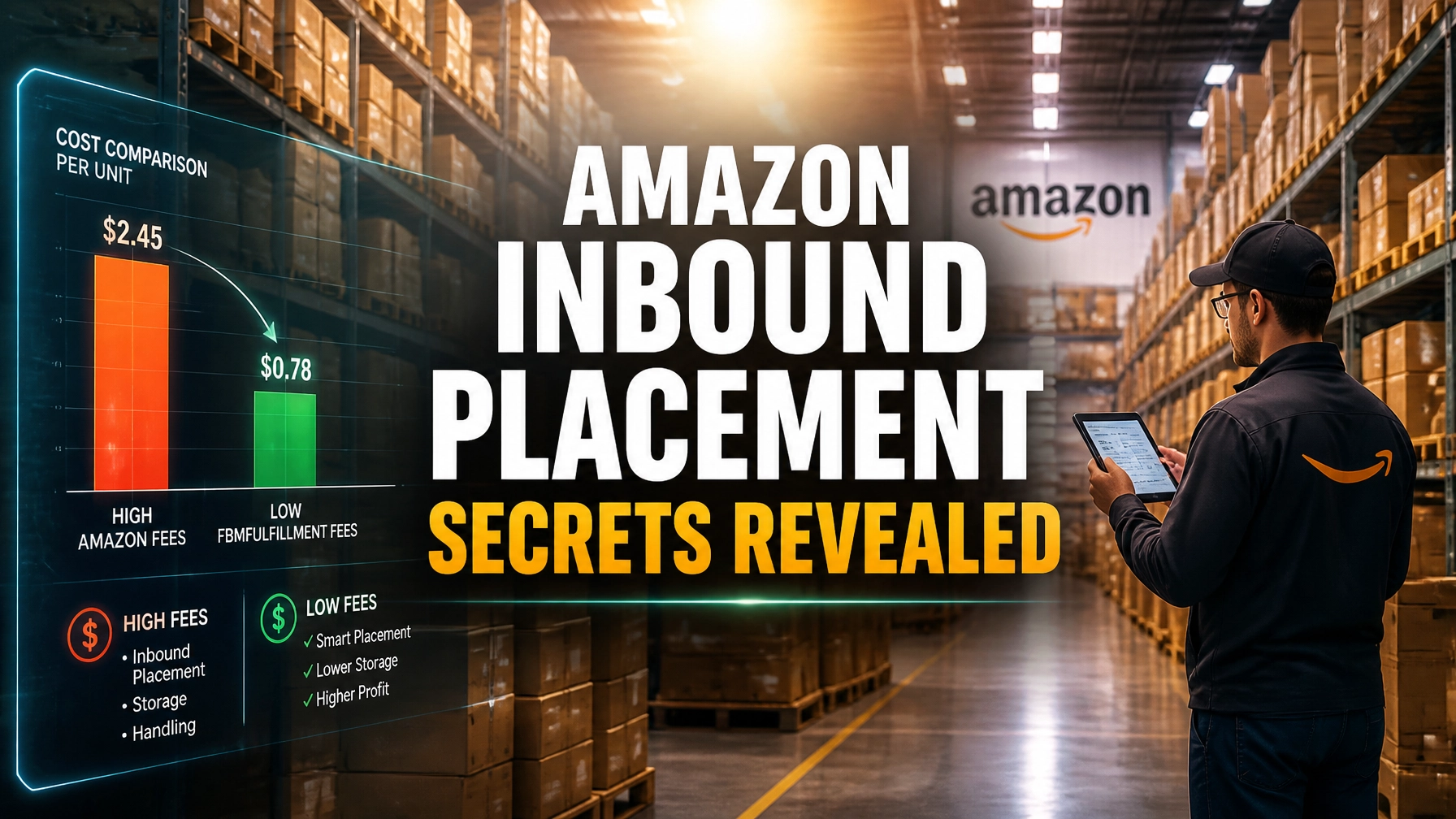
The landscape of Amazon FBA has shifted dramatically with the introduction of new fee structures that target the very heart of a seller’s margins. Perhaps the most significant: and potentially devastating: change is the implementation of amazon inbound placement fees. For years, sellers enjoyed a relatively straightforward inbound process, but the 2024 and 2025 updates have turned inbound logistics into a complex financial puzzle.
If you are shipping inventory into the Amazon network today, you are likely facing a choice: pay exorbitant fees to ship to a single location, or deal with the operational nightmare of splitting your shipments across four or more fulfillment centers. At FBMFulfillment.com, we saw this coming. As sellers ourselves, we built our exclusive FBA replenishment software module specifically to navigate these fee traps while maintaining inventory control.
The Financial Reality of Amazon Inbound Placement Fees
Amazon’s inbound placement service fee is designed to cover the cost of distributing inventory to fulfillment centers closer to customers. While Amazon claims this is partially offset by reduced outbound fulfillment fees, the data tells a different story for most multi-channel brands.
The 2024–2025 Fee Breakdown
Based on current data, the fees are assessed per unit and vary based on your “split” choice:
- Minimal Shipment Splits (1 Location): The most expensive option. For standard-size products, fees range from $0.21 to $0.35 per unit. For large bulky items, this can skyrocket to $3.50+ per unit.
- Partial Shipment Splits (2-3 Locations): A middle ground, typically costing $0.12 to $0.23 per unit for standard items.
- Amazon-Optimized Splits (4+ Locations): The only way to reach $0 in fees, but it requires shipping to at least four different regions simultaneously.
For a seller moving 10,000 units a month of a standard-size product, choosing the “minimal split” for convenience could cost an additional $3,500 monthly just in placement fees. This doesn’t include the “Low-Inventory-Level Fee” or the increased 2025 rates.
The FBMFulfillment Solution: The FBA Replenishment Module (FRM)
We didn’t just want to provide a warehouse; we wanted to provide a tactical advantage. Our exclusive FBA replenishment software module allows you to bypass the “Convenience vs. Cost” trade-off that Amazon forces upon you.

How the Drip-Feed Strategy Works
Instead of shipping your entire manufacturing run directly to Amazon: and getting hit with massive amazon inbound placement fees and storage fees or risking stockouts due to Amazon’s internal transfer delays: you ship everything to our 3pl jacksonville facility.
Our software then manages a “Drip-Feed” replenishment cycle:
- Inventory Possession Control: Your stock stays in our warehouse, not stuck in Amazon’s “Reserved” status or lost in their massive cross-docking system.
- Scheduled Replenishment: Our system identifies the optimal time to send small, frequent shipments to FBA.
- Automatic Split Management: We handle the logistics of shipping to multiple Amazon FCs (the “Amazon-Optimized” 4+ split) on your behalf. You get the $0 placement fee benefit without the manual labor of managing four different LTL or SPD shipments yourself.
Why 3PL Jacksonville is Your Logistics Cheat Code
Location is everything in logistics. Many sellers make the mistake of choosing a 3PL based solely on proximity to their home office. However, to maximize the efficiency of fba replenishment, you need to be near the point of entry.
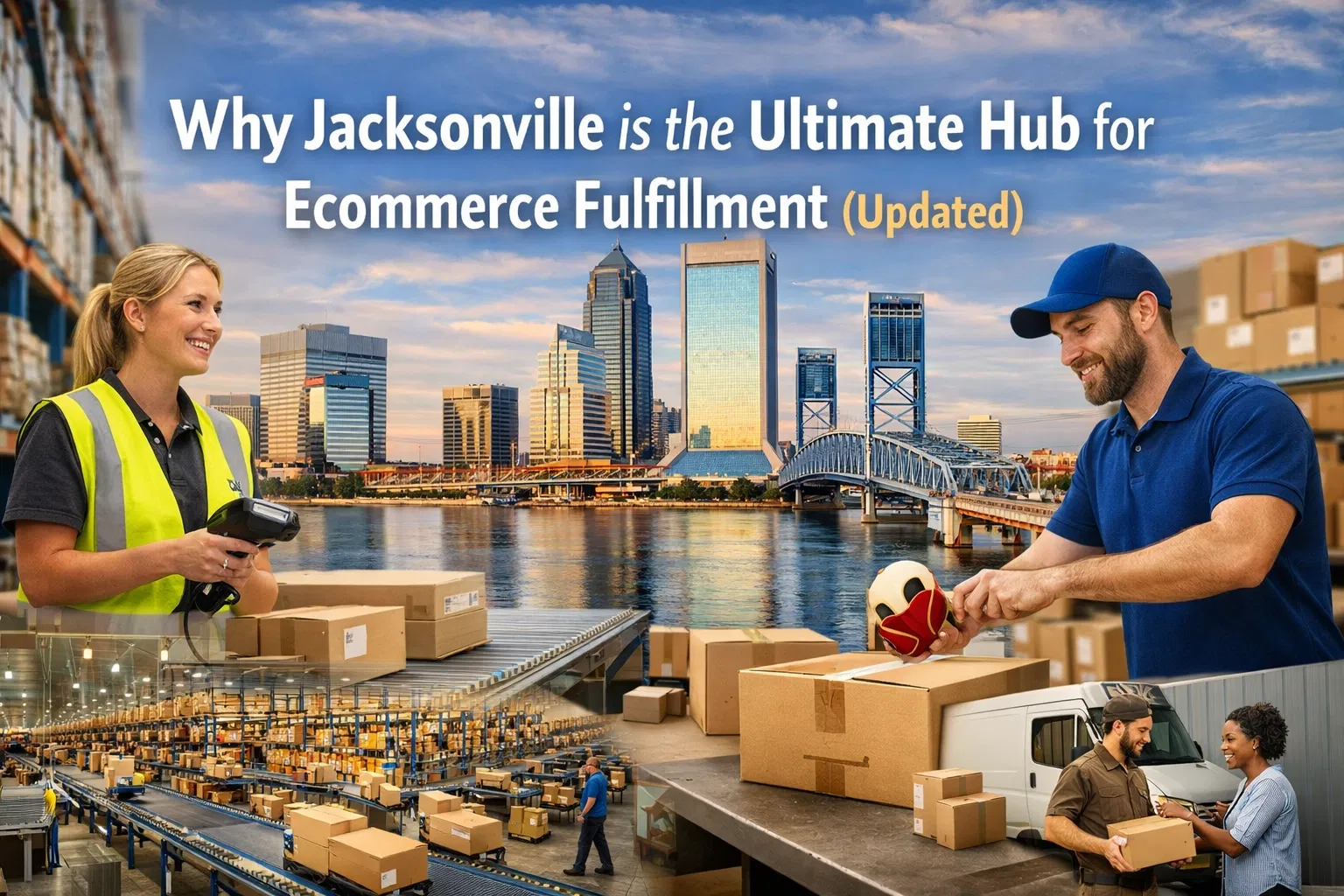
Our facility in Jacksonville, Florida, offers a unique strategic advantage known as the “Cleveland Longitude” secret. Jacksonville is located further west than many other East Coast ports, providing faster rail and trucking access to the Midwest and the entire Eastern Seaboard. By using a 3pl jacksonville, you reduce the lead time from port arrival to “Live on Amazon” by days, if not weeks.
This speed is critical because Amazon rewards “Fast Track” items. If your inventory is sitting in a container in LA/Long Beach for three weeks, you aren’t just losing sales; you are losing your Best Seller Rank (BSR).
Cost Comparison: Direct-to-FBA vs. FBMFulfillment Hybrid
Let’s look at the hard numbers for a typical large standard-size shipment of 2,000 units (weighing 1.5 lbs each).
| Fee Type | Direct-to-FBA (Minimal Split) | FBMFulfillment Hybrid Strategy |
|---|---|---|
| Inbound Placement Fee | ~$700 ($0.35/unit) | $0 (Optimized Split) |
| Storage Fee (Peak) | High ($2.40/cu ft) | Lower ($0.80 – $1.00/cu ft) |
| Inbound Shipping | Lower (1 location) | Slightly Higher (4 locations) |
| Processing Time | 14-21 Days (Transfer) | 2-5 Days (Direct to FC) |
| Total Savings | $0 | $450 – $1,100 per shipment |
The savings aren’t just in the amazon inbound placement fees. By holding your “overflow” stock in our Jacksonville warehouse, you avoid Amazon’s punitive storage rates for slow-moving or seasonal inventory.
Beyond FBA: Integrating Amazon Multi-Channel Fulfillment (MCF)
While FBA is a powerhouse, relying on a single channel is a precarious strategy. Many sellers attempt to use amazon multi channel fulfillment mcf to ship orders from Shopify, TikTok Shop, or Walmart.

Unfortunately, MCF comes with significant downsides:
- Loss of Branding: Your TikTok customer receives an Amazon-branded box, which can be confusing and against the TOS of certain marketplaces like Walmart.
- Inconsistent Shipping Times: Amazon prioritizes its own Prime orders over MCF orders, leading to shipping delays for your other channels.
- Inventory Lockdown: If Amazon suspends your account, your inventory for all channels is held hostage.
By using FBMFulfillment for your fba replenishment, you also gain a true multi-channel hub. We fulfill your Shopify, eBay, and TikTok orders directly from the same inventory pool we use to feed Amazon. This gives you actual 2-day delivery via FedEx and total control over your returns and branding.
Taking Control of Your Supply Chain
The era of “set it and forget it” FBA logistics is over. To survive the rising tide of amazon inbound placement fees, sellers must adopt a hybrid model.
At FBMFulfillment.com, we aren’t just a 3PL; we are your operational partners. Our systems were built by people who have dealt with the same “lost unit” headaches and “fee creep” that you are facing today. Whether you are looking to scale your wholesale operations or need a reliable 3pl jacksonville to protect your margins, we have the infrastructure to make it happen.
Contact us at FBMFulfillment.com and we will be glad to help you audit your current FBA fees and implement a replenishment strategy that sticks.
Key Takeaways
- The introduction of amazon inbound placement fees dramatically impacts seller margins.
- Sellers face a choice between high fees for one location or operational challenges splitting shipments across multiple centers.
- FBMFulfillment’s FBA replenishment module offers a solution by managing optimal shipping strategies and avoiding hefty fees.
- Jacksonville’s strategic location enhances logistics efficiency, providing faster access to Amazon fulfillment centers.
- Using FBMFulfillment enables sellers to bypass limitations of Amazon’s multi-channel fulfillment, maintaining control over branding and inventory.
Related Links
Frequently Asked Questions
It depends on how the shipment is split. Sending everything to a single location runs about $0.21-$0.35 per unit for standard items (and $3.50+ per unit for large bulky items). Splitting into 2-3 locations brings it down to about $0.12-$0.23 per unit. Splitting across 4+ Amazon-optimized locations brings the fee to $0. FBMFulfillment customers using the Exclusive FRM Module usually pay $0 in placement fees and products are available for sale, much faster with less handling opportunity for damage.
The article gives an example of a seller moving 10,000 units a month: choosing a minimal, one-location split for convenience could add roughly $3,500 a month in placement fees compared to a properly optimized multi-location split.
The FRM manages a ‘drip-feed’ replenishment cycle from FBMFulfillment’s Jacksonville facility, automatically splitting shipments across 4+ Amazon locations to hit the $0 placement fee tier — instead of shipping directly to Amazon and absorbing whatever fee a smaller split triggers. Inventory stays in the 3PL’s possession rather than sitting in Amazon’s reserved status until it’s actually needed.
Jacksonville offers faster rail and trucking access to the Midwest and Eastern Seaboard than West Coast ports do, which the article says can cut the time from port arrival to live, sellable Amazon inventory by days or even weeks — which helps protect Best Seller Rank instead of losing momentum while inventory is in transit.
For an example shipment of 2,000 units at 1.5 lbs each: direct-to-FBA runs about $700 in placement fees (at $0.35/unit) plus higher peak storage fees (around $2.40/cu ft) and 14-21 days of processing time. The FBMFulfillment hybrid model brings placement fees to $0, lowers storage to roughly $0.80-$1.00/cu ft, and cuts processing to 2-5 days — a total savings the article estimates at $450-$1,100 per shipment.
MCF ships in Amazon-branded packaging, which can create terms-of-service issues on platforms like Walmart or TikTok; shipping speed is inconsistent since Amazon prioritizes Prime orders first; and your non-Amazon inventory becomes vulnerable if your Amazon account is ever suspended. A 3PL hybrid model instead offers unified fulfillment with full branding control across Shopify, eBay, and TikTok.
The article argues no — with placement fee tiers, storage costs, and processing times all working against sellers who ship directly and simply, a hybrid model that actively manages splits and replenishment timing is now necessary to keep fee escalation under control.