
A late carrier scan, a missed same-day cutoff, or one week of stock sitting in the wrong place can cost more than the fulfillment fee on a single order. That is why the Amazon FBM vs 3PL question is often framed incorrectly. FBM is an Amazon fulfillment method. A 3PL is the operating partner that can execute that method for you.
For serious sellers, the real decision is not whether to fulfill orders yourself or use a warehouse. It is how much operational control you need, which costs you can absorb, and whether your current setup can keep pace when order volume, SKU count, or channel complexity increases.
Amazon FBM vs 3PL: Understand the Difference First
Amazon FBM, or Fulfilled by Merchant, means the seller is responsible for getting an Amazon order to the customer. The seller owns the shipping performance, handling time, tracking quality, cancellation rate, return process, and customer delivery experience. You can perform that work from your own warehouse, a garage in the early days, or through a third-party fulfillment provider.
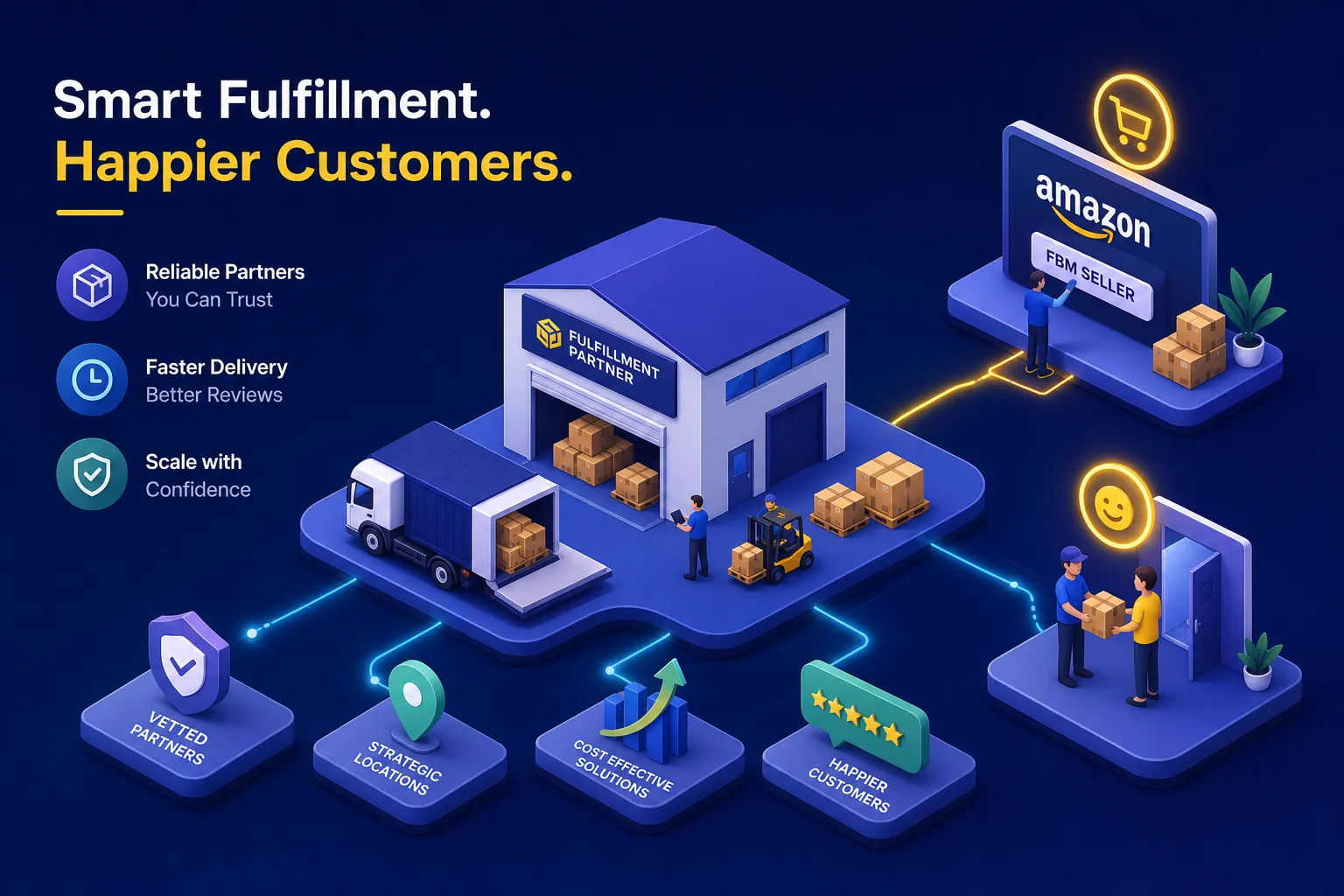
A 3PL, or third-party logistics provider, stores inventory and handles fulfillment work on a seller’s behalf. A capable ecommerce 3PL can ship Amazon FBM orders, direct-to-consumer orders from Shopify, Walmart orders, eBay orders, wholesale shipments, and replenishment shipments to Amazon FBA. In other words, using a 3PL does not mean giving up FBM. It can be the way a growing brand makes FBM operationally viable.
This distinction matters because many sellers compare Amazon FBA to FBM, then treat FBM as synonymous with packing orders in-house. That works until it does not. Once fulfillment requires multiple carrier pickups, accurate order routing, weekend coverage, returns processing, and inventory allocation across channels, the cost of running everything internally becomes much more than labor and tape.
The Real Cost Comparison Is Not Fee vs Fee
Amazon FBA has clear charges, but sellers know the total cost rarely stops at a fulfillment fee. Storage fees, aged inventory exposure, inbound placement requirements, receiving delays, inventory limits, removal orders, and lost sales during stockouts all affect margin. FBA remains valuable for products that benefit from Prime eligibility and Amazon’s delivery network, but it should not automatically become the only place inventory lives.
With in-house FBM, the visible cost may look lower at first. You pay your own labor, rent, packaging, software, shipping, and supplies. The hidden cost shows up when the owner becomes the backup warehouse manager, when an employee calls out during a promotion, or when one marketplace spike disrupts every other channel. Internal fulfillment can be efficient for brands with stable volume, simple catalogs, and the space and team to run it well. It is not automatically efficient because the business owns the warehouse.
A 3PL adds a service cost, but it can remove expensive friction. The right provider gives a brand established warehouse labor, shipping workflows, carrier relationships, inventory systems, and the ability to process orders across channels without building every capability from scratch. The value is not just in outsourcing pick and pack. It is in reducing the risk that fulfillment becomes the constraint on growth.
The comparison should include the operational cost of failure. Ask what happens if a delayed inbound shipment puts FBA inventory out of stock. Ask what happens if a team misses Amazon’s promised handling time during a holiday surge. Ask what it costs when a fast-selling SKU is trapped in the wrong network while your Shopify store has demand. Those are margin events, not minor warehouse issues.
Where FBM Gives Sellers More Control
FBM can give sellers more control over inventory placement and order decisions. Rather than sending all available stock into Amazon, a brand can hold inventory in a fulfillment center and route it to the channel where it is needed. That protects the business from putting too much stock inside one marketplace ecosystem.
It also creates options. A seller can use FBA for proven, fast-moving SKUs while using FBM for oversized items, slower movers, bundles, seasonal products, or products that need special handling. The same inventory pool can support Amazon merchant-fulfilled orders, a branded store, and other marketplaces when the fulfillment operation is set up correctly.
For Seller Fulfilled Prime sellers, the stakes are higher. Delivery performance is not a branding exercise. It is an account-level requirement. Cutoff times, carrier handoff, scan compliance, inventory accuracy, and cancellation prevention need to work every day, not only when volume is predictable. Sellers considering this route need a fulfillment partner that understands that Amazon metrics can affect selling privileges and revenue.
When an In-House FBM Operation Still Makes Sense
There is no rule that every Amazon seller needs a 3PL. In-house FBM can be the right choice when order volume is manageable, the product requires hands-on customization, or the business already has an experienced warehouse team and available space. It may also make sense for a local operation with unusual packing requirements that would be hard to train externally.
The key is to measure capacity honestly. If the operation depends on one person knowing every SKU location, if orders pile up whenever volume doubles, or if the team cannot take a day off without risking late shipments, the business does not have scalable fulfillment. It has a fragile process.
A useful test is whether the warehouse can handle four events at once: a promotion-driven order spike, an inbound container or freight delivery, a return backlog, and a marketplace inventory issue. If one of those events stops orders from leaving on time, it is time to examine outside support.
When a 3PL Is the Better FBM Strategy
A 3PL becomes especially valuable when a seller is expanding beyond a single channel. Multichannel brands need one accurate inventory picture, order routing that does not require manual intervention, and a process for preventing oversells. They also need a plan for distributing inventory without losing control of it.
The right provider should be evaluated as an extension of your operations team, not as a place to send boxes. Ask how it manages Amazon order cutoffs, carrier scans, stock discrepancies, returns, FBA replenishment, and inventory reporting. Ask who responds when a shipment has an exception or a SKU count does not match. Vague answers are a warning sign.
Service accountability matters just as much as warehouse capacity. A low pick-and-pack quote does not protect your margin if late shipments damage account health, inventory errors create cancellations, or support tickets sit unanswered while a best seller goes out of stock. The cheapest fulfillment option can become the most expensive one when it creates seller performance problems.
For brands using both FBA and FBM, a 3PL can serve as the control point between channels. Inventory can be held outside Amazon, replenished into FBA in planned quantities, and used to fulfill merchant-fulfilled orders when Amazon inventory is constrained or delayed. That approach reduces dependency on one network without giving up the sales opportunities FBA can provide.
Build the Model Around Risk, Not Convenience
The strongest fulfillment model is usually a hybrid one. Keep FBA where it supports conversion and delivery expectations. Use FBM to preserve flexibility, protect against inventory restrictions, support products that do not fit the FBA model, and keep other sales channels supplied. Then decide whether your internal operation can execute that strategy consistently or whether a 3PL should run the warehouse layer.
FBMFulfillment works with sellers facing this exact decision because the answer is rarely to move every unit in one direction. It is to put inventory where it can produce revenue without exposing the business to unnecessary fees, delays, or single-channel risk.
Fulfillment should give your business options when demand changes. If your current setup only works when every forecast, shipment, and marketplace policy goes according to plan, it is not giving you control. It is giving you a deadline.