If you have ever watched a listing slow down because inventory was stuck in receiving, or paid storage fees on units you needed somewhere else, you already understand why amazon fbm fulfillment service matters. For many sellers, FBM is not a backup plan. It is a way to protect margin, keep inventory accessible, and avoid putting every operational decision inside Amazon’s network.
The mistake is treating FBM like a simple pick-and-pack function. It is not. When FBM is set up correctly, it becomes a control system for your business. It affects delivery promises, account health, replenishment timing, return handling, and how fast you can move inventory across Amazon, Shopify, Walmart, eBay, and other channels without creating stockouts or overcommitting inventory.
What an amazon fbm fulfillment service actually does
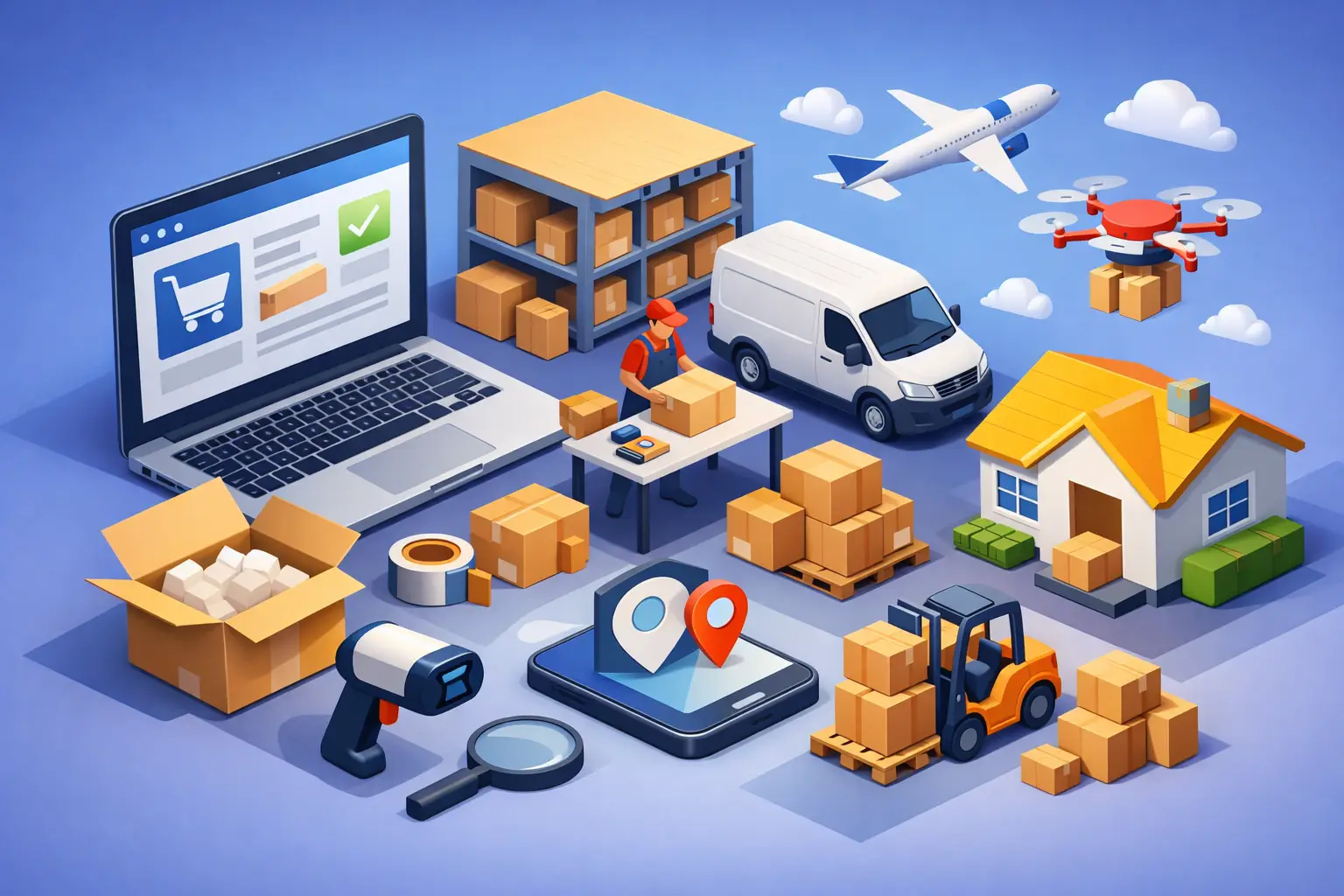
At a basic level, an amazon fbm fulfillment service stores your products, processes orders, picks and packs each shipment, and gets it out the door on time. But serious sellers need more than a warehouse that prints labels.
A strong FBM operation has to work around the way Amazon actually evaluates seller performance. That means shipping on time, maintaining valid tracking, controlling cancellation rates, handling returns cleanly, and making sure inventory shown as available can actually be shipped within the promise window. If the fulfillment provider misses those details, the seller takes the hit, not the warehouse.
That is why FBM fulfillment should be treated as an operations function, not a commodity service. The right partner understands that one delayed outbound batch can create customer complaints, late shipment defects, and performance pressure that costs more than any storage invoice.
Why more sellers are moving inventory outside FBA
The appeal of FBA is obvious. It can increase reach, simplify Prime eligibility in some cases, and remove a lot of daily fulfillment work. But the economics and risk profile have changed for many brands.
Inventory limits can force difficult decisions about what to send in and when. Receiving delays can leave your best sellers unavailable when demand is strongest. Long-term storage costs and aged inventory surcharges can eat into margin quietly, month after month. And if too much of your inventory sits inside one channel, your ability to serve other marketplaces gets weaker.
That is where FBM becomes practical. You keep inventory available outside Amazon, which gives you options. You can fulfill Amazon orders directly, feed inventory into FBA in smaller replenishment waves, support direct-to-consumer orders, and react faster when demand shifts. Instead of forcing all stock through one path, you build flexibility into the business.
For hybrid sellers, that flexibility matters even more. Many brands use FBA for part of the catalog and FBM for oversized products, slower movers, bundled products, fragile SKUs, seasonal overflow, or listings where FBA fees no longer make sense. It depends on product economics, sales velocity, and how much fulfillment risk you are willing to hand over.
The real benefits of Amazon FBM fulfillment service
The biggest advantage is control. Your inventory stays accessible, which means you are not waiting on Amazon to receive, redistribute, or approve movement before you can sell again. If a SKU starts moving on Walmart or Shopify, you can allocate stock there without fighting the limitations of inventory trapped in FBA.
The second advantage is margin protection. FBA is not always the cheaper option once you factor in storage pressure, inbound shipping, prep costs, removals, and fee changes. For certain products, especially larger, heavier, lower-turn, or bundled items, FBM can make the unit economics cleaner.
The third advantage is multichannel efficiency. Sellers who are no longer Amazon-only need one inventory pool that can support multiple sales channels. Running separate inventory silos creates forecasting errors and stock fragmentation. A capable 3PL lets you use inventory more intelligently across channels instead of duplicating stock everywhere.
There is also a risk-management benefit that experienced operators appreciate. If Amazon changes a policy, restricts a category, delays a shipment, or suddenly compresses your available storage, you are not starting from zero. You already have an external fulfillment operation in place.
Where FBM can go wrong
FBM is not automatically better than FBA. It works when the operation behind it is disciplined.
If your fulfillment partner is slow, misses carrier cutoffs, ships with poor packaging, or lacks accurate inventory controls, the cost of that failure lands on your seller account. Late shipments, cancelled orders, and weak tracking are not small issues on Amazon. They can damage performance fast.
There is also a systems issue. Some warehouses can fulfill orders, but they are not built for ecommerce complexity. They struggle with channel integrations, SKU mapping, kit assembly, order routing, or syncing inventory in real time. That creates oversells, delays, and manual cleanup work that gets worse as order volume grows.
This is why sellers should be skeptical of any provider that presents FBM as generic warehousing. Amazon orders come with service-level expectations. Multichannel brands come with inventory complexity. If the 3PL does not understand both, you will spend your time managing exceptions instead of scaling.
How to evaluate an amazon fbm fulfillment service
Start with operational accuracy, not pricing. Low rates do not mean much if orders ship late or inventory counts drift. Ask how inventory is received, how discrepancies are handled, how quickly orders are processed, and what happens when the daily volume spikes.
Then look at channel compatibility. If you sell on Amazon today but also run Shopify, Walmart, or eBay, your fulfillment setup should support that broader model. Even if Amazon is the largest channel, it should not be the only one your warehouse can handle well.
You should also ask how the provider deals with FBA support functions. Many sellers do not need a warehouse for FBM alone. They need reserve storage, drip-feed replenishment into Amazon, returns handling, prep work, and freight coordination. Those functions matter because they reduce the friction between your owned inventory and Amazon’s network.
Finally, evaluate accountability. When fulfillment problems happen, do you get clear answers from people who understand seller metrics, or do you get generic warehouse responses? That difference becomes obvious the first time a receiving issue, stock mismatch, or delivery delay threatens sales.
FBM works best as part of a larger fulfillment strategy
The strongest ecommerce operations usually do not think in terms of FBA versus FBM as a binary choice. They use both where each one makes sense.
FBA may be the right fit for high-velocity SKUs where the fee structure works and inventory flow is stable. FBM may be better for backup inventory, overflow storage, products with margin pressure, multichannel allocation, and faster response when Amazon creates friction. The point is not to pick a side. The point is to reduce dependence on any one channel’s limitations.
That is also where an operator-minded 3PL has value. A warehouse that understands Amazon from the seller side can help you think beyond shipment processing. It can help you protect stock availability, avoid storage traps, and keep more control over where your inventory goes next. That is a very different relationship from simply renting shelf space.
For brands that are growing, this matters early. Waiting until inventory limits tighten, a top SKU stocks out, or Amazon delays receiving before setting up FBM usually means you are making decisions under pressure. A better move is to build the infrastructure before the problem gets expensive.
FBMFulfillment is built around that reality. The goal is not just to ship boxes. It is to give sellers a fulfillment operation that supports Amazon performance, multichannel growth, and better inventory control at the same time.
If you sell online for a living, fulfillment is not a back-office task. It is one of the main ways you protect margin, preserve account health, and stay in control when the market or Amazon shifts under you. The sellers who treat it that way usually make better decisions before they are forced to.