
Amazon AWD Vs. FBMFulfillment: Which Is Better for Your Multi-Channel Margins?
Amazon AWD is a “walled garden” that can quickly turn into “Amazon Jail.” While automatic FBA replenishment sounds easy, the hidden fees—like $1.35 per box handling and 5% surcharges for neutral packaging—eat your profits. We compare AWD’s restrictive ecosystem to our independent FBA Drip-Feed model. With FBMFulfillment, you maintain 100% possession control and a single inventory pool for all channels. Our “Daily Wins” storage (no snapshot traps) and neutral carriers ensure you can pivot instantly if Amazon suspends your account, keeping your Shopify and TikTok sales alive.
Best 3PL Fulfillment Companies for Small Businesses in the US
Choosing a 3PL is like hiring: you need a partner that fits your profile, not just a big brand name. This guide provides a framework to evaluate providers by order volume, SKU complexity, and geography. We shortlist top picks for 2026, highlighting FBMFulfillment for sellers who demand direct control, no contracts, and no onboarding fees. We dive into the math of cubic-foot storage vs. pallet positions and emphasize API-first integrations. Use our weighted scorecard to filter out “fly-by-night” startups and find a fulfillment partner that actually scales with your margins.
FBA vs. FBM: Which Products Win Where? (And How to Use Both)
FBA isn’t the only way to scale—sometimes it’s a track to margin-suicide. This post breaks down which SKUs thrive in FBA and which are better off in a 3PL. FBA is great for small, high-velocity “winners,” but margin-killing for multi-unit bundles, oversized items, and high-SKU catalogs. We introduce the “Insurance Policy”: an FBA/FBM Hybrid strategy that uses FBM as a “hot standby” to protect your Best Seller Rank during stockouts. Use our FBA Drip-Feed model to beat storage limits, maintain high IPI scores, and reclaim control over your returns and reputation.
Amazon FBA Inventory Math: How to Calculate Your Target Stock Levels (and Save Your Sanity)
Inventory is “frozen cash,” and managing it shouldn’t be based on a gut feeling. Whether you’re dealing with lead time swings or safety stock buffers, this data-driven guide provides the formulas needed to stay in the “Goldilocks Zone.” Learn how a domestic 3PL partner changes the math by reducing replenishment times from months to days. By drip-feeding Amazon FBA from a local 3PL, you keep your IPI scores high and your storage fees low. Stop the inventory roller coaster and start right-sizing your stock to unlock capital for ads and growth.
FBA-FBM Hybrid Listing Secret to Maximize Amazon Profits
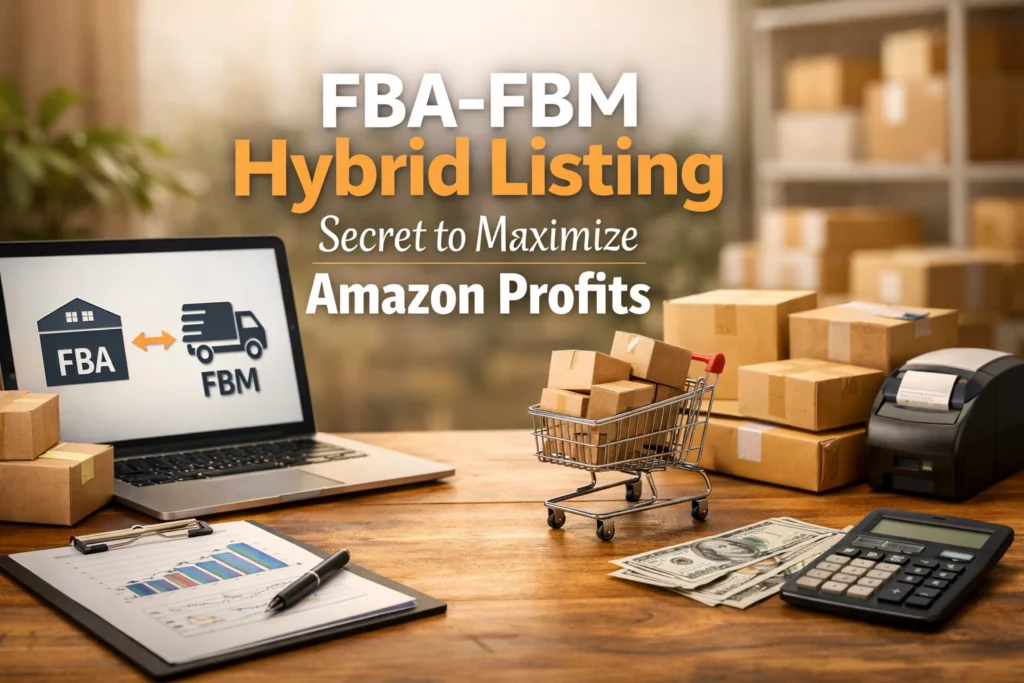
Relying 100% on FBA is a risk modern brands can no longer afford. Between skyrocketing storage fees and replenishment restrictions, your inventory is often held “hostage.” The secret is the FBA-FBM Hybrid Strategy: creating mirror listings for every ASIN. This fail-safe ensures that if FBA stocks out, your Merchant Fulfilled offer automatically kicks in to protect your keyword rankings and Buy Box status. Discover how our advanced technology synchronizes “each-level” inventory in real-time, giving you the resilience of a professional seller and the affordable storage of a dedicated 3PL partner.
FBA Dripfeed: The 2026 Strategy for High IPI and Low Fees
Amazon wants to be a fulfillment center, not a storage warehouse. If you’re still sending bulk shipments straight to Jeff, you’re likely tanking your IPI and overpaying for storage. Enter the FBA Dripfeed: storing your bulk stock at a 3PL and shipping small, optimized batches into FBA as needed. This strategy keeps your sell-through rates phenomenal and bypasses aggressive placement fees. By combining dripfeeding with an FBM backup, you create a lean, profitable machine that keeps your margins fat while staying exactly within Amazon’s evolving rules for 2026.