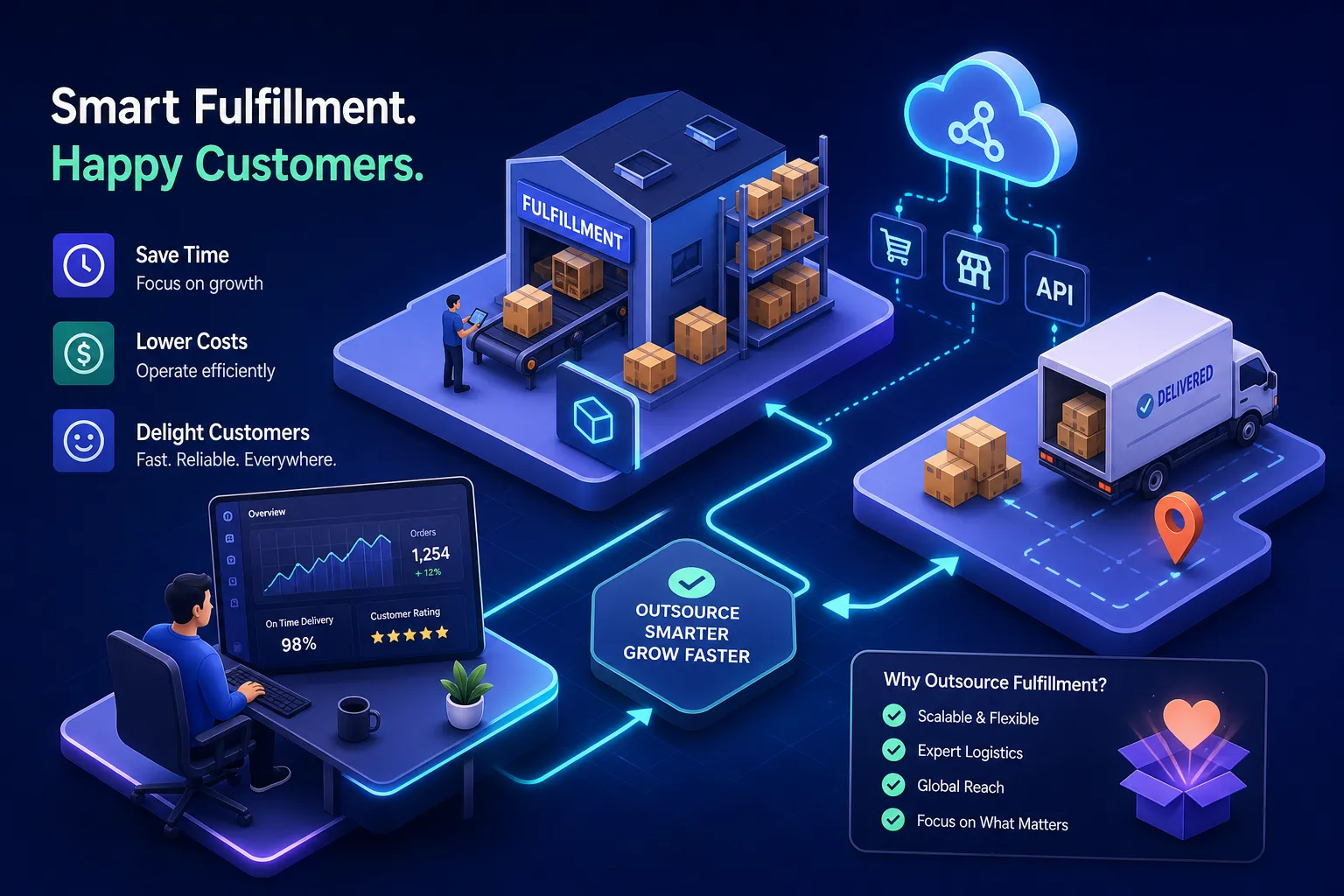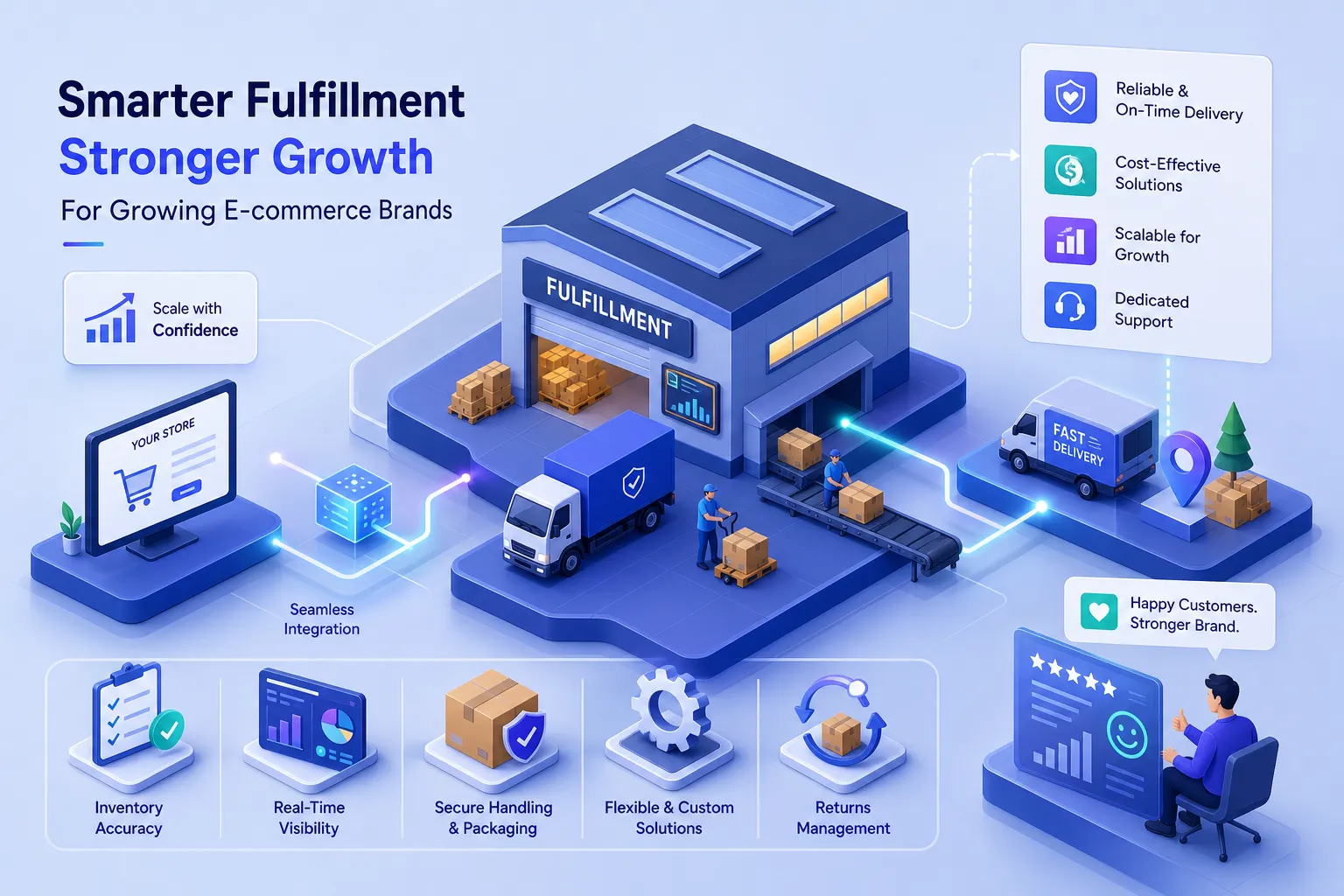
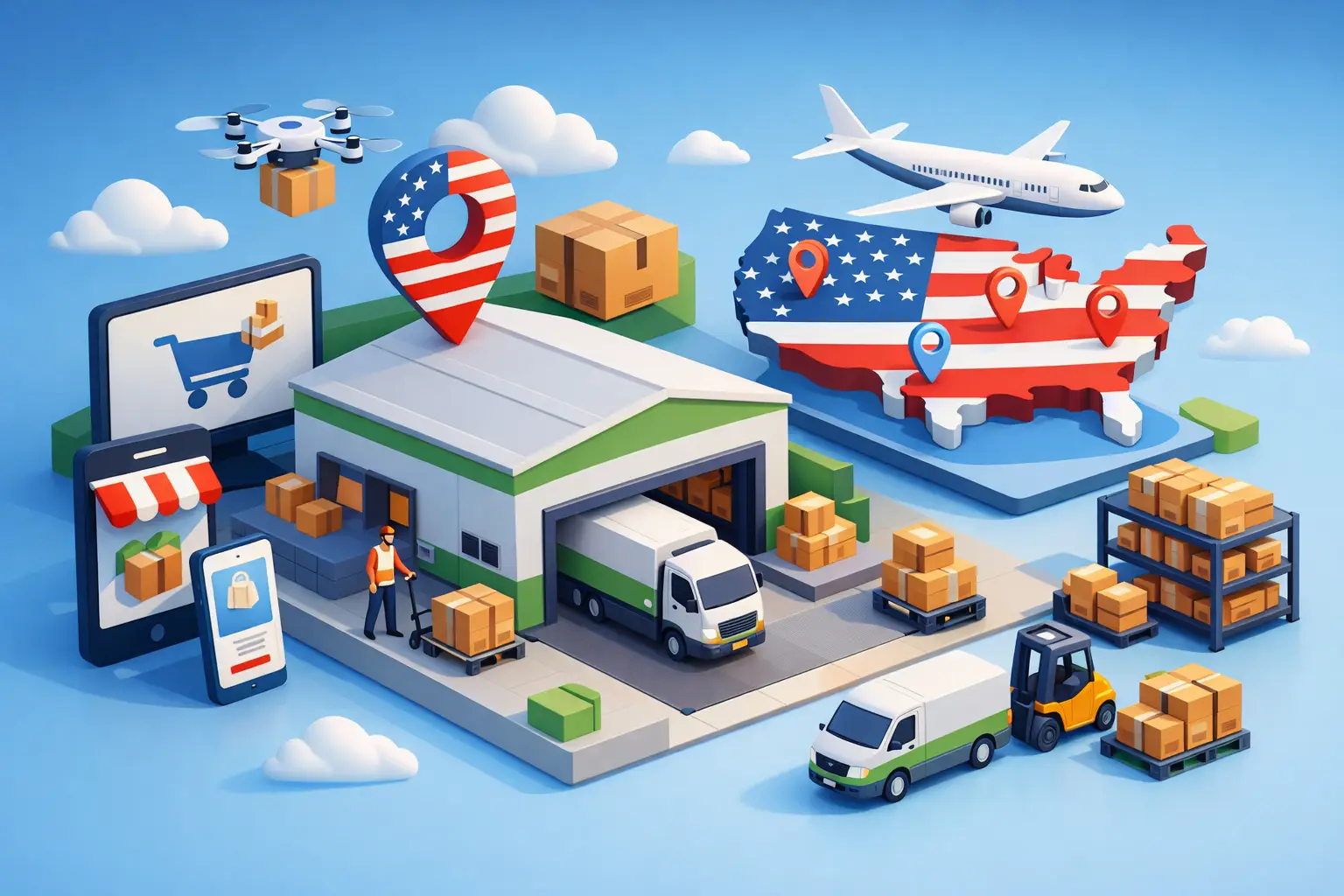
A late shipment from your Shopify store does more damage than the cost of postage. It eats into margin, triggers support tickets, weakens repeat purchase rates, and turns fulfillment into a daily distraction. That is why choosing the right shopify fulfillment center usa option is not just about finding warehouse space. It is about protecting delivery performance, inventory accuracy, and operational control as your brand grows.
For serious ecommerce operators, fulfillment is where profit gets preserved or lost. A provider can look fine on paper and still create expensive problems once order volume climbs, SKU counts expand, or sales start flowing from multiple channels at once. If you sell on Shopify and also move inventory through Amazon, Walmart, eBay, or wholesale accounts, the wrong 3PL will show its weaknesses fast.
What a Shopify fulfillment center USA partner should actually do
A lot of providers present fulfillment as a simple pick, pack, and ship service. That is too narrow for a growing ecommerce business. A real Shopify fulfillment partner in the US should function as an operational extension of your business, not a box-moving vendor.
At minimum, the provider should sync cleanly with Shopify, process orders quickly, maintain accurate inventory, and handle returns without creating a second mess for your team. But that baseline is not enough if you are trying to scale. You also need visibility across SKUs, disciplined receiving, support for bundles and kitting, and the ability to manage inventory that may be allocated across more than one channel.
That matters even more for hybrid sellers. If your Shopify store is only one part of your sales mix, your warehouse partner has to understand that inventory is not static. Stock may need to support direct-to-consumer orders today, Amazon FBM tomorrow, and FBA replenishment next week. A warehouse that only understands one workflow will create bottlenecks everywhere else.
Why US fulfillment matters for Shopify brands
A shopify fulfillment center usa strategy makes sense for merchants who sell primarily to US customers and need predictable domestic delivery. Speed matters, but consistency matters more. Customers may tolerate a four-day delivery if the promise is accurate. They are far less forgiving when the delivery estimate says two days and the order ships three days late.
Domestic fulfillment also gives sellers more control over returns, inventory transfers, and customer communication. If stock is held overseas or passed through fragmented shipping networks, every exception takes longer to resolve. That delay adds labor costs internally, and it creates churn externally.
There is also a margin issue. Many brands underestimate how quickly fulfillment costs compound when inventory is stored in the wrong place or shipped through inefficient zones. A US-based operation with smart carrier routing, reliable receiving, and disciplined order handling can reduce both direct shipping cost and the hidden cost of fulfillment mistakes.
The most common mistakes when evaluating a Shopify fulfillment center USA provider
The first mistake is choosing based on rate cards alone. Low storage fees or attractive pick-and-pack pricing can hide expensive operational gaps. If inventory gets received slowly, orders get mis-picked, or support responses take two days, the real cost shows up elsewhere.
The second mistake is ignoring system quality. Shopify sellers need more than a basic software connection. You need dependable order import, live inventory updates, and clean handling of order exceptions. If the system fails when you run promotions, launch bundles, or process high order volume, your warehouse pricing will not save you.
The third mistake is treating fulfillment as separate from channel strategy. Many ecommerce brands outgrow single-channel logistics long before they realize it. A provider may handle Shopify orders well enough, but if they cannot support Amazon FBM, FBA replenishment, or wholesale prep, you end up splitting inventory and adding complexity. That usually leads to poorer forecasting and more stock risk.
What to ask before you sign
A good provider should be able to answer direct questions without dancing around them. Ask how they handle receiving delays, damaged inbound shipments, returns processing, SKU relabeling, bundle assembly, and carrier exceptions. Ask how inventory counts are verified and how often cycle counts happen. Ask who you speak to when an issue affects live orders.
You should also ask operational questions that many sellers skip. What happens when your daily order volume doubles during a promotion? How are backorders prevented? Can the provider separate inventory for Shopify, Amazon, and wholesale if needed? How do they handle FBA prep or drip-feed replenishment if your Amazon storage limits tighten?
These are not edge-case questions. They are normal ecommerce realities. If a 3PL cannot give clear answers, that usually means you will be the one solving the problem later.
Inventory control is the real advantage
Most sellers start looking for a fulfillment partner because they need shipping help. The better reason is inventory control. Inventory is where margin, cash flow, and channel stability meet.
A strong fulfillment operation helps you avoid the two most expensive inventory mistakes: overcommitting stock and losing sellable units to bad warehouse process. When your warehouse data is unreliable, every decision above it gets weaker. Forecasting gets harder. Ad spend gets riskier. Marketplace promises become harder to maintain.
This is one reason experienced sellers often move away from treating Amazon as their only inventory solution. FBA has a role, but putting too much stock into one network can expose your business to receiving delays, storage restrictions, fee pressure, and stranded inventory risk. A US 3PL that supports Shopify orders while also feeding Amazon as needed gives you more flexibility.
That flexibility is often where better margins come from. You can hold reserve inventory outside Amazon, replenish strategically, and continue fulfilling direct-to-consumer orders without waiting for a marketplace to solve your logistics problem.
Shopify fulfillment is easier when your 3PL understands marketplaces
A lot of Shopify brands are not pure DTC brands. They may start on Shopify, but they also sell on Amazon, Walmart, TikTok Shop, eBay, or through retail and wholesale channels. That changes what “good fulfillment” looks like.
A warehouse that only understands DTC shipping may struggle with marketplace compliance, routing requirements, prep standards, or the urgency that comes with account metrics. On the other side, a provider built around ecommerce operations understands that one inventory pool may need to support very different order types with very different service expectations.
That seller perspective matters. It changes how the warehouse receives product, prioritizes exceptions, and communicates around delays. It also changes how replenishment gets planned. If your fulfillment partner understands stockout risk, Amazon performance pressure, and the cost of missed delivery windows, they make better decisions before the problem gets expensive.
That is where a provider like FBMFulfillment tends to stand out. The value is not just that orders get shipped. The value is that the operation is built around the realities sellers actually face when inventory has to support Shopify, marketplaces, and growth at the same time.
When a Shopify fulfillment center USA setup is the right move
Not every merchant needs to outsource immediately. If you have low order volume, a narrow SKU catalog, and enough internal capacity to pack accurately every day, keeping fulfillment in-house can still work. But there is usually a tipping point.
That tipping point often shows up when the founder is spending too much time on shipping, when customer service volume rises because fulfillment is inconsistent, or when inventory is spread across garage shelves, small storage units, and Amazon. It also appears when promotions become stressful because your systems and space cannot absorb order spikes.
Once fulfillment starts limiting growth, outsourcing is no longer just a convenience decision. It becomes an operational decision. The right 3PL gives you room to scale without losing control.
How to make the final decision
Choose the partner that gives you confidence in execution, not just confidence in sales calls. You want clear operating procedures, responsive support, accurate inventory handling, and real experience with ecommerce complexity. If you sell across channels, make sure the provider can support that model now, not later.
It also helps to think beyond the next 90 days. A fulfillment provider should fit the business you are building, not only the order count you have today. Can they handle more SKUs, more channels, more returns, and more demanding service levels without creating friction?
A good warehouse reduces labor. A strong fulfillment partner reduces risk. That is the difference worth paying attention to.
If you are evaluating a shopify fulfillment center usa solution, look past the promise of faster shipping and focus on control. The providers that help you keep inventory clean, orders moving, and channel strategy flexible are the ones that make growth easier instead of harder.