A WooCommerce store can look healthy on the front end while fulfillment is quietly eating the business alive. Orders come in, the checkout works, ad spend is producing sales, but the back end starts slipping – late shipments, split inventory, picking mistakes, and customer service tickets that pile up faster than the team can clear them. That is why woocommerce order fulfillment deserves more attention than most sellers give it.
For smaller stores, fulfillment problems usually start as annoyances. For growing stores, they turn into margin loss and operational risk. If you sell across Amazon, Walmart, eBay, or your own site, the pressure is even higher because one weak process can affect every channel at once.
What WooCommerce order fulfillment actually includes
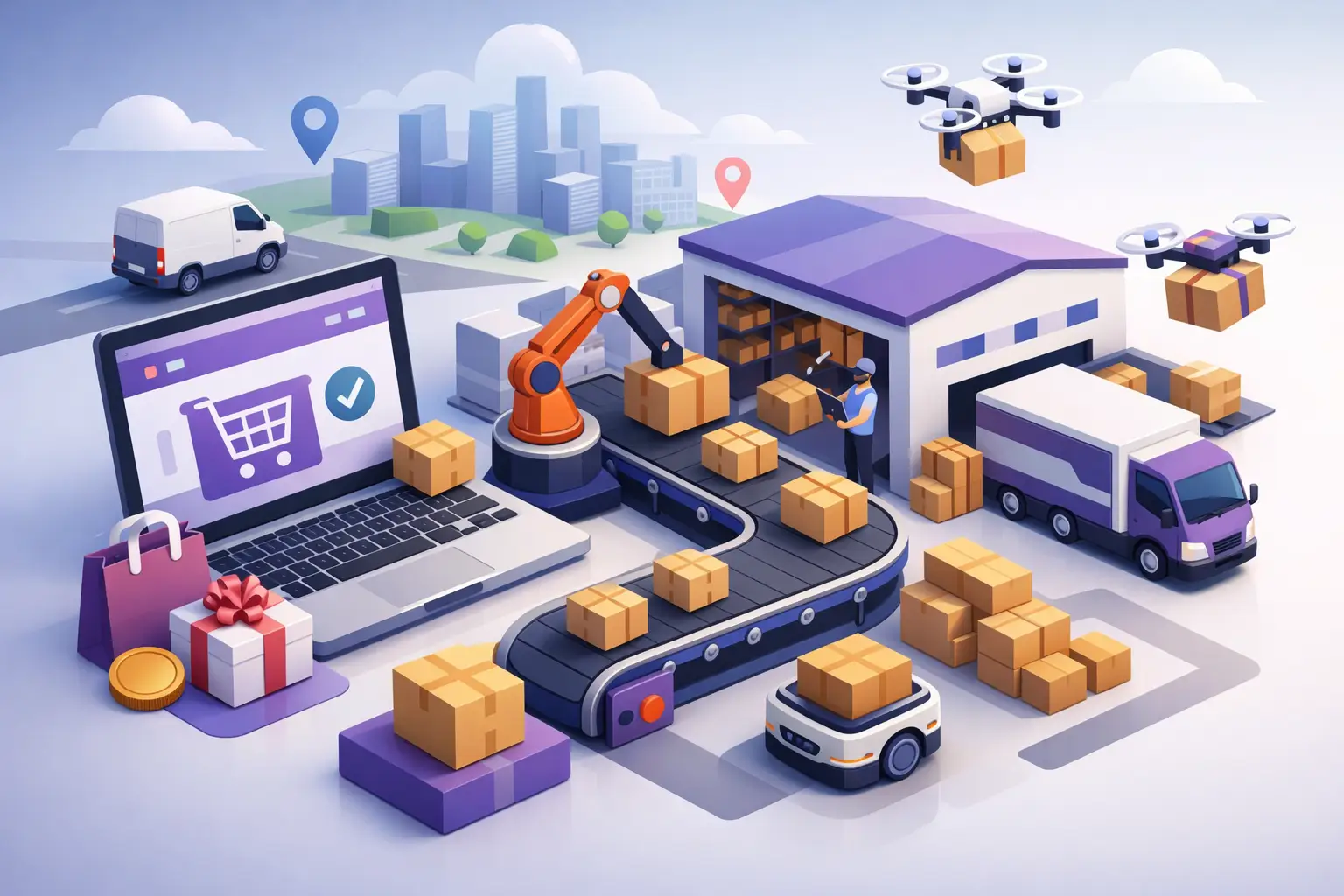
A lot of merchants reduce fulfillment to printing labels and handing boxes to a carrier. That is only the visible part. In practice, WooCommerce order fulfillment includes order import, inventory syncing, picking, packing, shipping method logic, tracking updates, return handling, and stock accuracy across every place you sell.
If any one of those pieces is weak, the cost shows up somewhere else. A bad inventory sync creates oversells. Slow pick-and-pack times increase same-day shipping misses. Poor packaging decisions raise shipping costs or damage claims. Returns without clear workflows create dead stock and accounting confusion.
This is where many WooCommerce sellers get caught. The platform can support serious ecommerce operations, but it does not solve warehouse execution by itself. A plugin stack is not a fulfillment strategy.
Where WooCommerce stores usually break
Most fulfillment breakdowns are not caused by one major failure. They come from a series of small process gaps that get exposed as order volume climbs.
The first problem is inventory accuracy. When a merchant is selling from WooCommerce while also feeding Amazon FBM, retail orders, or wholesale accounts, inventory has to stay current everywhere. If stock counts are updated late or manually, overselling becomes almost inevitable. One wrong quantity on a fast-moving SKU can trigger canceled orders, customer complaints, and marketplace performance issues.
The second problem is warehouse flow. Many stores start by fulfilling in-house from a garage, office, or small unit. That can work for a while, especially with a simple SKU mix. It breaks when SKU counts expand, product bundles are introduced, or promotional spikes hit. Suddenly the business is relying on tribal knowledge instead of standard operating procedures.
The third issue is shipping logic. WooCommerce sellers often set basic shipping rules early and never revisit them. Then product dimensions change, carriers raise rates, zones shift, and the store keeps using methods that no longer make financial sense. What looked profitable on paper gets chipped away by avoidable parcel cost.
The fourth issue is labor dependency. If fulfillment only works when one experienced person is in the building, that is not a stable operation. It is a bottleneck with a payroll line attached.
Why fulfillment matters more for margin than many sellers realize
Marketing waste gets attention because it is easy to see. Fulfillment waste is quieter, which makes it more dangerous.
A one- or two-dollar increase in actual shipping cost per order can erase a meaningful part of your contribution margin. So can frequent reships, poor packaging choices, inaccurate rate shopping, or excessive storage time on slow inventory. Add labor inefficiency and return processing issues, and the problem gets bigger fast.
WooCommerce sellers also tend to feel fulfillment costs indirectly through customer behavior. If orders arrive late, tracking is unclear, or packages show up damaged, repeat purchase rate drops. That hurts lifetime value, even if the original order looked profitable.
For sellers running a hybrid model with Amazon, fulfillment discipline matters even more. If your direct-to-consumer channel is disorganized, you lose flexibility. You cannot move stock confidently between your own store, FBM orders, FBA replenishment, and other channels. That creates exactly the kind of inventory friction that leads to stockouts in one place and stranded inventory in another.
When in-house fulfillment still makes sense
Not every WooCommerce store needs a 3PL immediately. If your volume is low, your SKU catalog is simple, and your team can maintain accurate shipping and inventory processes without distraction, keeping fulfillment in-house can be reasonable.
It also makes sense when product handling is highly specialized and hard to train externally, or when the business is still validating demand and should avoid locking into more operational structure than it needs.
But there is a difference between in-house fulfillment being efficient and it simply being familiar. A lot of sellers keep packing orders themselves because it feels cheaper, even when it is pulling time away from merchandising, channel expansion, and cash flow management. If the founder is still fixing shipping exceptions at night, the business has probably outgrown the current setup.
Signs your WooCommerce order fulfillment needs a different model
The decision point usually shows up before owners want to admit it. You are likely there if shipping cutoff times keep getting missed, inventory counts require frequent corrections, customer service is spending too much time on tracking issues, or peak periods create chaos instead of controlled volume.
Another major sign is channel conflict. If WooCommerce orders are competing with Amazon FBM orders, wholesale prep, or marketplace replenishment for the same labor and inventory, the operation is too exposed. At that point, fulfillment is no longer a back-office task. It is a growth constraint.
The cleanest operations treat fulfillment as a control system. Inventory is organized for speed, stock levels are visible, routing logic is deliberate, and returns have a process instead of becoming a pile of unresolved exceptions.
What to look for in a WooCommerce fulfillment setup
Whether you keep fulfillment internal or move it to a partner, the standards should be the same.
First, inventory visibility has to be reliable. That means real stock counts, fast updates, and clear location control inside the warehouse. If you cannot trust the number on hand, every other decision is weaker.
Second, order flow needs to be automated where it should be and reviewed where it matters. Orders should import cleanly, ship method logic should make sense, and exceptions should be easy to catch. Automation helps, but blind automation can create expensive mistakes if rules are poorly configured.
Third, the warehouse has to be built around your order profile. A store shipping apparel, supplements, fragile products, and bundles does not need the same setup as a business shipping single-SKU replenishable items. Good fulfillment is not generic. It reflects product characteristics, order velocity, and channel mix.
Fourth, returns must be treated as part of fulfillment, not an afterthought. Returned units affect available inventory, customer satisfaction, and future sellability. If the return workflow is messy, inventory data becomes unreliable very quickly.
The 3PL question – and why it depends on your business model
A third-party logistics provider can solve real problems, but not every 3PL solves the right ones. Some warehouses are built for storage volume, not ecommerce execution. Others can process orders but struggle with multichannel inventory control, special handling, or Amazon-related timing requirements.
For WooCommerce sellers, the right partner should understand that direct-to-consumer fulfillment rarely exists in isolation. Many stores are balancing their own site with Amazon FBM, FBA replenishment, wholesale orders, and other marketplaces. That means the warehouse is not just shipping boxes. It is managing risk across channels.
This is where operator-minded fulfillment matters. A warehouse that understands stockout pressure, receiving delays, account metrics, and margin compression will make better decisions than one that treats every client the same. FBMFulfillment is built around that reality, which is why the conversation is usually less about square footage and more about control.
How to make WooCommerce order fulfillment more stable
If you want a stronger operation, start with the areas that create the most downstream damage. Clean up SKU organization. Standardize picking and packing steps. Recheck shipping rules against current carrier costs. Make sure inventory syncing is fast enough for your sales velocity. Document exception handling so your team is not reinventing solutions every day.
Then look at capacity honestly. Not optimistically – honestly. Can the current operation handle a promotion, Q4 volume, a new marketplace launch, or a sudden wholesale order without breaking service levels? If the answer is no, the issue is not just labor. It is system design.
Strong WooCommerce fulfillment is less about moving packages and more about protecting the business from preventable mistakes. When your operation is structured well, you ship faster, forecast better, absorb demand spikes with less damage, and keep more control over margin. That kind of control gives you room to grow without wondering which order problem will hit next.