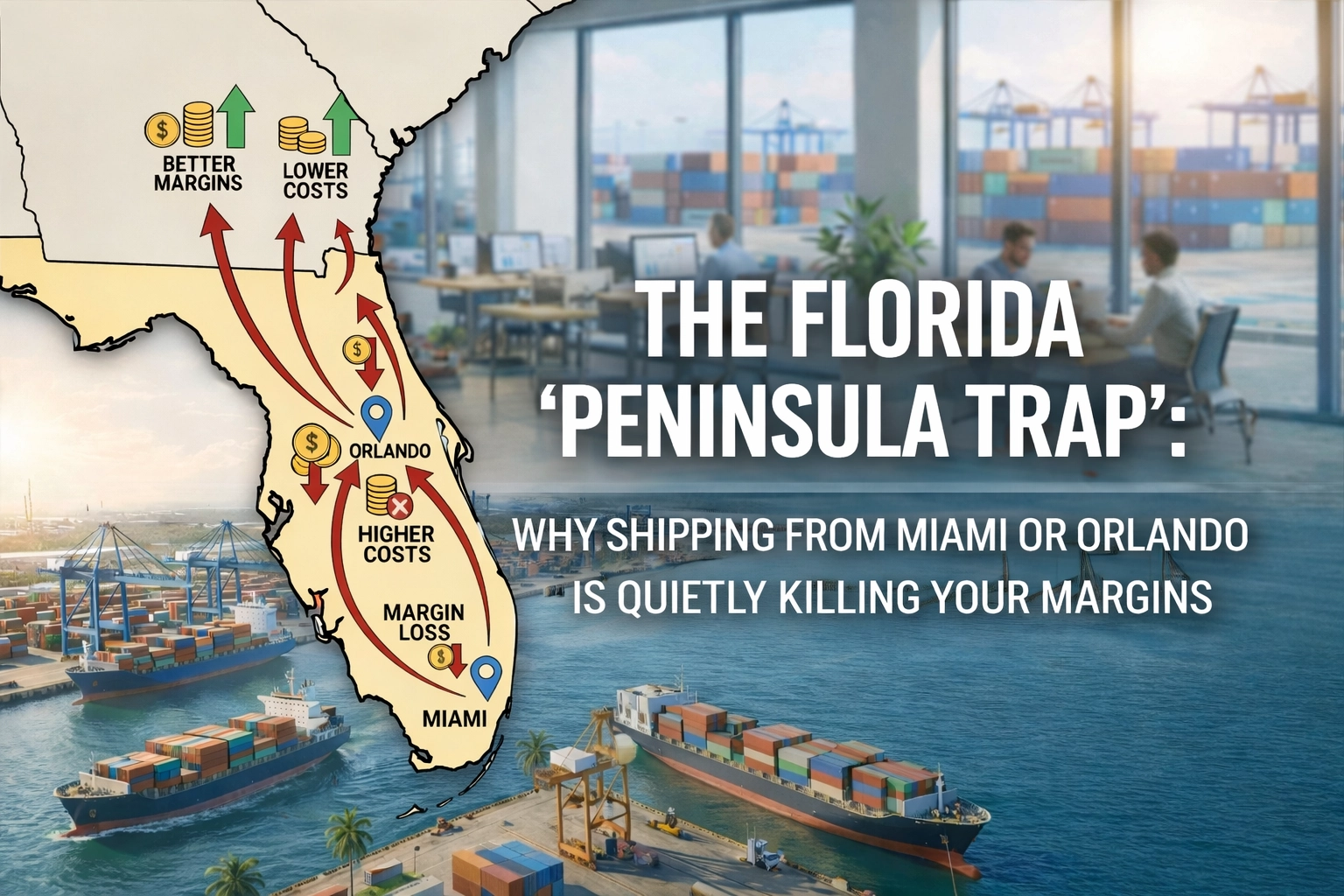
If you are running an e-commerce brand and looking for a fulfillment center in florida, you’ve probably seen the flashy advertisements for warehouses in Miami or Orlando. On paper, they look great. High-tech facilities, proximity to major international airports, and a massive local population. But there is a hidden cost lurking in those locations: something we call the “Peninsula Trap.” While these cities are fantastic for tourism, they are a logistical nightmare for shipping goods to the rest of the United States. Every mile your product travels south of Jacksonville is a mile it eventually has to travel back north just to reach your customer in Atlanta, Charlotte, or New York.
The reality is simple: Florida is a giant finger pointing into the Atlantic. If your inventory is sitting at the tip of that finger, you are paying a “geographic tax” on every single outgoing shipment.
NEED A FULFILLMENT CENTER IN FLORIDA?
Logistics is a game of minutes and miles. When you partner with a 3PL in Miami, your carrier starts their journey hundreds of miles away from the Georgia border. Think about the math. A truck leaving a Miami warehouse has to drive roughly 350 miles just to leave the state. That’s five to six hours of drive time, fuel, and driver wages spent before the package even begins its journey to the rest of the country.
Unfortunately, many sellers don’t realize this until they see their margins shrinking. When you choose a 3pl jacksonville, you aren’t just picking a warehouse; you are picking a strategic exit point. We are the “Front Door” to the United States. Your packages hit I-95 or I-10 within minutes, not hours.
1. THE “EMPTY MILES” SURCHARGE
Why does shipping from South Florida cost more? It’s not just about the distance your package travels; it’s about how carriers view the region. Florida is a “consumption state,” not a “production state.” This means thousands of trucks drive into Florida filled with goods, but many of them leave empty because there isn’t enough manufacturing in the south to fill them back up.
Carriers hate “deadheading” (driving empty). To compensate, they bake that cost into your rates. If you are using a fulfillment center southeast located too far down the peninsula, you are subsidizing the carrier’s trip back north. By moving your inventory to Jacksonville, you tap into a balanced hub where trucks are constantly moving in both directions, keeping your rates competitive and your margins healthy.
2. THE CLEVELAND LONGITUDE SECRET
Most people don’t realize that Jacksonville is the westernmost city on the Atlantic coast. In fact, if you drew a line straight north from Jacksonville, you’d hit Cleveland, Ohio. This geographic quirk is a logistics cheat code.
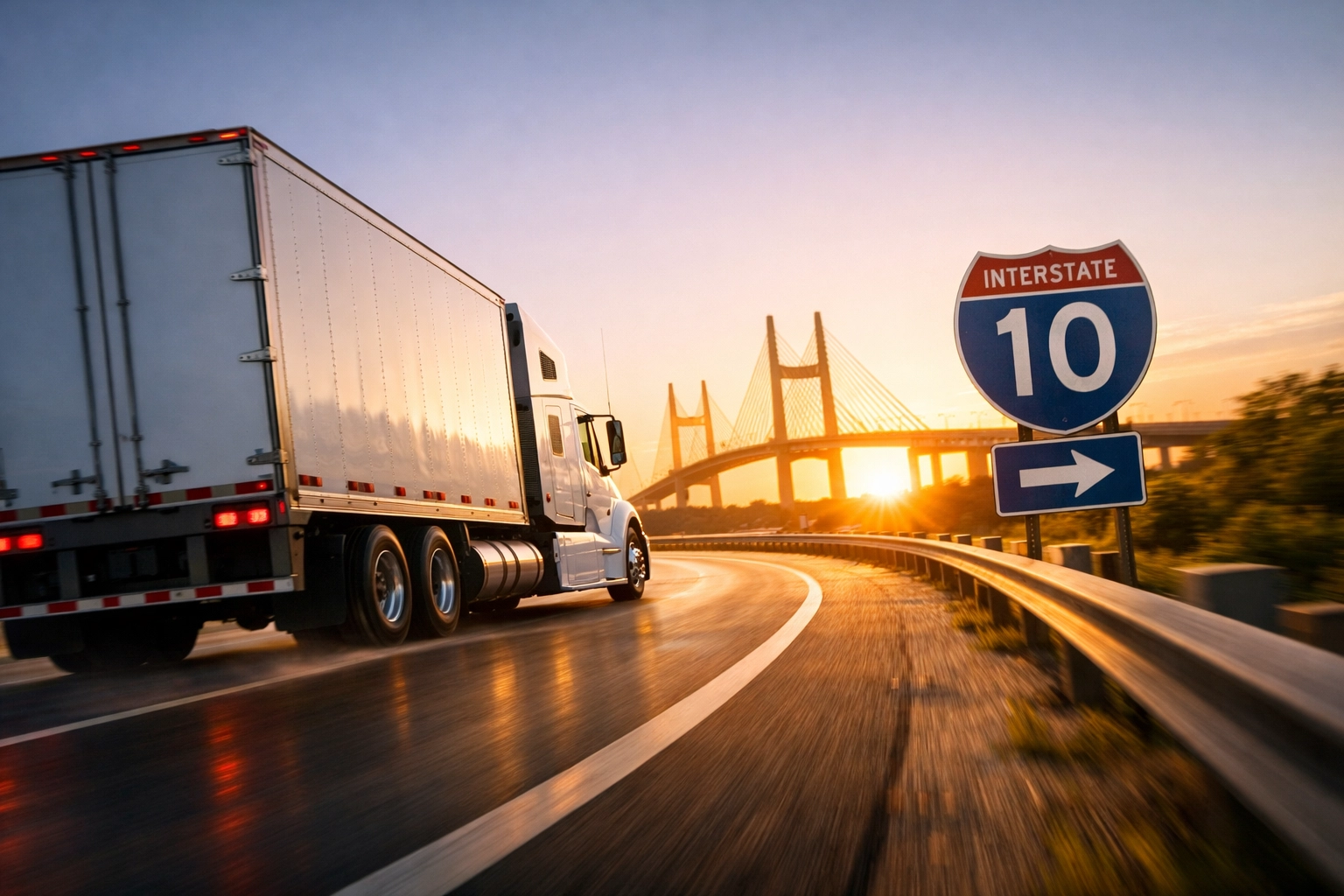
Being further west than Miami or even Savannah gives a 3pl jacksonville a massive advantage for reaching the Midwest and the Gulf Coast. We aren’t just positioned to go north; we are perfectly positioned to go west via I-10. This allows for rapid ground shipping to states like Alabama, Mississippi, and Louisiana that would take an extra day (or a lot more money) from an Orlando-based facility.
3. TRAFFIC: THE HIDDEN MARGIN KILLER
If you’ve ever driven through Orlando or Miami, you know the nightmare of I-4 and the Palmetto Expressway. For a fulfillment center, traffic isn’t just an annoyance: it’s a line item on your invoice.
- Missed Pickups: Carriers getting stuck in South Florida congestion often miss their daily windows.
- Increased Surcharges: Regional carriers often apply “metropolitan surcharges” for high-traffic zones.
- Wasted Fuel: Every hour a truck sits in Orlando traffic is fuel you are indirectly paying for.
Jacksonville offers a streamlined experience. With easy access to major arteries without the gridlock of the tourist hubs, a fulfillment center in florida based in the north part of the state ensures your “Daily Pickups” actually happen daily.
4. REACHING 50 MILLION PEOPLE IN 24 HOURS
The goal of any e-commerce business is fast, reliable delivery. When you utilize a fulfillment center in florida, you want to maximize your 1-day and 2-day shipping zones.
From Jacksonville, a truck can reach almost any major city in the Southeast: Atlanta, Birmingham, Nashville, Charlotte: within a single day’s drive. If you are shipping from Miami, those same cities become 2-day or even 3-day zones for ground shipping. In the age of the “Amazon Prime” expectation, that extra day is the difference between a loyal customer and a cancelled order.
5. THE HURRICANE “GOLDILOCKS ZONE”
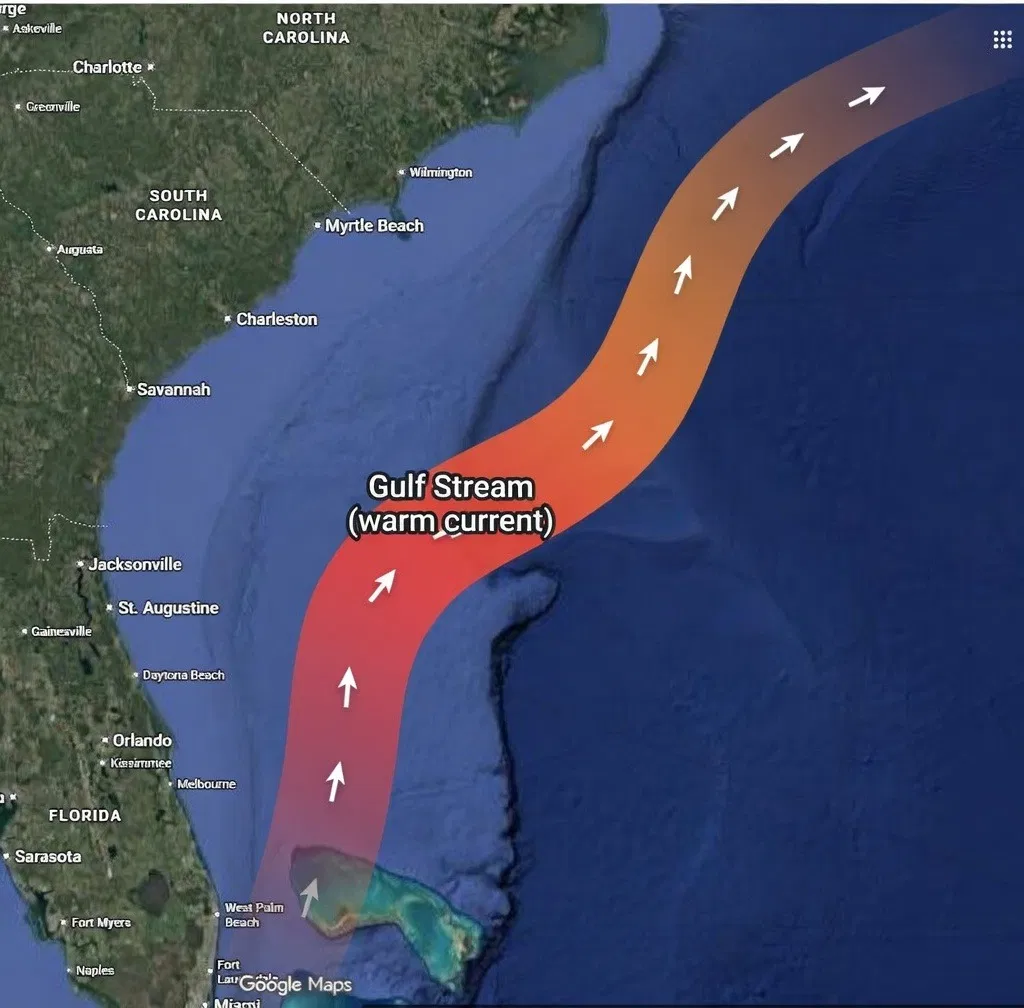
Let’s talk about risk. Florida and hurricanes go hand-in-hand, but not all parts of the state are created equal. South Florida and the Panhandle are frequently in the crosshairs. Jacksonville sits in a unique “pocket” that has historically seen fewer direct hits than our neighbors to the south and north.
When a storm hits Miami, the entire region shuts down. Ports close, warehouses lose power, and trucks stop moving. If your inventory is trapped there, your business stops. By choosing a 3pl jacksonville, you are placing your inventory in a safer “Goldilocks Zone” that balances coastal access with a lower historical risk of catastrophic weather disruptions.
6. WHY “ONBOARDING FEES” ARE A RED FLAG
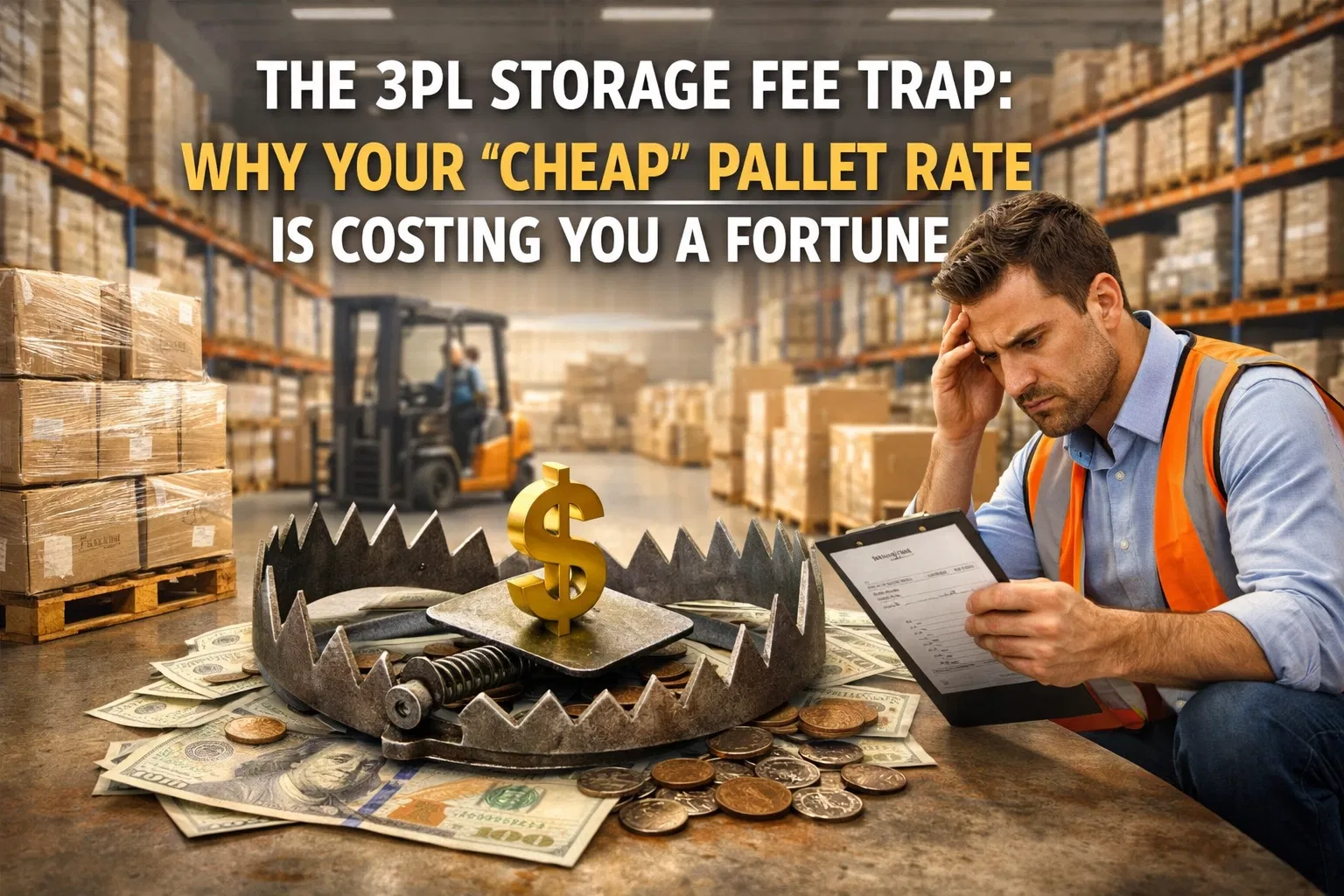
Many 3PLs in high-rent districts like Miami or Orlando try to offset their massive overhead with “Onboarding Fees” or “Integration Fees.” These can range from $500 to $5,000 just to start.
Here is an insider secret: If a 3PL needs a massive upfront fee to make you a client, it’s often because they know their location or service won’t keep you long-term. They are front-loading their profit. At FBMFulfillment.com, we believe our location and our service should earn your business every single month. We don’t need to trap you with fees because the geographic advantage of Jacksonville speaks for itself.
THE “FRONT DOOR” ADVANTAGE
Think of Jacksonville as the lobby of a large office building. Miami and Orlando are the offices at the very end of a long, winding hallway. Why would you walk all the way to the back of the building just to turn around and walk out again?
By positioning your inventory at the “Front Door,” you gain:
- Instant Access: Direct on-ramps to I-95, I-10, and I-75.
- Faster Turnaround: Packages leave the state hours faster than southern competitors.
- Lower Costs: Reduced fuel consumption and carrier “empty mile” surcharges.
- Reliability: Fewer traffic delays and lower weather risk.
If you are currently shipping out of Central or South Florida, take a hard look at your shipping zones and transit times. You might find that the “Peninsula Trap” is quietly eroding your profitability.
READY TO ESCAPE THE TRAP?
Navigating the world of 3PLs is complex, but your warehouse location shouldn’t be a hurdle you have to jump over. Whether you are doing Amazon FBM or looking for a wholesale partner, the “where” matters just as much as the “how.”
At FBMFulfillment.com, we specialize in helping brands optimize their logistics by leveraging the unique advantages of the Jacksonville hub. We offer transparent pricing, no hidden “onboarding” traps, and a team that treats your inventory like our own.
Contact us at FBMFulfillment.com and we will be glad to help you analyze your current shipping spend and show you how much you can save by moving north.
Why an Ecommerce Fulfillment Center in Florida Will Change the Way You Scale the Southeast
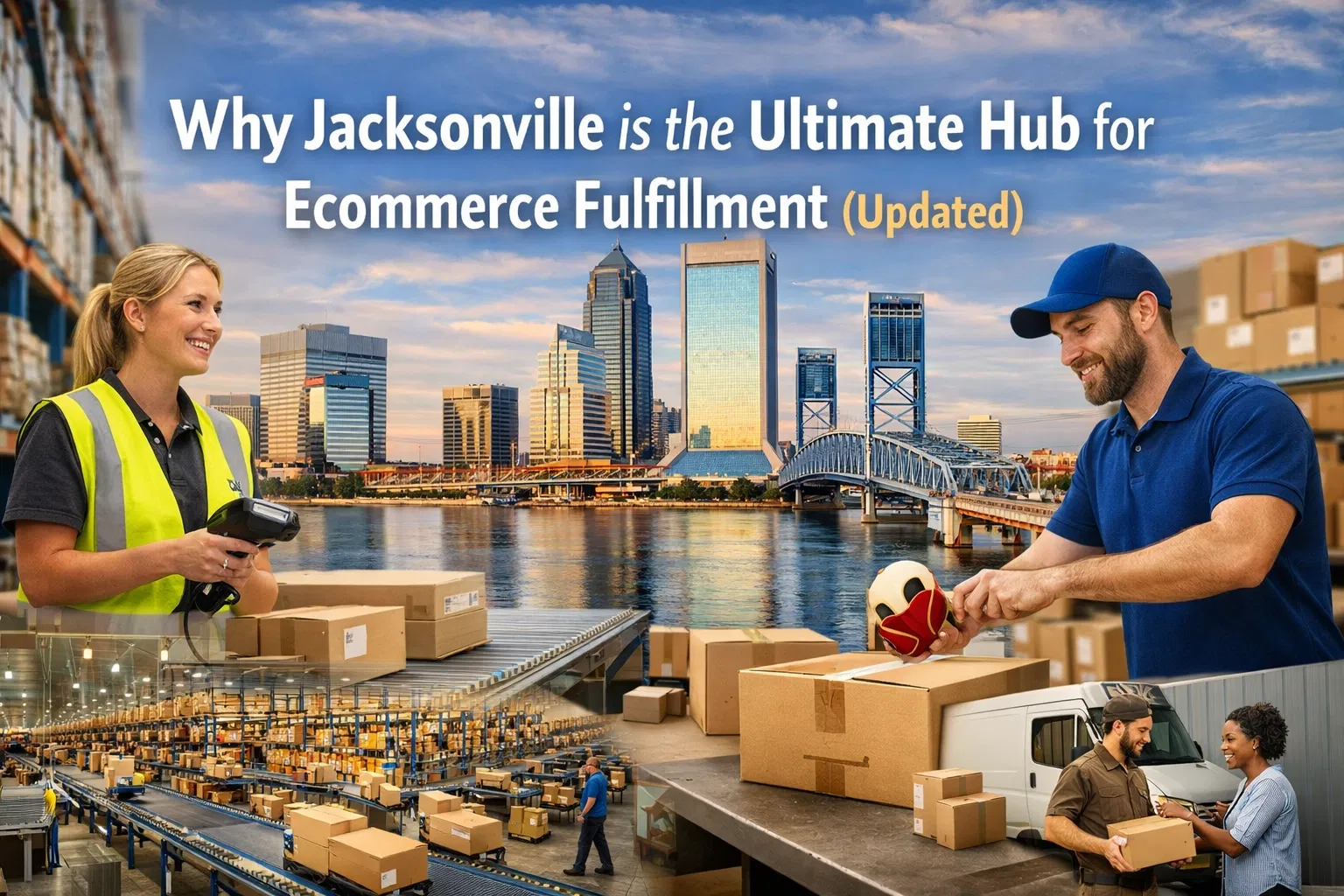
Why Jacksonville is the Ultimate Hub for Ecommerce Fulfillment