
Let’s talk about the sku meaning and why this little string of letters and numbers is actually the heartbeat of your entire e-commerce operation. If you’ve ever felt like your inventory is a chaotic pile of “stuff” rather than a precision-tuned machine, you probably have a SKU problem. In the world of logistics, a sku is far more than just a label; it’s the DNA of your brand.
Whether you are selling a single revolutionary gadget or managing a catalog of 5,000 fashion variants, understanding the sku meaning is the difference between scaling a multi-channel empire and drowning in a sea of “false backorders” and customer service nightmares. At FBMFulfillment.com, we see thousands of products move through our Florida warehouse every day, and we can tell you exactly which sellers are going to win based solely on how they define sku logic in their system.
SKU What Is It Exactly? (The Stock Keeping Unit Meaning)
So, sku what is it? Let’s get the technical stock keeping unit meaning out of the way first. A SKU is a unique alphanumeric code assigned to a specific product to track inventory. Unlike a UPC (Universal Product Code), which is the same for every retailer globally, a SKU is internal to your business.
The definition of sku is built on the idea of identity. If you sell a “Blue T-shirt” in Small, Medium, and Large, those are not one product: they are three distinct SKUs. If you don’t treat them as unique units, your inventory math will never add up. When someone asks about the stock keeping unit definition, they are usually looking for a way to categorize their world. In business, that categorization is your survival.

A business professional reviewing sku inventory levels at a fulfillment center.
Why the SKU Meaning in Business is Actually “Survival”
Why does the sku meaning in business matter so much? Because data is only as good as the primary key it’s attached to. Without a solid sku number strategy, you can’t accurately track:
- Sales Velocity: Which specific items are flying off the shelves?
- Profitability: Is the “Red” version of your product eating your margins while the “Blue” one thrives?
- Shrinkage: Are items disappearing because of “magic,” or is there a leak in your supply chain?
- Reordering: When do you need to trigger a restock to avoid the Amazon FBA stockout trap?
When you define sku parameters correctly, you create a “Single Source of Truth.” This is vital because, in 2026, e-commerce isn’t just about a website; it’s about being everywhere at once. If your TikTok Shop, Shopify store, and Amazon listing don’t share the same sku, your inventory is essentially a deck of cards scattered across a windy beach.
SKU What Does It Mean for Your Warehouse?
From a 3PL perspective, the stock keeping unit definition is the blueprint for our warehouse management system (WMS). When an order drops into our system from your Shopify store, our pickers don’t look for “that cool water bottle.” They look for WB-GRN-LGE-01.
A clear sku number allows for:
- Pick/Pack Accuracy: Reducing the chance of sending the wrong size or color.
- Virtual Kitting: Combining multiple SKUs into a single bundle without messy physical repacking.
- Real-time Visibility: You can see exactly how many units are sitting in our Jacksonville fulfillment center at any given second.
If you are still wondering sku what does it mean for your daily life, think about the last time you had to manually tell a customer you were out of stock. That happened because your SKU logic failed.

Illustration of sku number hierarchy and stock keeping unit definition for inventory management.
Anatomy of a Perfect SKU Number
Don’t just let a computer generate a random string of nonsense. A high-performing sku should be human-readable and logically structured. A good definition of sku structure usually follows this pattern: Brand – Category – Attribute – Variant.
For example: FBM-TSHIRT-COT-BLU-SML
FBM(Brand)TSHIRT(Product Category)COT(Material: Cotton)BLU(Color: Blue)SML(Size: Small)
This structure ensures that anyone: from your intern to our warehouse manager: can look at the sku number and know exactly what is inside the box. Avoid using leading zeros (Excel hates them) and special characters like @ or *. Keep it clean, keep it alphanumeric, and keep it consistent.
The Multi-Channel Nightmare: When SKUs Don’t Match
We’ve written before about how Amazon, TikTok, and Shopify walk into a warehouse. The punchline is usually a disaster for the seller.
If you have a sku on Amazon called B01-AWESOME-PROD and the same item on Shopify is called awesome-product-red, your inventory management software is going to think these are two different things. You’ll be sitting on 1,000 units of “Hostage Inventory” that one platform can’t see.
The sku meaning in a multi-channel world is “Synchronization.” At FBMFulfillment.com, we advocate for the “Single Pool of Truth.” Use one master sku and map all your channels to it. If you need to distinguish between FBA and FBM stock, use a simple suffix like -FBM. This keeps your inventory math sane and your sanity intact.

Multichannel fulfillment operations using organized stock keeping unit identification for ecommerce orders.
SKU vs. UPC: Clear Up the Confusion
One of the most common questions we get is: “If I have a barcode, why do I need to define sku codes?”
Think of it this way:
- UPC/EAN: This is the product’s social security number. It’s external and universal.
- SKU: This is the product’s nickname within your family. It’s internal and customized.
You can’t change a UPC without a lot of headaches and GS1 fees. But you can (and should) design your sku logic to help you run your specific business. While a barcode helps a scanner identify a product, the sku meaning in business helps a manager identify a trend.
The 2026 E-commerce Reality: SKUs and Margins
As we move deeper into 2026, FBA fees continue to jump, and platforms like TikTok Shop are enforcing stricter delivery windows. If your sku strategy is a mess, you will inevitably overpay for storage or face account suspensions for “out of stock” cancellations.
Understanding the sku what is factor allows you to implement a hybrid fulfillment strategy. You can “dripfeed” your best-selling SKUs into Amazon to keep your IPI high, while fulfilling the rest of your catalog: the “tail” of your inventory: directly from our 3PL warehouse. This protects your margins and ensures you aren’t paying Jeff Bezos to store products that aren’t moving.

Ecommerce manager tracking sku profitability and fba fees in a warehouse.
How to Scale Without Losing Your Mind
If you’re ready to stop playing “inventory detective” every time a sale happens, it’s time to professionalize. Here are the key steps to mastering your sku DNA:
- Audit Your Current Catalog: Do you have duplicate sku entries for the same product across different platforms?
- Standardize Your Naming: Use the Brand-Category-Variant logic we discussed.
- Sync Your Channels: Ensure your WMS can “talk” to every platform you sell on.
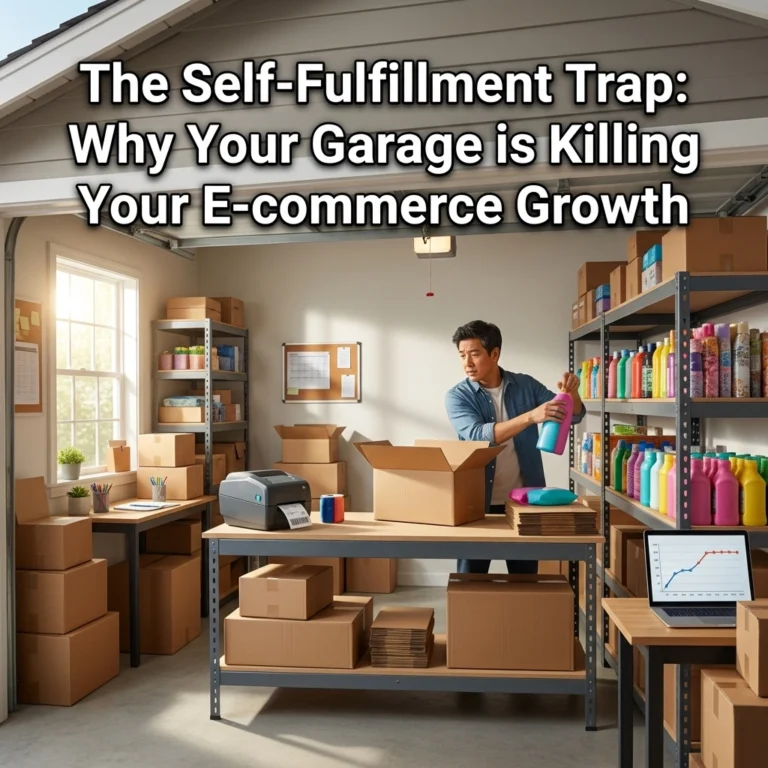
- Partner with a Pro: Don’t try to manage a 500-SKU catalog from your garage. DIY fulfillment is a growth killer.
At FBMFulfillment.com, we don’t just ship boxes; we manage data. We help you define sku hierarchies that make sense for your bottom line. Whether you are navigating the TikTok Shop trap or looking to scale your Shopify store, your success starts with a single, well-organized code.
Ready to see how a professional 3PL can turn your SKU chaos into a streamlined profit machine? Reach out to us at FBMFulfillment.com, and let’s get your DNA in order.