Importance of SKU Consistancy
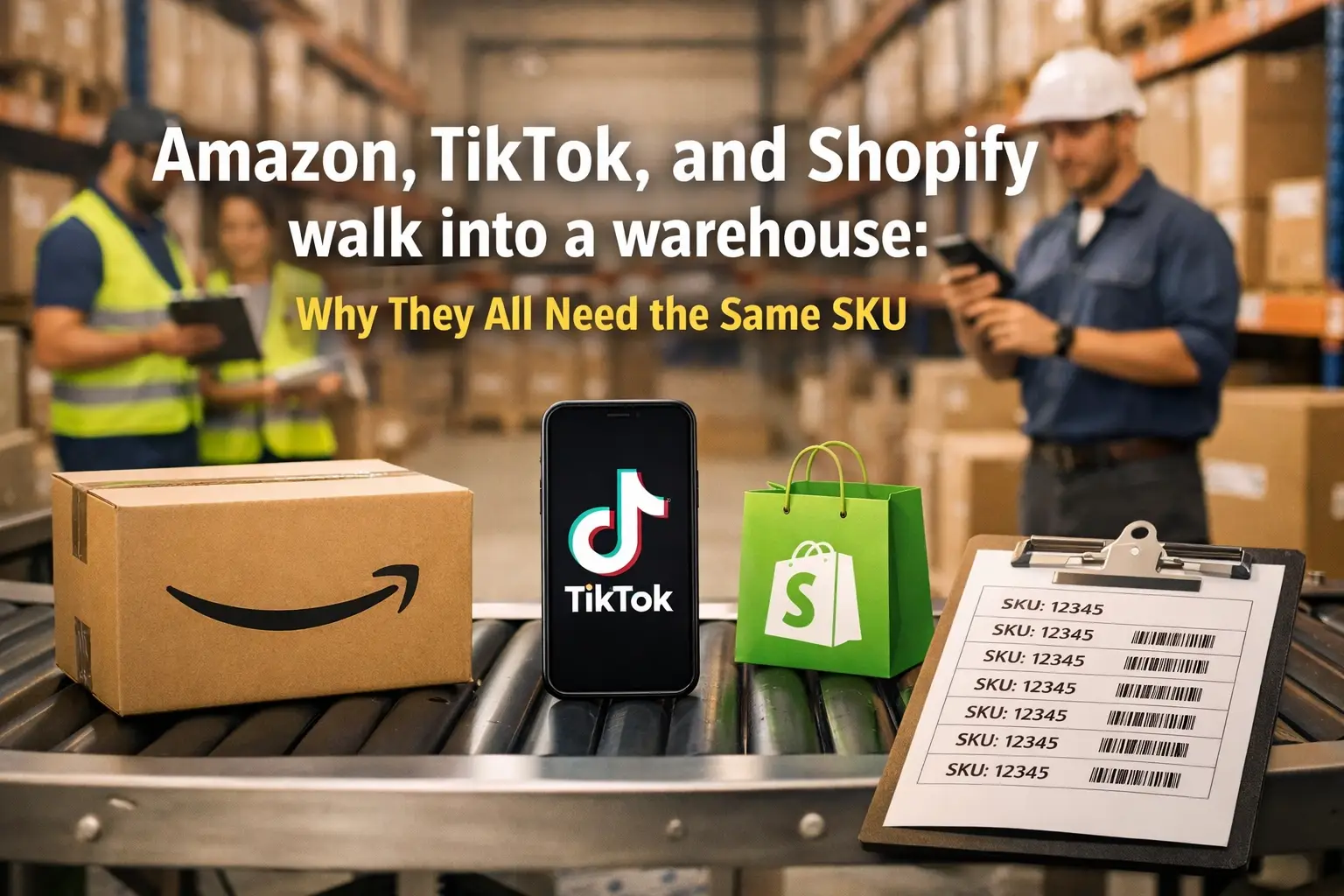
The punchline isn’t funny: the warehouse has no idea what’s going on, your TikTok customers are screaming about “false backorders,” and your Shopify store is happily selling stock that doesn’t exist.
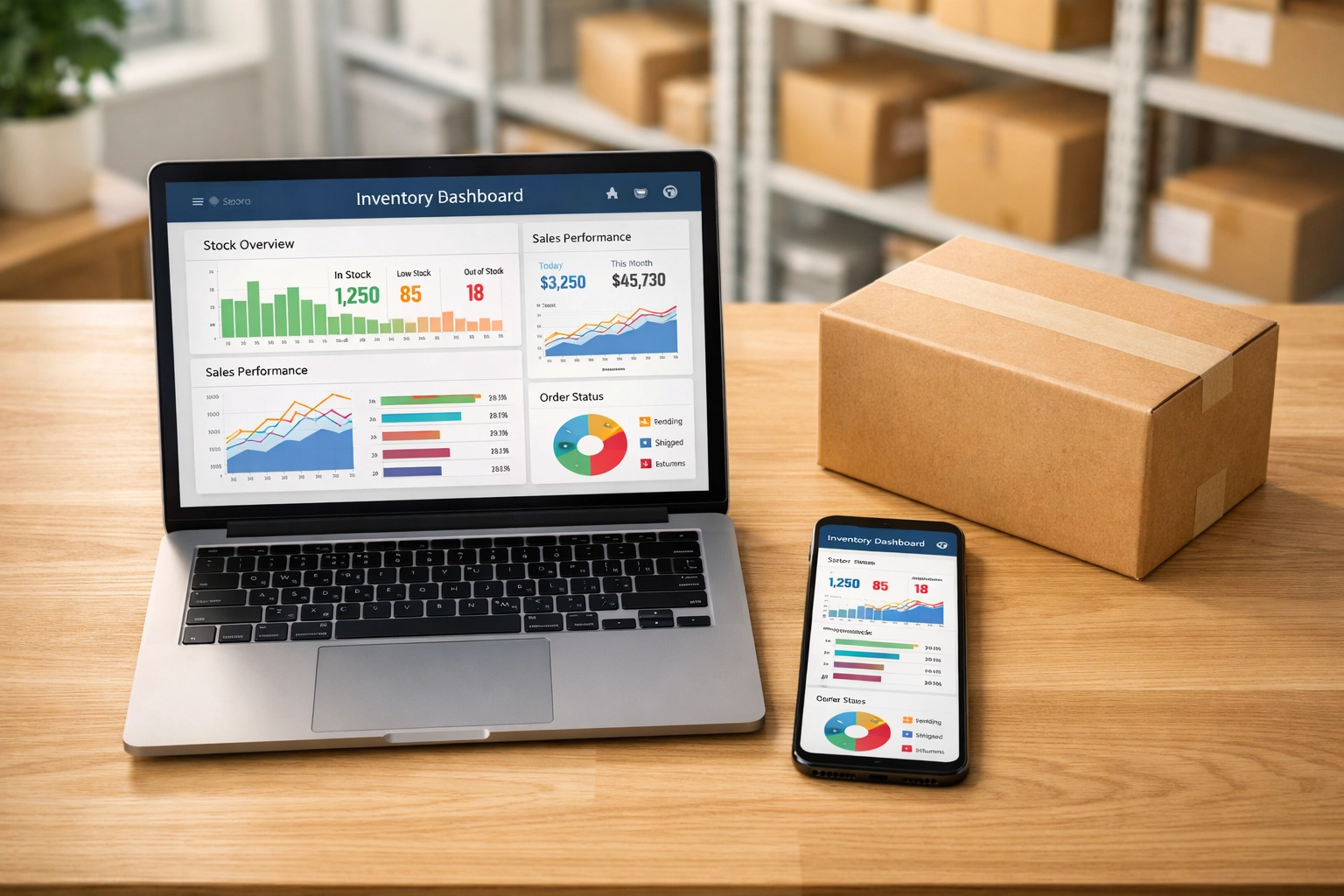
If you’re a multi-channel seller, you’ve likely felt the sting of an inventory “ghost.” You look at your Warehouse Management System (WMS) and see 500 units. You look at TikTok Shop and see 0. You look at Amazon and see “Currently Unavailable.” This isn’t a glitch in the Matrix: it’s usually a self-inflicted wound caused by inconsistent SKUs.
At FBMFulfillment.com, we see this daily. Sellers treat SKUs (Stock Keeping Units) like nicknames: one for Amazon, a different one for Shopify, and a creative one for Etsy. Stop doing that.
SKU consistency is the absolute glue of e-commerce logistics. Without it, your inventory sync fails, your costs skyrocket, and your sanity evaporates. Let’s dive into why one SKU must rule them all and how to handle the tricky world of hybrid fulfillment.
The Permanence of the Amazon SKU: A Warning
Before you even think about scaling to Shopify,TikTok or Walmart, you need to understand the rigid nature of Amazon Seller Central.
When you create a listing on Amazon, you assign it a SKU. Once that SKU is created and saved, it is set in stone. You cannot edit it. You cannot “tweak” it. If you realize six months later that your SKU naming convention is a disaster, your only choice is to delete the listing and start over: which means losing your sales history, rank, and reviews if not handled perfectly through a flat file.
Most sellers realize this too late. They name a product BLUE-SHIRT-01 on Amazon, then name it NAVY-TEE-LG on Shopify. When the 3PL (us!) tries to sync your orders, our system looks for NAVY-TEE-LG but only finds BLUE-SHIRT-01. Result? The order hangs in “Pending” status while your customer waits.

The Chaos of Inconsistency: False Backorders and Fees (Importance of SKU Consistancy)
Why does it matter if the names match? Because modern fulfillment is automated. We use high-speed software to talk to your various stores. This software uses the SKU as the unique identifier: the “DNA” of your product.
1. The False Backorder Trap
If you have 100 units of Widget-A in our warehouse, but your TikTok Shop is looking for Widget-A-TikTok, the sync will fail. TikTok will assume you have zero stock. This is a false backorder. You have the product, we have the product, but the “internet” says you’re out. You’re leaving money on the table because of a naming error.
2. The Over-Selling Nightmare
The opposite is even worse. If your SKU mapping is messy, you might accidentally sync two different products to the same inventory pool. You sell 10 of Product A, but the system deducts 10 from Product B. Now you’ve sold a product you don’t actually have. This leads to the TikTok Shop trap where a viral hit becomes a catastrophic failure of cancellations and account bans.
3. Extra Charges and Manual Labor
When SKUs don’t match, your 3PL has to perform “manual mapping.” This means a human has to sit down and tell the computer that SKU-1 is actually SKU-2. Most 3PLs: ourselves included: will eventually charge for this extra administrative time. It’s an unnecessary complication that eats into your margins.
(Placeholder: A clear infographic showing a single SKU connecting Amazon, TikTok, and Shopify to one central warehouse inventory pool. 1280×1024.)
The Hybrid Seller’s Dilemma: FBA vs. FBM
This is where things get slightly complicated, but it’s the most important part of your strategy. Many of our clients are “Hybrid Sellers.” They use FBA (Fulfilled by Amazon) for that Prime badge, but they also keep FBM (Fulfilled by Merchant) stock with us to handle Amazon stockouts or multi-channel orders.
You cannot use the same SKU for FBA and FBM on the same ASIN.
Amazon requires them to be distinct. If you try to use the same SKU, Amazon will simply toggle the existing listing between FBA and FBM. To have both live simultaneously (which we highly recommend to avoid the brutal truth of scaling), you need two SKUs.
The Suffix Solution
We recommend a simple, clean naming convention.
- FBA SKU:
PRODUCT-123 - FBM SKU:
PRODUCT-123-FBM
The -fbm suffix (or -merchant, or -warehouse) clearly identifies which inventory pool is being used. It tells Amazon, “This listing is coming from my 3PL, not your warehouse.”
The “Golden Rule” of Multi-Channel Sync
Here is the mistake 90% of sellers make: They use the FBA SKU for their Shopify and TikTok stores.
DO NOT DO THIS.
If you are using a 3PL like FBMFulfillment.com to ship your Shopify, TikTok, Walmart, and Etsy orders, you must use your FBM SKU across all of them.
Why? Because your FBA inventory is locked in Amazon’s warehouse. We can’t touch it. Your FBM inventory is what sits on our shelves. Therefore, your Shopify store should be looking at the FBM inventory pool.
The Workflow Should Look Like This:
- Amazon: You have two listings. One is
SKU-XYZ(FBA). One isSKU-XYZ-FBM(FBM). - Shopify: You use
SKU-XYZ-FBM. - TikTok: You use
SKU-XYZ-FBM. - Walmart: You use
SKU-XYZ-FBM.
By using the suffixed SKU across all non-Amazon platforms, you ensure that every single sale: whether it’s a viral TikTok trend or a Shopify subscription: deducts from the exact same pile of boxes in our warehouse. This is how you achieve proper inventory sync and protect your margins.
Why This Is Essential for 2026 and Beyond
As we move further into 2026, the complexity of e-commerce platforms is only increasing. TikTok Shop is notorious for its strict shipping windows. If you have a SKU mismatch that causes a 24-hour delay in order processing, TikTok will penalize your shop.
Furthermore, “extra charges” aren’t just about 3PL fees. They’re about platform penalties. Selling “out of stock” items on Walmart or Amazon can lead to account suspension. There is absolutely no reason to risk your entire business because you didn’t want to spend ten minutes standardizing your SKU list.

(Placeholder: A frustrated seller looking at a computer screen showing “Out of Stock” on TikTok while the warehouse has plenty of items, illustrating a SKU mismatch error. 1280×1024.)
Action Steps: How to Audit Your SKUs Today
If you’re currently looking at a mess of different names and numbers, don’t panic. You can fix this, but you need to be methodical.
- Export Your Catalog: Download your product lists from Amazon, Shopify, and any other platform.
- Identify the “Master” SKU: Usually, this should be your FBM SKU (the one your 3PL uses).
- Update Shopify/TikTok/Etsy first: These platforms are generally more forgiving. You can update the SKU field in a few clicks or via a CSV upload.
- The Amazon Pivot: If your Amazon FBM SKU doesn’t match your Shopify SKU, you’ll likely need to create a new “Condition” on the ASIN with the correct SKU.
- Test the Sync: Once updated, ask your 3PL account manager to “refresh” the connection. Watch a test order to ensure it flows through with the correct identifier.
Final Thoughts: Keep it Simple
The goal of e-commerce is to spend less time on “admin” and more time on “growth.” Standardizing your SKUs is a one-time chore that pays dividends every single day. It eliminates the “Where did my inventory go?” mystery and ensures that when a customer clicks “Buy,” you actually have a box to ship them.
Consistency isn’t just a logistics preference: it’s a requirement for a professional, scalable brand. If you’re struggling with your multi-channel setup or tired of the “DIY fulfillment” nightmare, reach out to us. We’ll help you clean up the mess and get your inventory syncing like a Swiss watch.

Ready to stop worrying about backorders? Let’s get your SKUs in line. Contact FBMFulfillment.com today and let’s talk shop. Or check out our FAQ for more tips on mastering the multi-channel game.
SKU Secrets: The Foundation of a Scalable E-commerce Business Empire