It is March 19, 2026. If you’re an e-commerce seller, you’re likely staring at your Seller Central dashboard with a mix of caffeine-induced hope and “where did all my money go?” despair.
The game has changed. Amazon isn’t just a marketplace anymore; they’ve become a high-stakes landlord. With the recent end of FBA prep services in January and the looming March 31 deadline for the total elimination of commingled inventory, the “set it and forget it” era of FBA is officially dead.
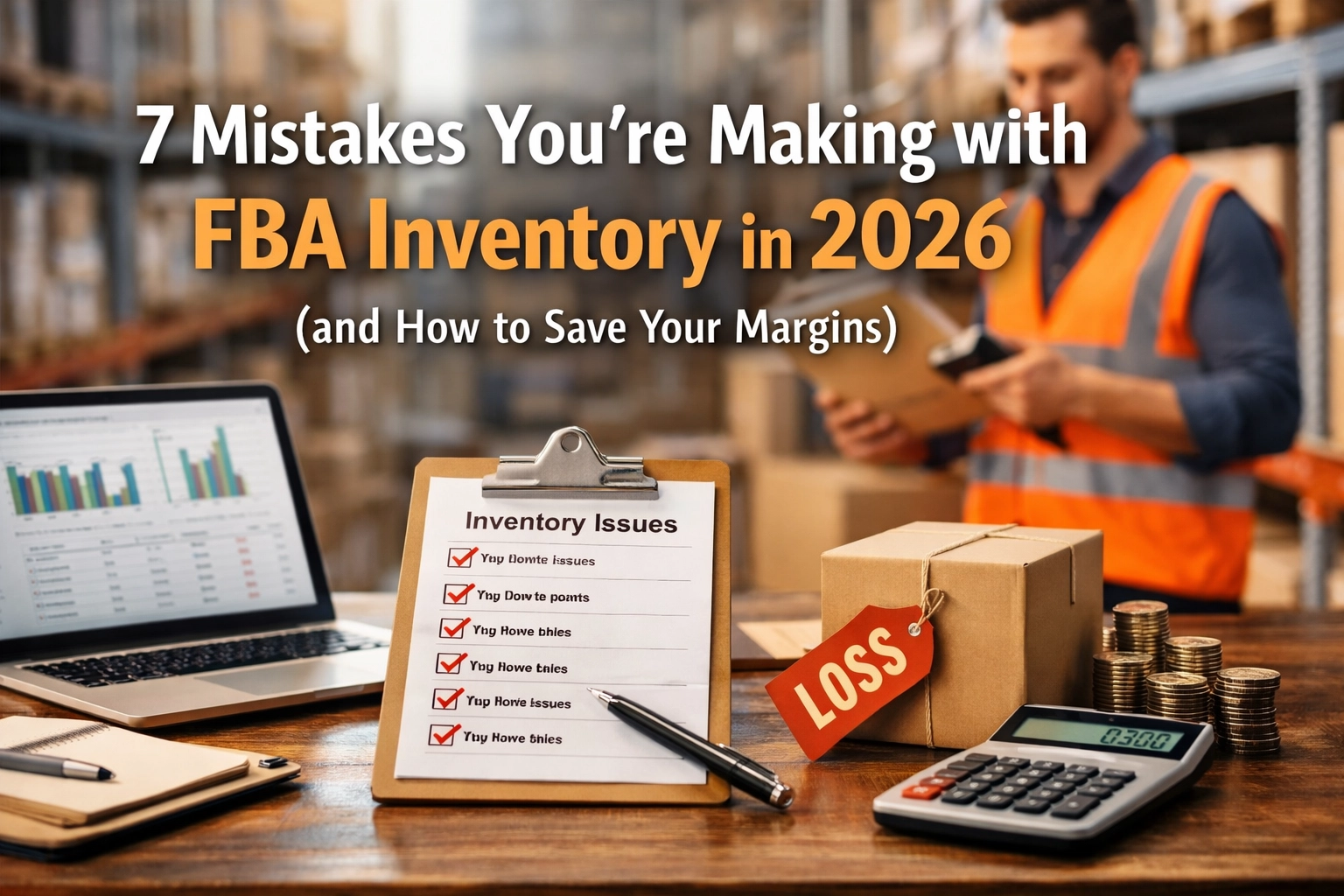
At FBMFulfillment.com, we see the backend of thousands of shipments. We see where the margins leak. If you’re still treating your 2026 inventory like it’s 2021, you’re likely making at least one of these seven expensive mistakes.
Here is how to stop the bleeding and take back your brand.
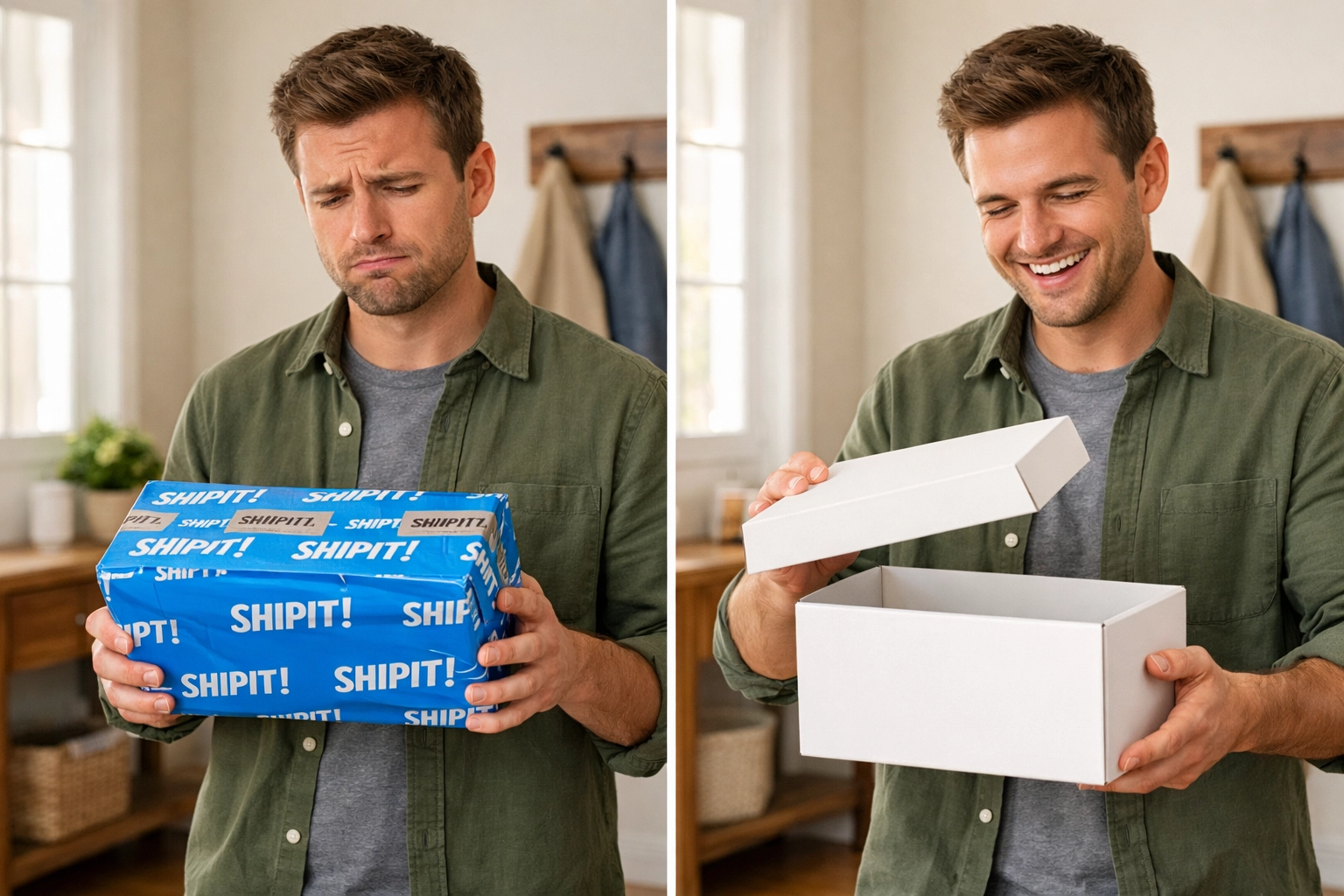
1. The “Frown Factor” (Using Amazon Boxes for Everything)
You’ve finally cracked the code on TikTok Shop and Walmart. Your orders are flying. To keep things simple, you use Amazon Multi-Channel Fulfillment (MCF) to ship those orders.
The Mistake: You’re sending a TikTok customer a box with a giant blue arrow and “Amazon” plastered all over it.
In 2026, this is a death sentence for your multi-channel growth. Walmart and eBay have become incredibly aggressive about penalizing sellers who use Amazon Logistics (AMZL) or branded packaging. Customers get confused, they open “Item Not as Described” cases, and TikTok’s algorithm starts burying your shop because you aren’t meeting their neutral packaging standards.
The Fix: Use a fulfillment center that offers neutral packaging as a standard, not a “value-added service” you have to beg for. At FBMFulfillment, your brand: or a clean, neutral box: is all the customer sees. No “Frown Factor” included.
2. The “Per Unit” Fulfillment Fee Trap
Amazon’s pricing is designed for the “one-item order.” Their fulfillment fees are calculated per unit.
The Mistake: If a customer buys three of your $15 widgets in a single order, Amazon charges you the fulfillment fee three times. You are paying for the “pick” and the “pack” over and over, even though they all go in the same box.
The Math:
- FBA: $6.00 fee x 3 units = $18.00
- FBMFulfillment: Base pick fee + small incremental “add-on” pick fees for units 2 and 3 = Usually 40-60% cheaper.
For multi-unit sellers, FBA is a margin killer. We see sellers literally doubling their take-home profit just by moving their multi-unit SKUs to an ecommerce fulfillment partner that understands how to consolidate orders.
3. Falling for the “End-of-Month” Snapshot Trap
How does your storage provider bill you? Most warehouse fulfillment providers: and specifically Amazon’s AWD: use monthly snapshots.
The Mistake: If you send a massive shipment that arrives on the 28th of the month, AWD might bill you for that entire volume for the whole month. Or, if you sell through 90% of your stock by the 5th, you’re still paying for the “ghost space” that those products occupied at the start of the month.
The FBMFulfillment Difference: We use a Daily Wins strategy. Our rate is $0.0158 per cubic foot per day.
- Linear Diminishing Fees: As you sell, your storage fee drops every single day.
- Prorated Billing: If stock arrives on the 30th of a 31-day month, you pay for one day. Period.
At roughly $0.474 per month, we actually beat AWD’s standard $0.48/cu ft rate, but without the “Snapshot Trap” that pads their bottom line.
4. The 2026 “Aged Inventory” Nightmare
Amazon has turned up the heat on “slow-moving” stock. As of early 2026, the surcharges for inventory sitting longer than 181 days have become predatory.
The Mistake: Leaving seasonal overflow or long-tail SKUs in AWD. Once you hit that 6-month mark, fees can skyrocket to a staggering $5.90 per cubic foot. Amazon calls this an “incentive” to keep inventory moving; we call it a hostage situation.
The Fix: Don’t let Amazon dictate your product lifecycle. By using a 3pl logistics partner like us, you pay the same daily rate regardless of whether the item has been on the shelf for 10 days or 200. We don’t punish you for having a diverse catalog or preparing for a Q4 surge six months in advance.

5. Total Loss of Return Control
In the FBA world, returns go into a black hole. Amazon’s “inspectors” (who are often overworked and under-trained) make a split-second decision: Is this sellable?
The Mistake: FBA frequently puts defective, opened, or even “swapped” items (where a customer returns their old broken unit in your new box) back into your “New” inventory. The next customer gets a broken item, leaves a 1-star review, and your IPI score tanking begins.
The Fix: When returns come to FBMFulfillment, we actually look at them. We can send you photos, test the product, or refurbish the packaging. You gain a “Quality Control” wing of your business that FBA simply cannot provide. This is how you protect your seller feedback in a competitive 2026 market.
6. Paying the 5% “AMZL Penalty”
If you’ve tried to use MCF for non-Amazon channels recently, you’ve likely seen the option to “Block Amazon Logistics.”
The Mistake: Amazon charges you a 5% surcharge just to not use their own delivery vans. They are essentially taxing you to be compliant with other marketplaces like Walmart or TikTok.
Why pay a penalty to play by the rules? A dedicated fulfillment center uses neutral carriers (UPS, FedEx, USPS) by default. You get the same (or better) rates without the “Amazon Tax” attached to every label.
7. The “SKU Trap” and Ghost Pallets
Amazon AWD pricing is SKU-specific. To get their “Smart Storage” discounts, every single SKU must meet a 70% auto-replenishment threshold.
The Mistake: If you have 50 SKUs and 10 of them are slow movers, you pay the higher “Base Rate” for those 10, regardless of how well the others are doing. Furthermore, many 3PLs charge you for a full “pallet position” even if you only have three boxes left on that pallet.
The FBMFulfillment Advantage: We aggregate your total volume across all SKUs and locations. If you have 10 half-pallets of different SKUs, we don’t charge you for 10 pallets. We charge you for 5 pallets worth of volume. We bill for the space you actually use, not the air around your products.
The 2026 Reality: Prep Bureaucracy
Adding to the complexity, the “Commingled Inventory” era ends on March 31, 2026. This means every single unit must have a unique, scannable barcode assigned specifically to your account. No more “manufacturer barcodes” being pooled with other sellers.
Amazon has also pulled back on in-house prep. They expect your inventory to arrive “AWD-ready.” If it isn’t, they’ll either reject the shipment or hit you with “unplanned service fees” that make your eyes water.
FBMFulfillment acts as your buffer. We handle the prep, the labeling, and the quality control before the stock ever hits the fulfillment floor. Whether you are shipping to an FBA warehouse or directly to a customer’s doorstep, we ensure you’re compliant with the latest 2026 regulations.
The Verdict: Partner vs. Landlord
Amazon AWD and FBA are great tools for a specific job: selling to Amazon customers. But the moment you want to grow into a multi-channel brand, those tools become chains.
Between the $5.90/cu ft aged inventory surcharges, the per-unit fulfillment traps, and the AMZL penalty taxes, your margins are under constant attack.
At FBMFulfillment.com, we aren’t your landlord. We’re your growth partner. We provide the daily-billed, aggregated, neutral-packaged logistics you need to actually own your business in 2026.
Ready to see the difference in your bottom line? Check out our FBA Drip-Feed Strategy to see how we help you keep your Amazon IPI high while keeping your costs low.
Don’t let your margins vanish into the “Amazon Jail.” Let’s get your inventory working for you again.
Need help navigating the March 31st commingled inventory deadline? Contact us here and we will be glad to help you audit your current stock strategy.