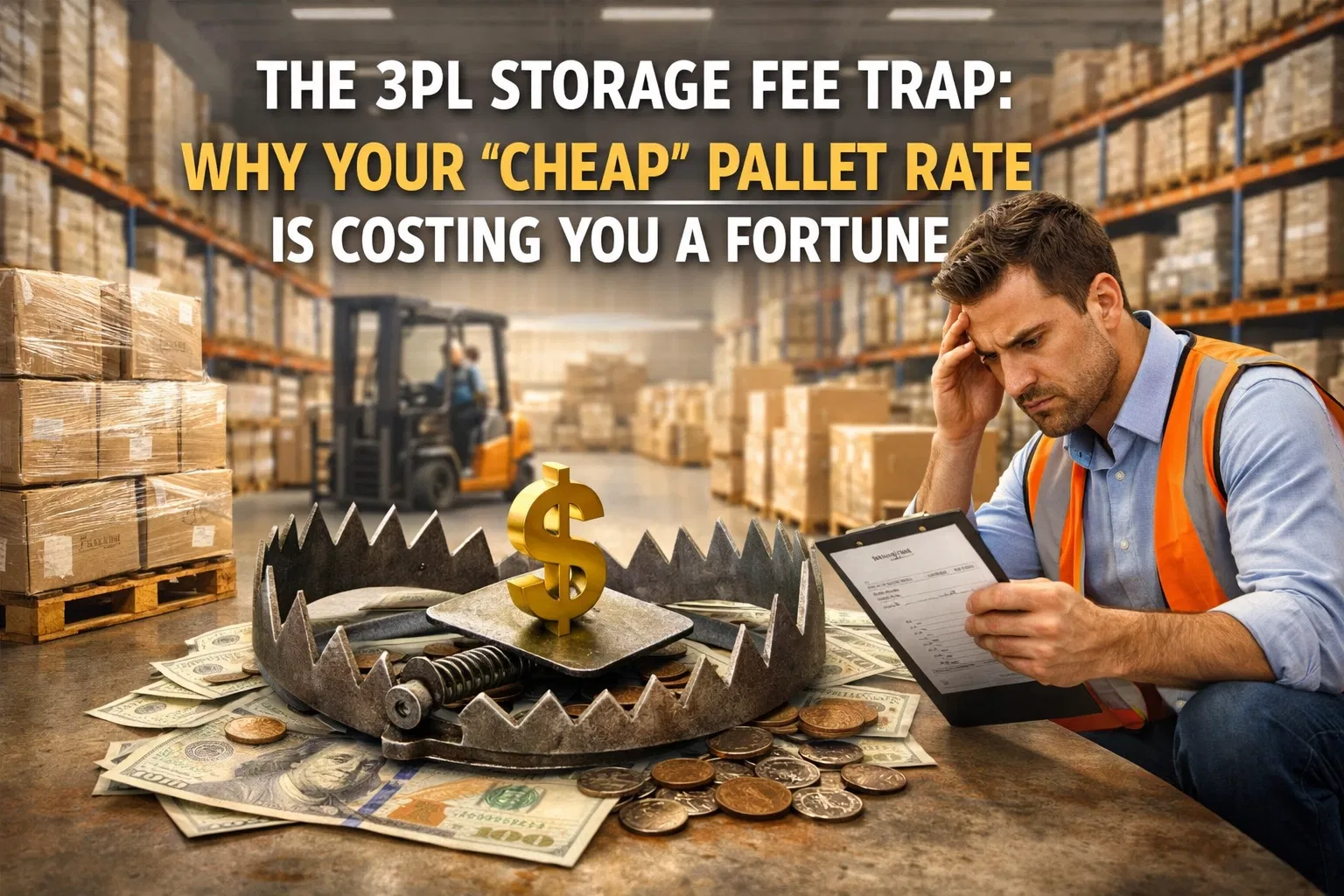
You finally found it. After weeks of vetting different 3rd party fulfillment services, you see a quote that makes your CFO smile: “$15 per pallet, per month.” Compared to the $25 or $40 rates you’ve been seeing, it looks like a total steal. You sign the contract, ship your inventory to the warehouse, and wait for the savings to roll in. Then the first full-month invoice hits your inbox. It’s double what you projected. You check the pallet count: it’s correct. You check the rate: it’s still $15. So, where is the extra money going?
Welcome to the “Ghost Space” tax.
In the world of logistics, what you don’t see is exactly what kills your margins. Most 3pl storage rates are built on a legacy model that prioritizes the warehouse’s convenience over your bottom line. At FBMFulfillment.com, we see this every day: sellers who are lured in by a low headline rate only to realize they are paying a premium to store air.
What Exactly is the “Ghost Space” Tax?
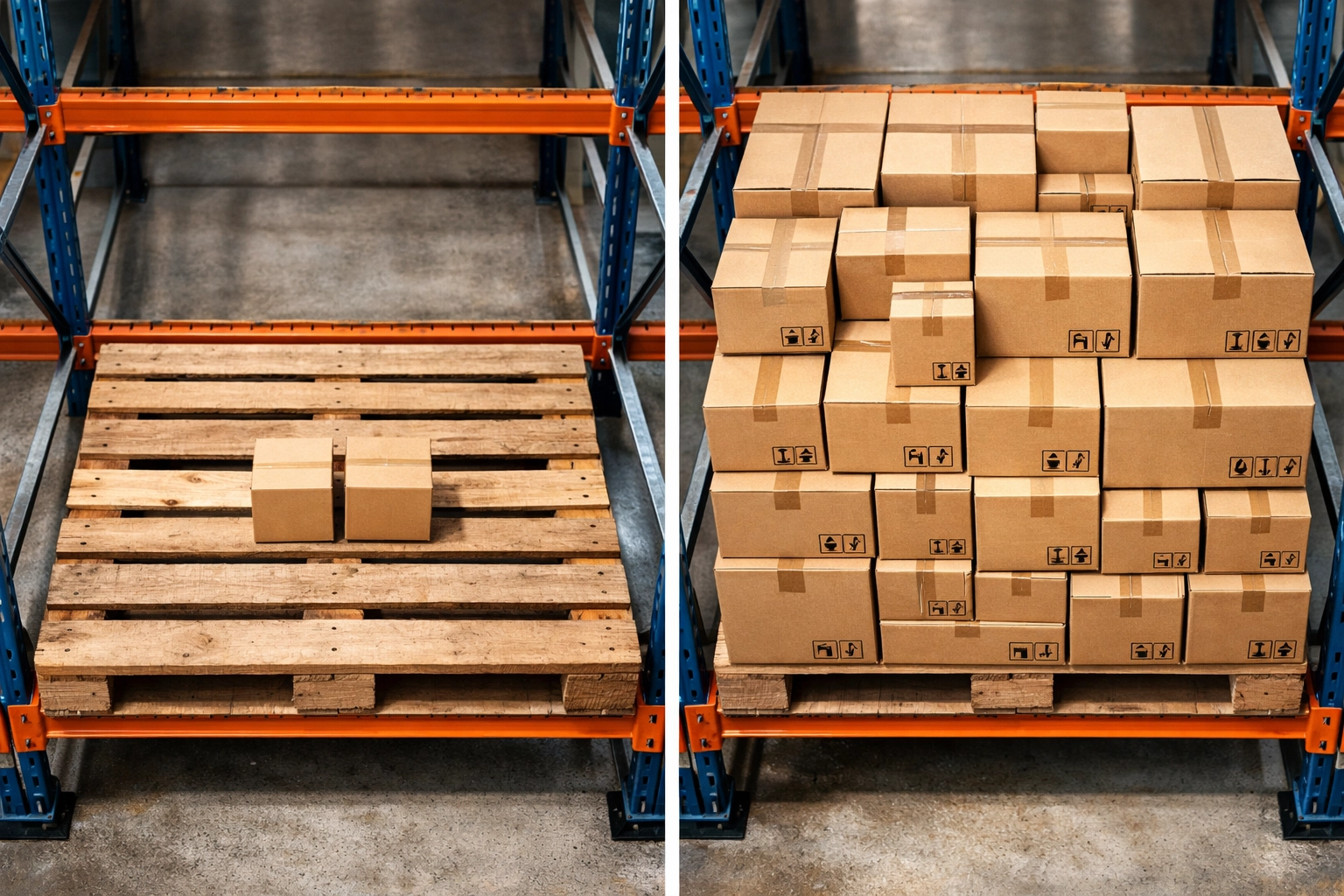
Think of a standard 40×48 pallet. When it arrives at a warehouse fully loaded with 50 cartons of your product, that $15 rate feels fair. You are using every square inch of that wooden platform. But what happens two weeks later when you’ve sold 40 of those cartons?
You now have 10 cartons sitting on that same pallet. In a traditional fulfillment center, you are still paying for a full pallet position. Those 40 empty boxes worth of space? That’s “Ghost Space.” You are paying to store nothing.
Unfortunately, most 3rd party fulfillment services won’t tell you that their business model depends on this inefficiency. They want you to have 100 pallets that are all 20% full because it allows them to bill you for 100 full positions while your actual physical inventory could fit on 20 pallets. It’s a silent margin killer that stays hidden in your monthly overhead.
The Math of the $15 Pallet Trap
Let’s look at the numbers. If you have 100 pallets at a “cheap” rate of $15, your base storage is $1,500.
Throughout the month, your stock sells down. By the 15th of the month, your 100 pallets are, on average, only half full. You are effectively storing 50 pallets of product, but you are still paying $1,500. Your actual storage rate isn’t $15; it’s $30 per pallet of actual goods.
Now, add in the hidden fees that usually accompany these low-cost leaders:
- Pallet In/Out Fees: $5 to $10 every time a pallet moves.
- Administrative Surcharges: Small fees for “account management.”
- The Monthly Snapshot: Many warehouses bill based on the maximum number of pallets held at any point during the month. If you have 100 pallets on the 1st and sell 90 of them by the 5th, you still pay for 100 pallets for the entire month.
When you add it all up, that $15 rate is a myth. It’s a hook designed to get you in the door so the “Ghost Space” tax can do its work. If you’re tired of these hidden costs, it’s time to look at how 3PL pricing should actually work.
Why 3rd Party Fulfillment Services Can Be So Deceptive
The problem is the “Footprint” mentality. Traditional warehouses operate like real estate companies. They rent floor space. If your product is sitting on a 4×4 square on their floor, they want their rent for that square, regardless of whether your product is one inch high or six feet high.
This is why comparing 3pl storage rates is so difficult for e-commerce sellers. You aren’t just comparing dollars; you are comparing billing philosophies.
- Pallet Billing: Easy for the warehouse, expensive for the seller as stock depletes.
- Square Foot Billing: Better for stackable goods, but still ignores the vertical “Ghost Space.”
- Cubic Volume Billing: The only fair way to bill for modern e-commerce.
At FBMFulfillment.com, we believe you should only pay for the physical space your product occupies. If you sell half a pallet of goods today, your storage bill should drop tomorrow. It’s that simple.
The FBMFulfillment Solution: Cubic Volume & Daily Proration
We decided to flip the script on the industry. Instead of the “Ghost Space” tax, we utilize a cubic volume approach. We measure the actual dimensions of your product. If your inventory takes up 450 cubic feet today, that’s what you pay for. If it takes up 400 cubic feet tomorrow because you had a great sales day, your cost goes down immediately.
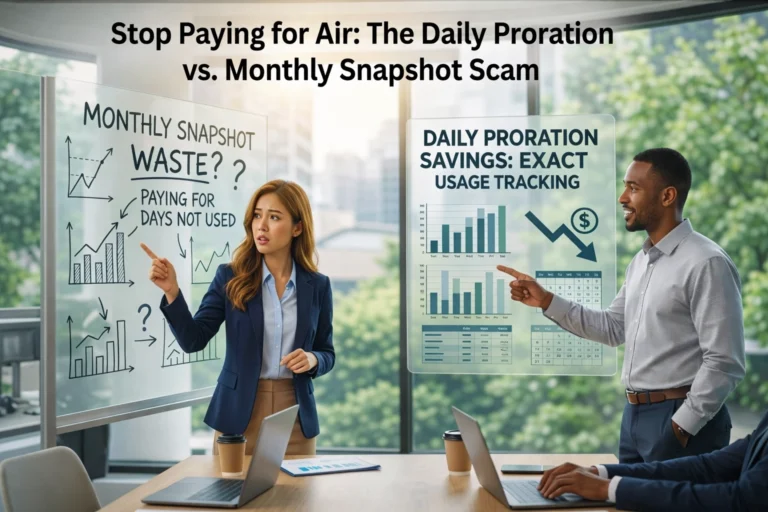
We also tackle the “Monthly Snapshot” scam. Most 3rd party fulfillment services take a picture of your inventory on the 1st of the month and bill you for it. This creates a massive incentive for them to receive your largest shipments right before the billing cycle hits.
We use Daily Proration. We track your inventory levels every single day. This means your storage fees are a true reflection of your inventory’s lifecycle.
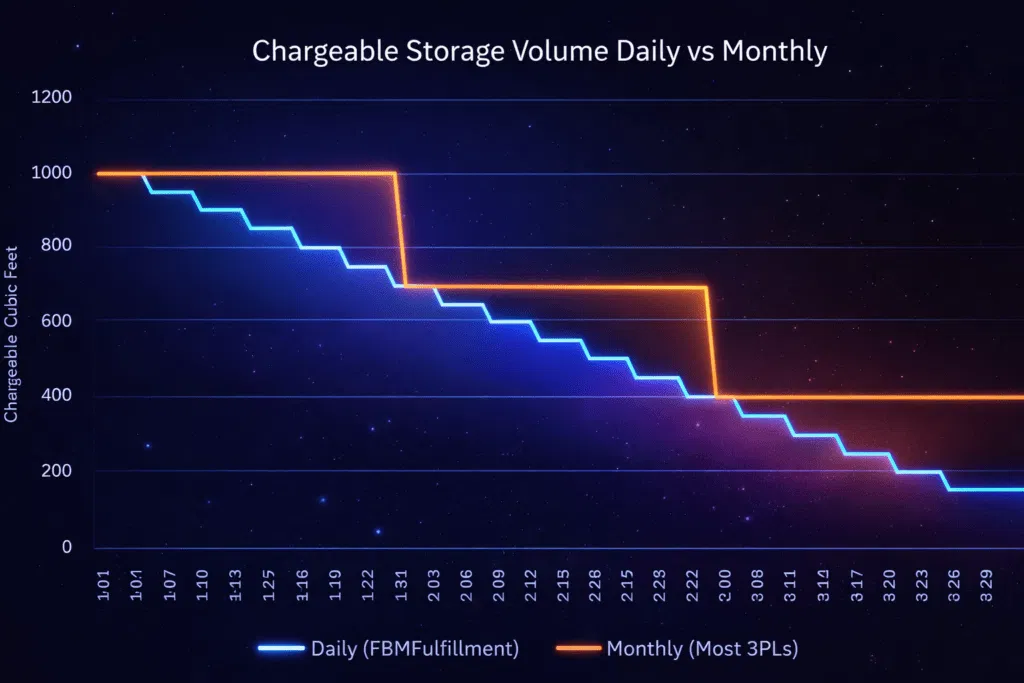
Look at the chart above. The orange line represents the “cheap” $15 pallet warehouse. Notice how the cost stays flat even as your inventory (and your revenue) drops throughout the month. The blue line is FBMFulfillment. As your items ship out to customers, your costs scale down in real-time. This is how you protect your margins in a high-inflation environment.
Don’t Let “Handling Fees” Mask the True Cost
Another way the “Ghost Space” tax hide is through complex handling fees. A warehouse might offer low 3pl storage rates but then hit you with a $5 “Pallet Access Fee” every time a picker needs to get a box off a rack.
When vetting 3rd party fulfillment services, ask these three questions:
- “If I have 10 units left on a pallet, am I still paying for a full pallet position?”
- “Do you bill based on a monthly snapshot or daily averages?”
- “Are there surcharges for ‘underutilized’ pallets?”
If the answer to any of these makes you uncomfortable, you are looking at a “Ghost Space” trap. You can learn more about what to look for in our guide on what to look for in a 3PL.
The Jacksonville Advantage: More Than Just Fair Pricing
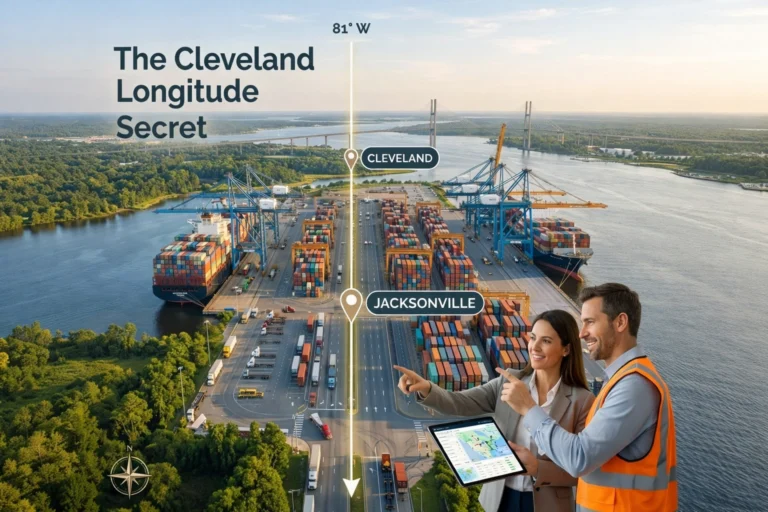
While pricing models are crucial, where your inventory sits matters just as much. Being based in Jacksonville, Florida, gives us a unique “logistics cheat code.” We call it the “Cleveland Longitude” secret. Jacksonville is actually further west than many realize, making it the westernmost point on the Atlantic Coast.
This means we can hit the entire Southeast and a huge chunk of the Midwest faster and cheaper than facilities in Miami or Orlando. When you combine our fair cubic storage model with the Southeast advantage, the “Ghost Space” tax becomes a thing of the past.
Stop Paying for Air
The e-commerce boom of the last few years has led to a surge of new 3PL providers. Many of these startups present “disruptive” pricing that is actually just the same old pallet-trap in a shinier wrapper. Be cautious of any provider that requires massive “onboarding fees” or multi-year commitments to lock you into these inefficient storage models.
Your fulfillment partner should be a tailwind for your business, not a drag on your bank account. If you are tired of looking at warehouse invoices and seeing charges for space you aren’t actually using, it’s time for a change.
At FBMFulfillment.com, we provide the transparency you need to scale. No ghost space, no hidden surcharges, and no “gotcha” billing. Just honest, supportive logistics designed to help you grow.
Ready to see the difference between “cheap” and “efficient”? Contact us at FBMFulfillment.com and we will be glad to help you audit your current storage costs. We’ll show you exactly how much “Ghost Space” you’re currently paying for: and how to stop.