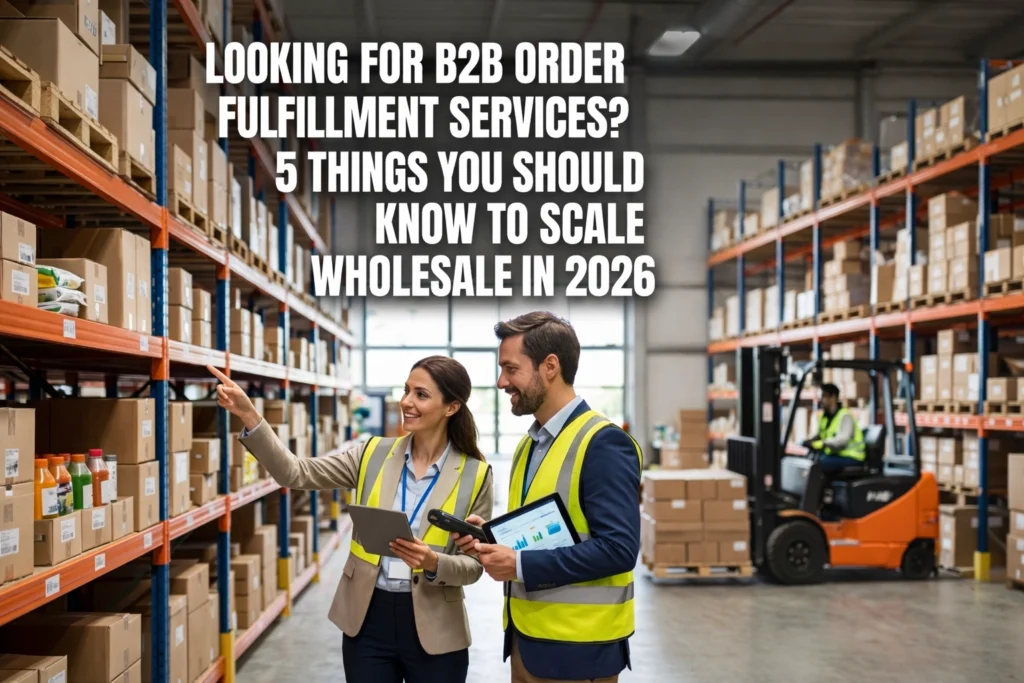
If you have spent the last few years mastering the art of Direct-to-Consumer (DTC) shipping, congratulations. You’ve survived the TikTok trends and the holiday rushes. But as we move through 2026, many brands are hitting a ceiling. To truly scale, you need to go where the volume is: wholesale. However, moving from shipping individual mailers to shipping full pallets to big-box retailers is a massive leap in complexity. If you are currently looking for B2B order fulfillment services, you are likely realizing that your current setup: or a standard “pick and pack” 3PL: might not be cut out for the rigid demands of retail distribution.
Scaling wholesale requires more than just a bigger warehouse. It requires a specific set of technical capabilities, compliance knowledge, and heavy-duty logistics. Unlike B2C, where a small shipping delay might cost you a customer, a mistake in B2B fulfillment can cost you a massive retail contract or result in thousands of dollars in “chargebacks.”
Here are the five essential things you need to know to successfully scale your wholesale operations using 3rd party fulfillment services in today’s market.
1. B2B Logistics Is a Different Beast (Pallets Over Parcels)
The most fundamental shift in B2B is the physical scale of the shipment. In the e-commerce world, we talk about ounces and individual boxes. In the wholesale world, we talk about pallets, floor-loading, and freight classes.
When you utilize b2b order fulfillment services, the provider must be experts in Less-Than-Truckload (LTL) and Full-Truckload (FTL) shipping. This isn’t just about putting a label on a box and handing it to a FedEx driver. It involves coordinating with freight brokers, scheduling dock appointments, and ensuring the inventory is “palletized” according to the receiver’s specific rules.
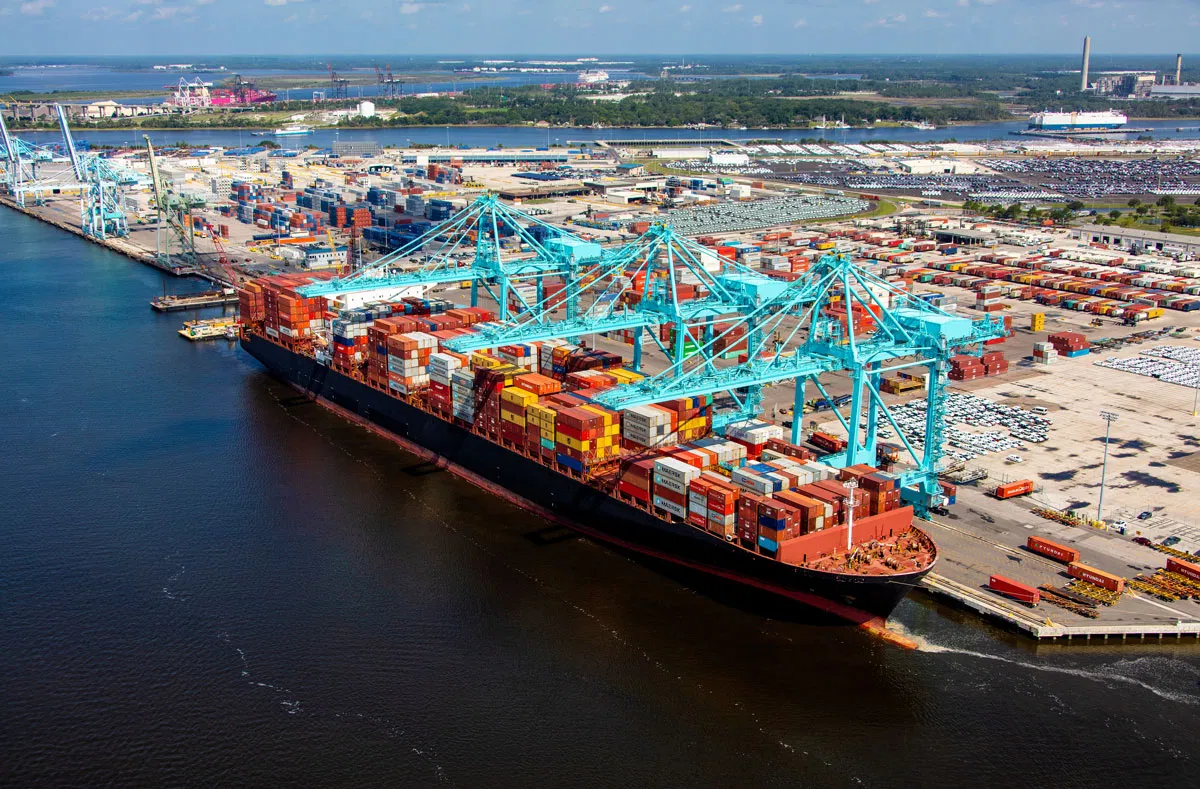
If your fulfillment partner isn’t experienced in freight coordination, your margins will vanish. Freight costs are volatile, and without a robust inbound freight program, you’ll end up overpaying for transport or facing “dry run” fees when a carrier shows up and the warehouse isn’t ready.
2. B2B Order Fulfillment Services Need UOM Tech (Mastering Pallet-to-Each Inventory)
If you want to scale wholesale without your warehouse turning into a spreadsheet nightmare, you need to master the pallet-to-each inventory chain. That is where Unit of Measure (UOM) technology becomes a real advantage.
UOM tech lets your WMS understand that the same product can exist as:
- A pallet (bulk storage / freight movement)
- A master case (case picks for wholesale)
- An each (piece picks for B2C or sample orders)
Here’s the win: you can receive inventory in pallets, move it through case pick locations, and still pick single units accurately: without creating duplicate SKUs or doing manual conversions in your head. Cleaner counts. Faster picks. Fewer short-ships.
In practical terms, UOM technology helps your warehouse:
- Convert inventory between pallets, cases, and eaches automatically (with the right pack hierarchy)
- Improve pick path efficiency (case pick when possible, each pick only when needed)
- Reduce mispicks caused by “case vs each” confusion (a classic wholesale scaling problem)
At FBMFulfillment.com, we treat this as part of our Technology Edge because it is one of the biggest operational separators between a true B2B-ready 3PL and a basic pick/pack warehouse.
3. Want Real Traceability? Look for LPN (License Plate Number) Tracking
Once you start moving wholesale volume, “inventory visibility” can’t just mean “the SKU total looks right.” You need traceability at the handling-unit level. That is where License Plate Number (LPN) technology comes in.
An LPN is basically a unique ID assigned to a specific physical unit in the warehouse: think this specific pallet, this specific case, or this specific tote. When that LPN gets scanned, the WMS knows exactly what moved, where it moved, and when it moved.
Why LPN matters for b2b order fulfillment services:
- Cleaner receiving (less “mystery inventory”)
- Faster putaway and picking (scan-to-confirm workflows)
- Better accuracy during replenishment from reserve to pick faces
- Stronger audit trail when something goes wrong (and it will, eventually)
This is another piece of FBMFulfillment.com’s Technology Edge: real tracking of inventory movement, not guesswork.
4. The “Chargeback Trap” and Custom Labeling
Retailers have “Routing Guides.” These are massive manuals: sometimes hundreds of pages long: that dictate exactly how they want their products delivered. They specify:
- The exact size of the pallet.
- The placement of the UCC-128 (GS1-128) labels.
- The type of stretch wrap used.
- The height limits for stacking.
If you ignore even one of these rules, the retailer will penalize you. High-quality b2b order fulfillment services act as your compliance shield. They ensure every pallet is built to spec and every label is scanned and verified before the truck pulls away.

Many brands try to manage this themselves in a small warehouse or a garage. Unfortunately, the complexity of custom labeling for wholesale is usually what breaks them. Using a professional partner allows you to scale wholesale without the headache of managing these granular requirements yourself.
5. B2B Order Fulfillment Services Should Include Direct Amazon Seller Central FBA Replenishment Tech
A lot of wholesale brands in 2026 are running a hybrid model: pallets and cases going to retail, while Amazon stays stocked via FBA. That sounds fine until you get hit with storage limits, stranded inventory, or you over-send inventory and eat fees. That is where Direct Amazon Seller Central FBA Replenishment Technology becomes a serious advantage.
The goal is simple: automate the dripfeed process so Amazon stays healthy without you babysitting shipments every week.
With direct Seller Central replenishment workflows, you can:
- Trigger replenishments based on inventory thresholds and real demand
- Keep FBA stock in range without blowing past storage limits
- Avoid overstocking (and the fees that come with it)
- Maintain control because your inventory is still in your possession until it is the right time to send it
At FBMFulfillment.com, we consider this part of our Technology Edge because it protects your cash flow and keeps you in control of inventory movement: instead of getting stuck reacting to Amazon’s rules.
6. The Double-Scan Standard: 100% Accuracy with Pick and Verification Scans
Wholesale volume has basically zero room for error. One wrong SKU. One wrong count. One wrong UOM. And now you’re staring at a chargeback, a refused delivery, or a relationship problem with a buyer who places big POs.
This is where scanning standards matter. A lot.
And honestly? This is where a lot of 3PLs are still operating old school. Some competitors will claim “barcode scanning” in their marketing, but in practice it can be superficial, inconsistent, or basically non-existent. A few people scan sometimes. Someone keys the rest in manually. Or the scan is only used at receiving, not during the pick/pack process. Unfortunately, manual processes are where the most expensive errors happen in B2B fulfillment.
At FBMFulfillment.com, scanning is mandatory. It is integrated into every workflow. Not a gimmick.
We run a double-check workflow using advanced scanning tech where every single item gets scanned twice:
- Pick Scan: the item is scanned when it is picked from the shelf (or pulled from a case/pallet pick location).
- Verification Scan: the item is scanned again at the packing/shipping station for final verification before it goes into a box or gets wrapped onto a pallet.
That means the system is confirming:
- The right SKU
- The right quantity
- The right UOM (Unit of Measure) (each vs case vs pallet)
This is a core part of our Technology Edge and a big reason our operational excellence stays so high. Fewer mispicks. Cleaner shipments. Less time spent doing rework. And way fewer “how did this even happen?” moments.
7. Avoiding the Hidden Cost of “Cheap” Pallet Rates
Many 3PLs will try to lure you in with incredibly low per-pallet storage rates. Be cautious. In the world of 3rd party fulfillment services, if a rate looks too good to be true, it’s because the provider is planning to make their money elsewhere: usually through “hidden” fees.
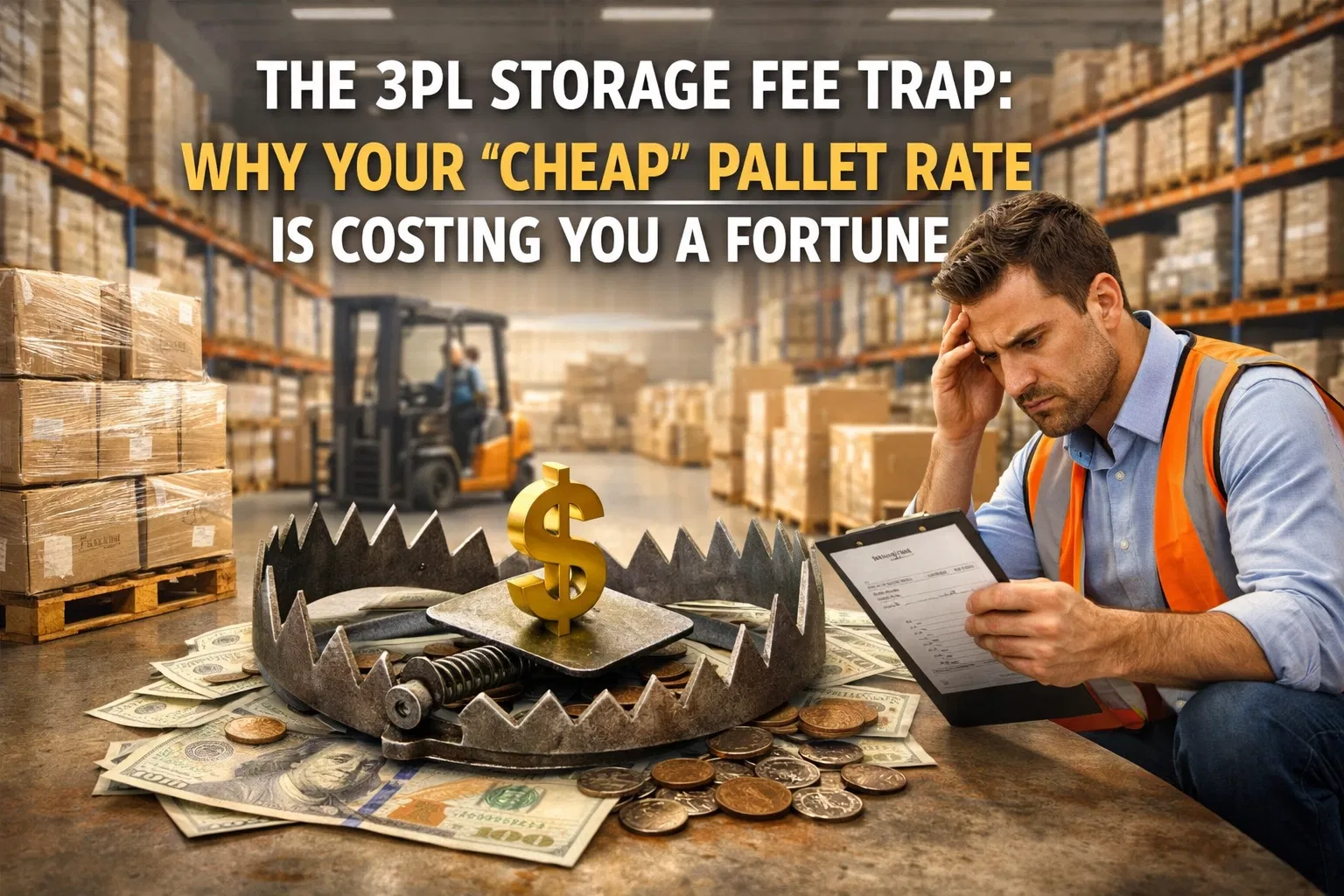
We call this the storage fee trap. You might get a $15/month pallet rate, but then get hit with:
- Administrative fees for every PO.
- “In-and-out” fees that are triple the industry standard.
- Surcharges for basic labeling that should be part of the service.
- Complexity fees for EDI connections.
Scaling wholesale requires predictable costs. You need a partner who offers transparent pricing so you can actually calculate your landed cost and maintain your margins.
Why FBMFulfillment.com is Your Wholesale Partner
Scaling a wholesale business in 2026 is an incredible opportunity, but the logistics are unforgiving. You need more than just space; you need a supportive partner who understands the high stakes of B2B retail.
At FBMFulfillment.com, we specialize in bridging the gap between high-growth e-commerce and serious wholesale distribution. Whether it’s keeping your pallets retail-ready, protecting you from chargebacks, or giving you a real Technology Edge with UOM, LPN tracking, and direct Amazon Seller Central FBA replenishment workflows, we are here to help.
The transition to wholesale shouldn’t be a nightmare of compliance fines and shipping delays. With the right b2b order fulfillment services, it becomes the engine that drives your brand to the next level of success.
Ready to get your wholesale orders moving without the stress? Contact us at FBMFulfillment.com and we will be glad to help you map out a logistics strategy that actually scales.