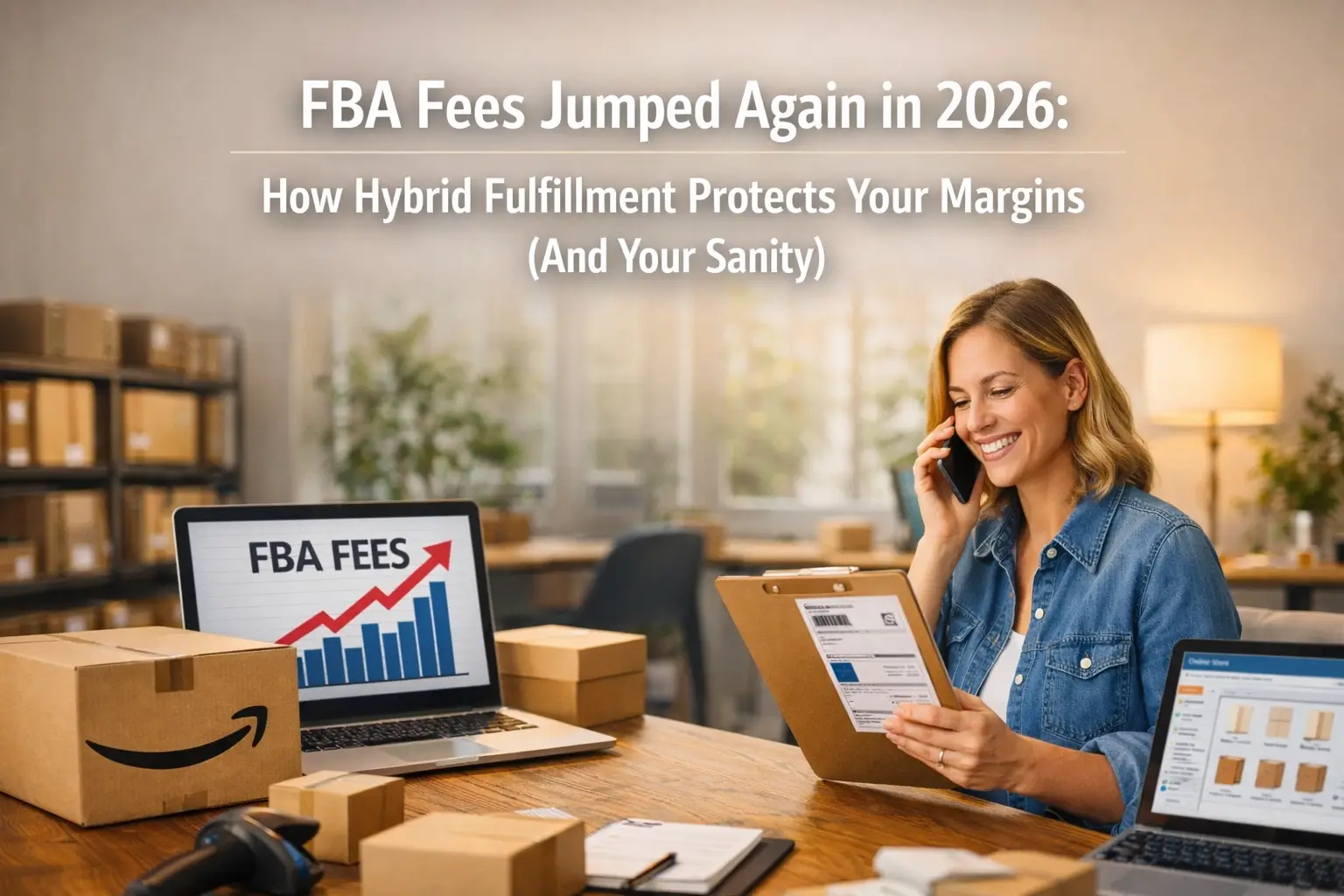
Amazon just increased FBA fees again. If you’re running the numbers and feeling that familiar knot in your stomach, you’re not alone.
The official line? An average of $0.08 per unit. Sounds almost reasonable until you multiply that across your annual volume and realize it’s eating 5% of your actual profit margin: not your revenue, your take-home profit. For sellers moving serious volume, this isn’t a rounding error. It’s a margin killer.
Here’s what Amazon won’t tell you: you have options. The hybrid fulfillment model gives you back control over your costs, your inventory, and your sanity. Let me show you how.
The Real Cost Breakdown (It’s Worse Than You Think)
Amazon’s messaging frames this as “less than 0.5% of the average item’s selling price.” That’s technically accurate and completely misleading.

If you’re operating on a 10% net profit margin: which is typical for most ecommerce sellers: that $0.08 per unit increase isn’t 0.5% of anything. It’s a 5% reduction in what you actually keep.
The per-unit impact varies dramatically by product tier:
- Small standard items ($10–$50): +$0.25 per unit
- Large standard items ($10–$50): +$0.05 per unit
- Products under $10: +$0.12 per unit
- Products over $50: +$0.31 to $0.51 per unit
Scale this across volume and the numbers get ugly fast:
- 50,000 units annually = $4,000 in additional fees
- 500,000 units annually = $40,000 in additional fees
That’s just the standard FBA fee increase. Buy with Prime went up approximately $0.24 per unit. Multi-Channel Fulfillment fees increased roughly $0.30 per unit. The cost differential between fulfillment channels is expanding, and FBA is pulling away as the most expensive option.
When FBA Stops Making Financial Sense
FBA works beautifully for one type of product: high-velocity items that turn quickly through Amazon’s network. Fast movers justify the premium because Prime badge conversion rates offset the fulfillment costs.
But most catalogs aren’t 100% fast movers. You’ve got:
- Seasonal inventory sitting for months
- Slow-moving SKU variants and bundles
- Products requiring custom inserts or kitting
- Inventory you’re selling across multiple channels (Shopify, TikTok Shop, Walmart)
For these products, FBA becomes a margin drain. Storage fees compound. Long-term storage penalties kick in. Your capital is tied up in Amazon’s warehouse generating fees instead of sales.
This is exactly where hybrid fulfillment makes sense.

How Hybrid Fulfillment Actually Works
A hybrid model means you’re using both FBA and a third party logistics provider (3PL) strategically. You’re not abandoning Amazon. You’re optimizing around it.
Here’s the setup:
- Keep your fast-moving core products in FBA for the Prime badge and rapid fulfillment
- Route slower inventory, multi-channel orders, and overflow to a dedicated fulfillment center that specializes in ecommerce fulfillment
- Use FBA replenishment (dripfeed model) to keep optimal stock levels at Amazon while your bulk inventory sits in cheaper 3PL storage
The result? You maintain Prime eligibility on Amazon while slashing storage costs and gaining flexibility across your entire operation.
What Makes FBMFulfillment.com Different
Full transparency: we’re a 3PL fulfillment provider, but we’re not your typical warehouse. We’re sellers who got fed up with the same margin squeeze you’re experiencing and built the solution we wished existed.
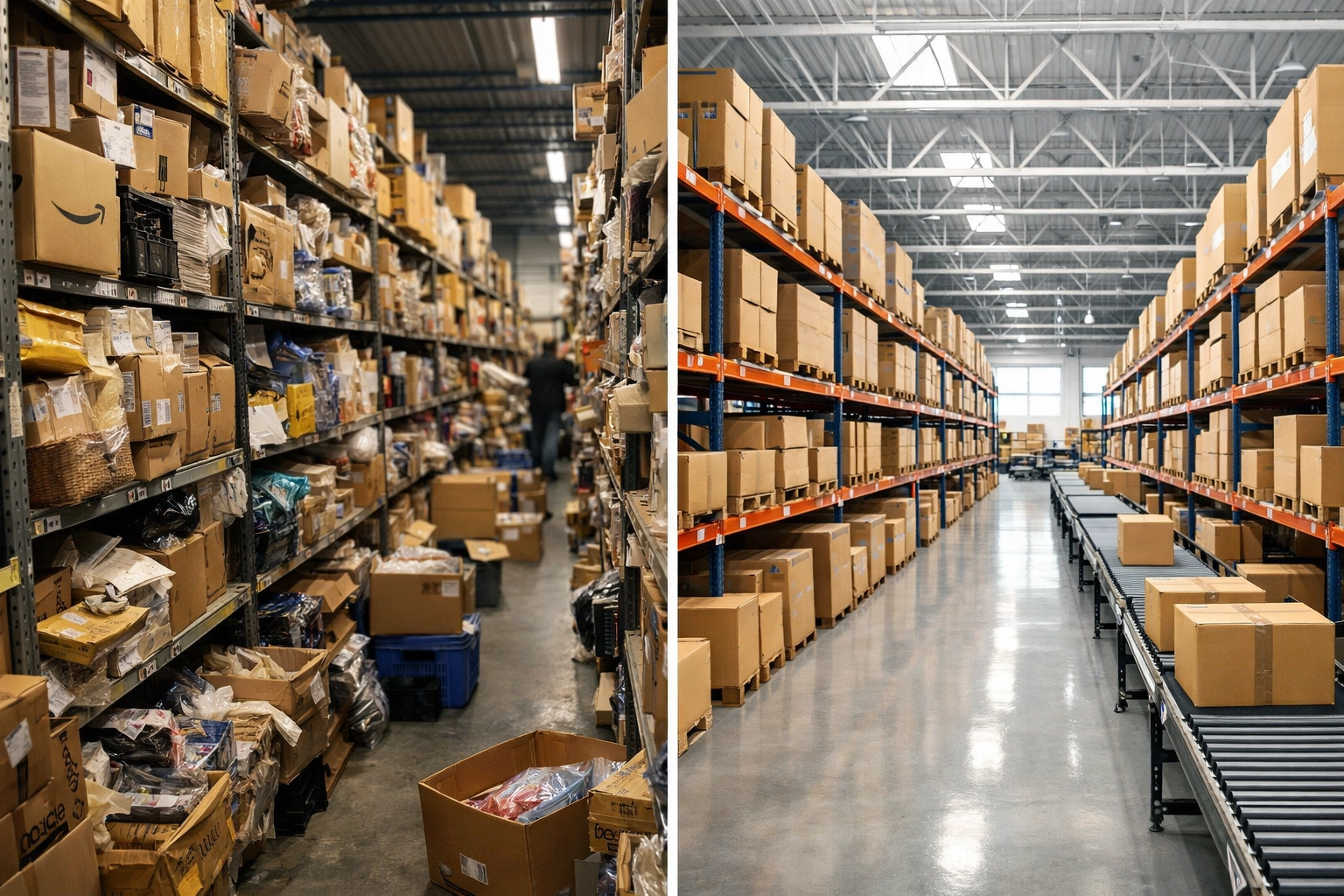
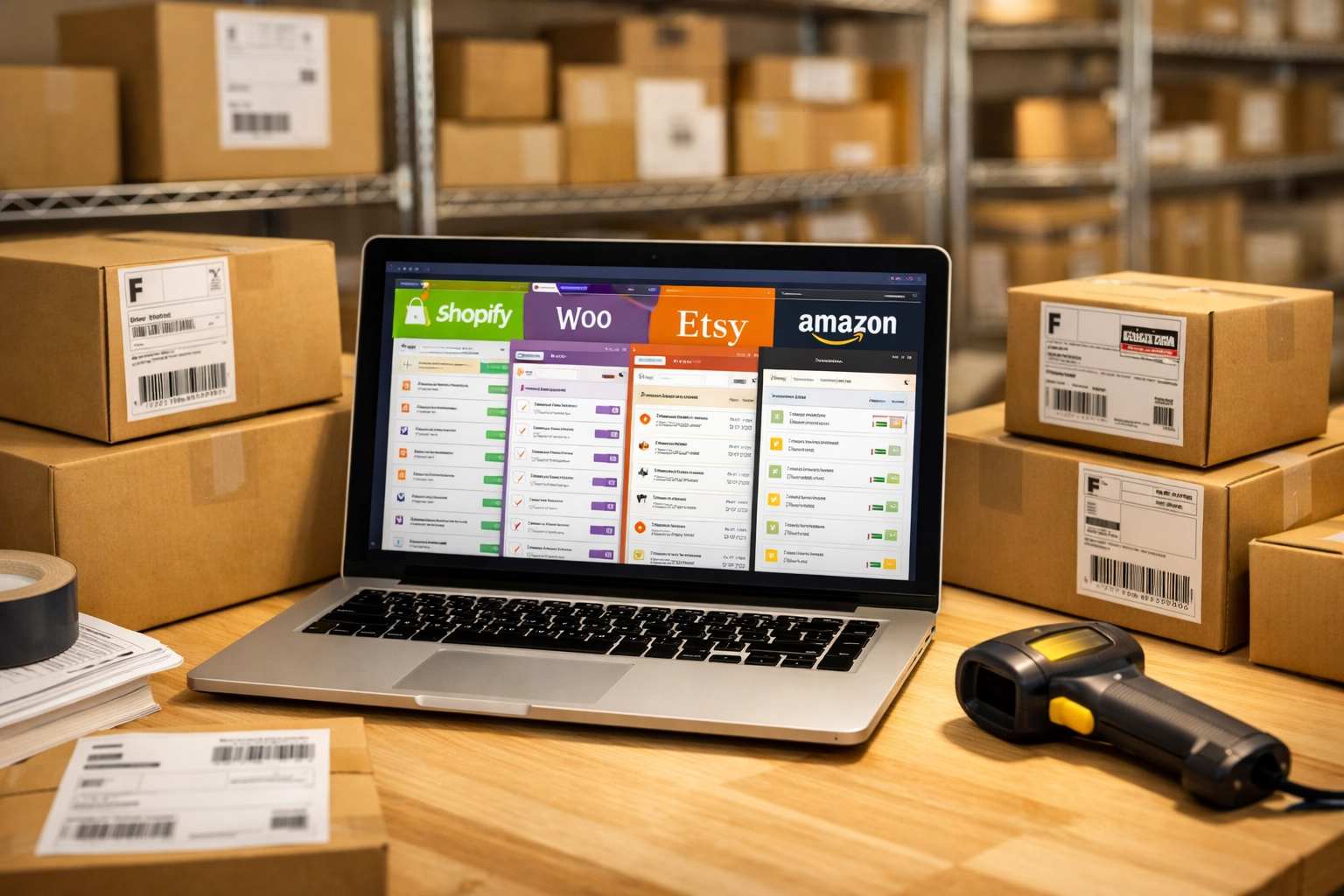
Multichannel fulfillment that actually works. We handle order fulfillment for Shopify, TikTok Shop, Walmart, eBay, and your DTC site from one inventory pool. No more juggling multiple warehouses or running separate inventory for each channel.
FBA overflow and replenishment without the chaos. Send us your bulk inventory. We’ll dripfeed into Amazon as needed, keeping your FBA storage costs minimal while preventing stockouts. You maintain the Prime badge. We handle the logistics.
Return management you can actually control. Amazon’s return process is a black box. Inventory disappears into removal orders. You have no visibility. With us, you control the return inspection process, refurbishment decisions, and what gets sent back to FBA versus liquidated. Your inventory, your rules.
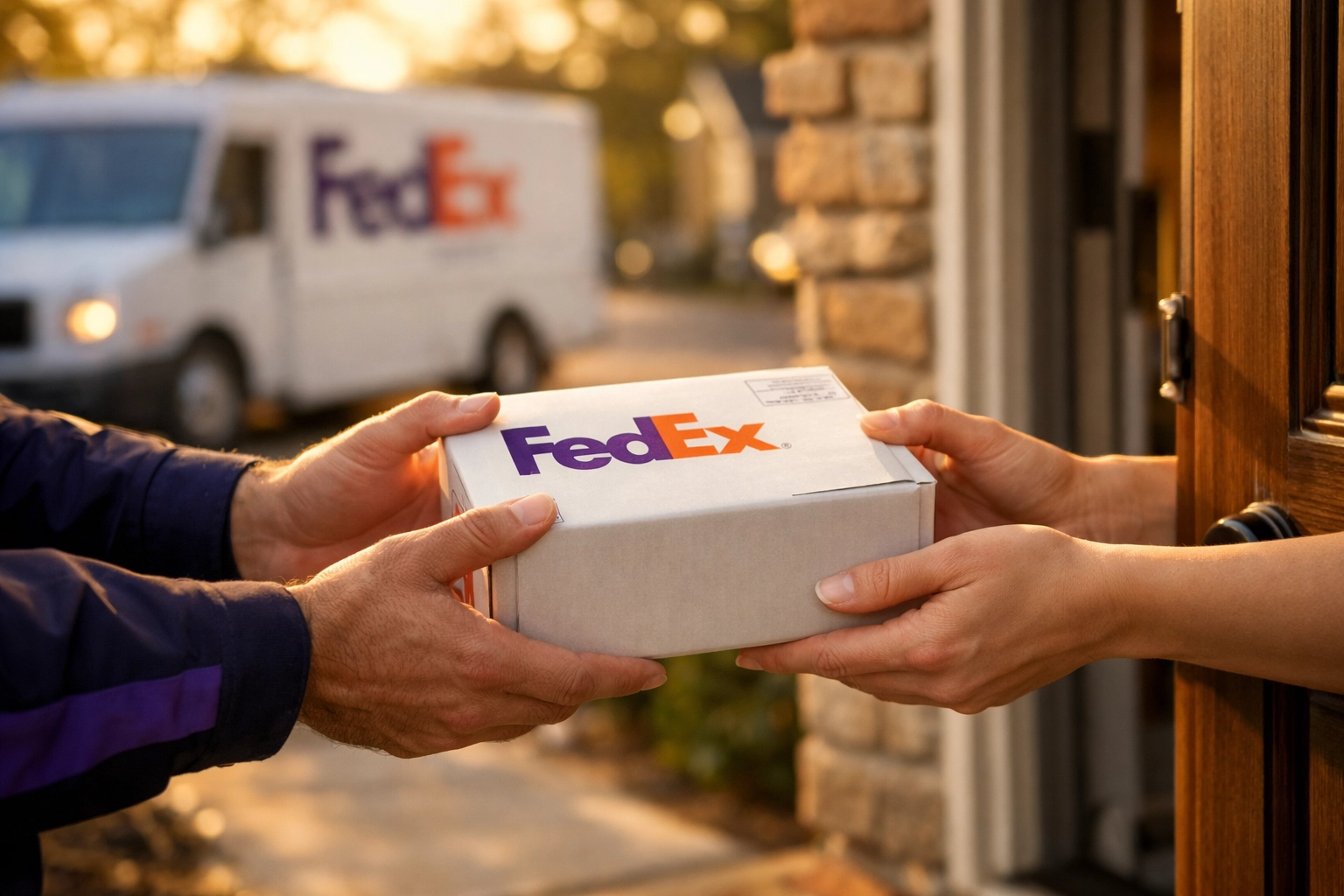
Actual 2-day delivery via FedEx 2Day. Not “estimated” Prime delivery that shows up in 4-5 days. Not “maybe 2-day if the fulfillment center is close.” Real, guaranteed FedEx 2Day service that hits the promised delivery window. Your customers get consistency. You get fewer support tickets.
The Hybrid Model in Action
Let’s walk through a realistic scenario. You’re selling a product line with 12 SKU variants. Three variants are your top sellers. The other nine move steadily but not fast enough to justify FBA storage costs year-round.
Old approach (all-in on FBA):
- All 12 SKUs sitting in Amazon warehouses
- Storage fees on slow movers eating margin every month
- Long-term storage penalties on seasonal dips
- Multi-channel fulfillment fees when you sell on Shopify
- No control over returns processing
Hybrid approach with FBMFulfillment.com:
- Top 3 SKUs in FBA with optimized stock levels via dripfeed
- Remaining 9 SKUs in our warehouse fulfillment system
- Multi channel fulfillment from one inventory pool
- Amazon orders for slower SKUs fulfilled via FBM (Fulfilled by Merchant) with our 2-day delivery matching Prime speed
- Return control with inspection and refurb before restock decisions
- Bulk inventory stored at 3PL rates instead of FBA rates
The math? Most sellers reduce total fulfillment costs by 15-30% while maintaining service levels.
What About Prime Badge Eligibility?
Here’s the concern we hear constantly: “If I pull inventory out of FBA, I lose the Prime badge and my sales tank.”
Valid concern. But here’s what actually happens with a properly structured hybrid model:
Your core products stay FBA with Prime. We keep them stocked via replenishment. Those listings maintain full Prime eligibility.
For your slower SKUs, you have two options:
- FBM listings with competitive delivery speed. Our FedEx 2Day service matches Prime delivery windows for most of the country. Customers get the same experience without you paying FBA fees.
- Seller Fulfilled Prime (SFP) if you qualify. We can support SFP requirements for order fulfillment speed and tracking.
The hybrid model isn’t all-or-nothing. You’re strategically placing inventory where the economics make sense while maintaining the customer experience that drives conversions.
Making the Switch Without Disruption
The biggest barrier to hybrid fulfillment isn’t the model: it’s the transition. You’re worried about stockouts during the move, order routing complexity, and whether your 3pl fulfillment provider can actually deliver on promises.
We’ve built our onboarding around these concerns:
- Parallel operation during transition (we fulfill new channels while FBA continues existing Amazon orders)
- Automated hybrid listing setup so both FBA and FBM work simultaneously
- Gradual SKU migration based on your velocity data
- Real-time inventory sync across all channels
Most sellers are fully operational within 2-3 weeks without sales disruption.
The Bottom Line on 2026 Margins
Amazon’s fee increases aren’t going to reverse. The trend is clear: FBA is getting more expensive, and the cost differential versus alternative ecommerce fulfillment options is widening.
You can absorb the fees and watch margins compress. Or you can take back control with a hybrid model that gives you the best of both worlds: Prime eligibility where it matters, cost efficiency everywhere else, and operational flexibility Amazon will never provide.
We’re sellers who built a third party logistics solution for sellers. We understand your margins because we live them too. If the 2026 fee increases are forcing you to rethink your fulfillment strategy, let’s talk. We’ll walk you through the numbers for your specific catalog and show you exactly where a hybrid approach makes sense.
Your margins are too tight to keep doing this the same way. Let’s fix it.